Is Trataka a Religious Practice?
Miha Cacic · April 10, 2026 · 4 min read
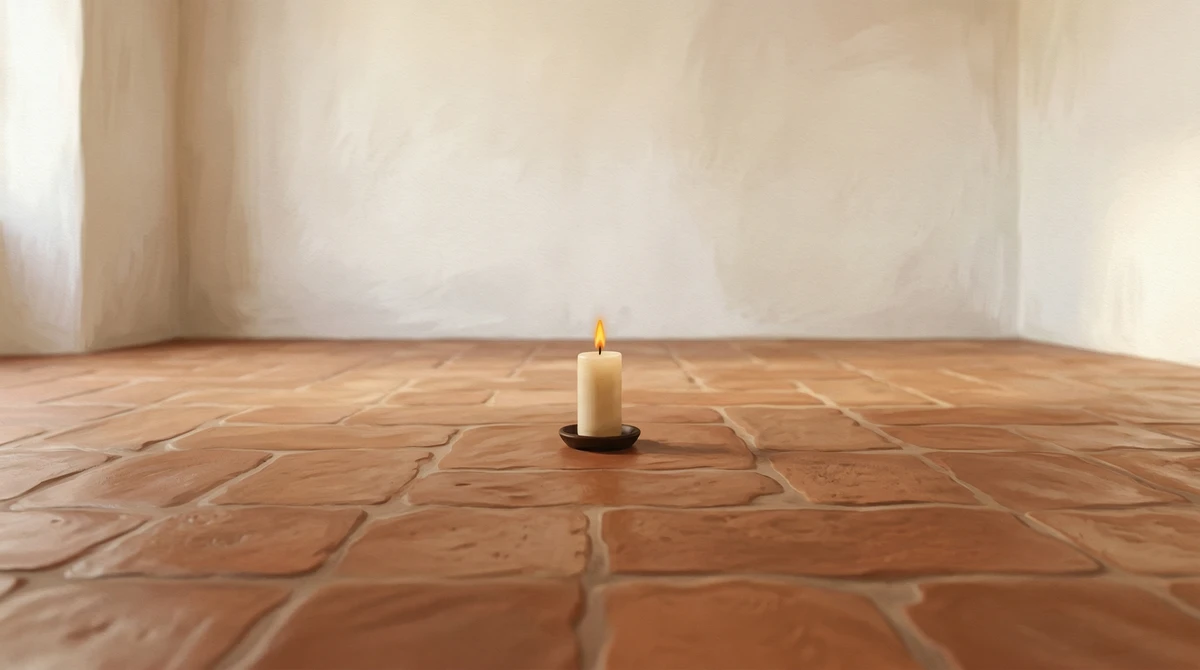
Trataka is not a religious practice in the way that prayer, worship, or ritual observance are. It comes from Hindu yogic tradition, but the same technique (fixing your gaze on a single point to still your mind) appears independently in Buddhism, Sufism, and Christian contemplation. When the same method emerges across that many unrelated traditions, it points to something neurological and human, not theological and proprietary.
What people actually mean when they ask this question
Two different concerns tend to get bundled into this search:
- “Do I need to be Hindu to practice trataka?” No. Trataka is a concentration technique, not a devotional act.
- “Am I inadvertently participating in someone else’s religious ritual?” Not unless you choose to. The technique is separable from the tradition.
A practice having religious origins is not the same as a practice requiring religious participation. Lighting a candle isn’t a Catholic ritual, even though candle-lighting has deep liturgical history in Catholicism. The physical act carries whatever meaning you bring to it.
Where trataka actually comes from
Trataka is one of the six shatkarmas (purification practices) codified in the Hatha Yoga Pradipika (15th century CE) and the Gheranda Samhita (late 17th century CE). The Hatha Yoga Pradipika defines it simply: “Gazing steadily at a small mark until tears flow.”
The text frames it as a functional technique. It sits alongside nasal cleansing (neti) and abdominal churning (nauli) in the shatkarma category, not alongside prayer or devotional chanting. Its purpose, as described in the original texts, is to purify the eyes, steady the mind, and prepare the practitioner for deeper concentration and meditation.
The Gheranda Samhita classifies trataka under both shatkarma (bodily purification) and dharana (concentration preparation). Even within the classical tradition, trataka was understood as a psychophysical technique, not an act of worship. 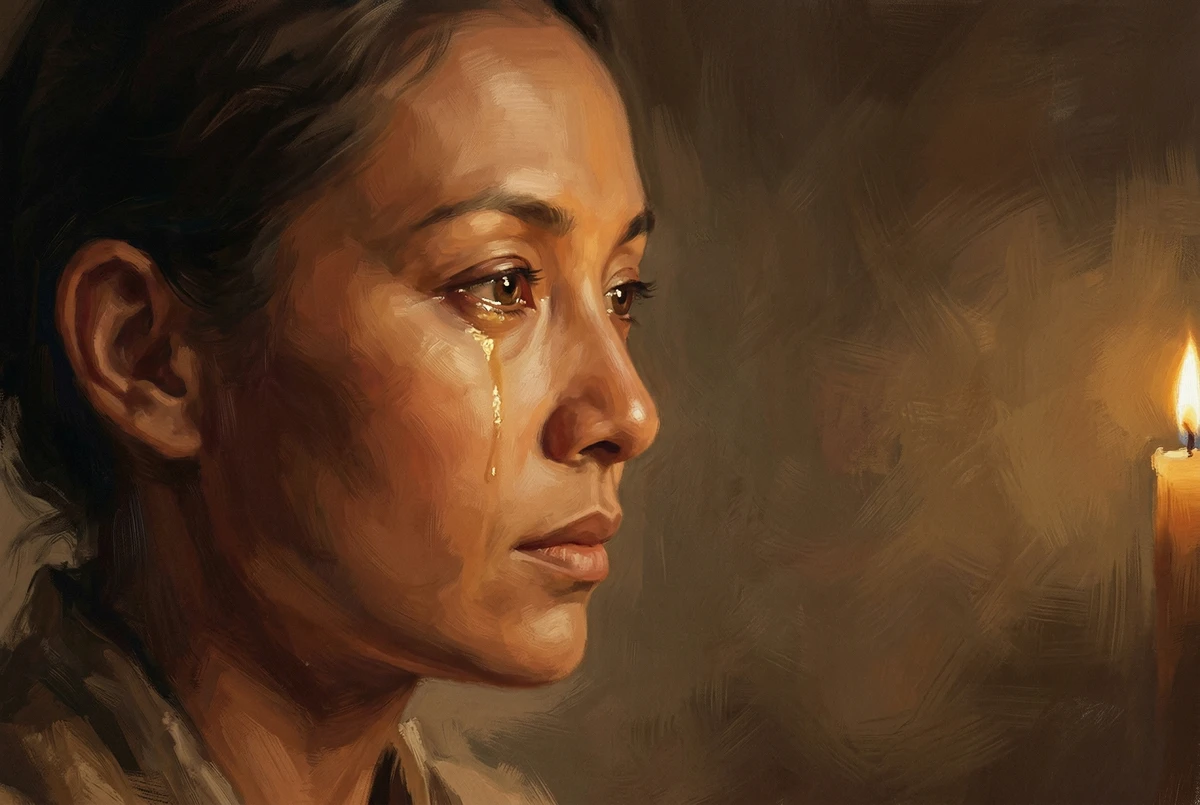
The context was Hindu. The mechanics, as described by the texts themselves, were functional.
The same technique appears across multiple religions
This is the strongest evidence that trataka is a technique, not a religious act. The same method (sustained gazing to develop concentration) arose independently in traditions with separate histories.
Buddhism. The Visuddhimagga (5th century CE), Theravada Buddhism’s central meditation manual, describes kasina meditation: gazing at a physical object (a colored disk, a candle flame, water) until the practitioner can hold a stable mental image with eyes closed. The fire kasina is structurally identical to trataka, progressing from external gazing to internal visualization. The Wikipedia article on kasina notes that it is “similar to the yogic practice of Trāṭaka.”
In Tibetan Buddhism, open-eyed gazing practices appear in Dzogchen and Bönpo shamatha traditions. As one experienced Dzogchen practitioner on Dharma Wheel described it: “I have never heard it called trataka when I have learned it, but this is part of some training in Shine/Shamatha.” Same technique, different tradition, different name.
Sufism. Practitioners in several Sufi orders describe contemplative flame gazing as part of muraqaba (meditative watchfulness), using candles and lamps as concentration anchors.
Christianity. Icon gazing in Eastern Orthodox hesychasm uses sustained visual focus on sacred images as a path to contemplative stillness. The Catholic Church’s 1989 document Orationis Formas acknowledges that physical techniques from Eastern traditions can serve as preparation for Christian prayer. Swami Satyananda Saraswati of the Bihar School noted that “in every church there are idols of Christ, candles and the symbolic cross. Although this is regarded as a form of worship, it is actually a form of trataka, for the aim is to concentrate the mind.” 
When traditions with separate histories converge on the same physical practice, the technique belongs to human neurology, not to any single religion.
Why it works without belief: the neuroscience of gazing
Eye movement and thinking are linked. Ehrlichman and Micic (2012) found that people move their eyes about twice as often when searching through memory as when doing tasks that don’t require mental recall. Their eye movements are “systematically related to internal thought processes,” even in darkness or with eyes closed.
The relationship runs both ways. As neuroscience writer Mo Costandi summarized in The Guardian (2015): “Eye movements can both reflect and influence higher mental functions such as memory and decision-making.”
If eye movements accompany and influence mental activity, then fixing your gaze, as trataka instructs, would interrupt that feedback loop. A 2021 study (PMC8718544) found that focused attention meditation like trataka enhances working memory by activating the bilateral dorsolateral prefrontal cortex, the brain region governing attention and executive function. 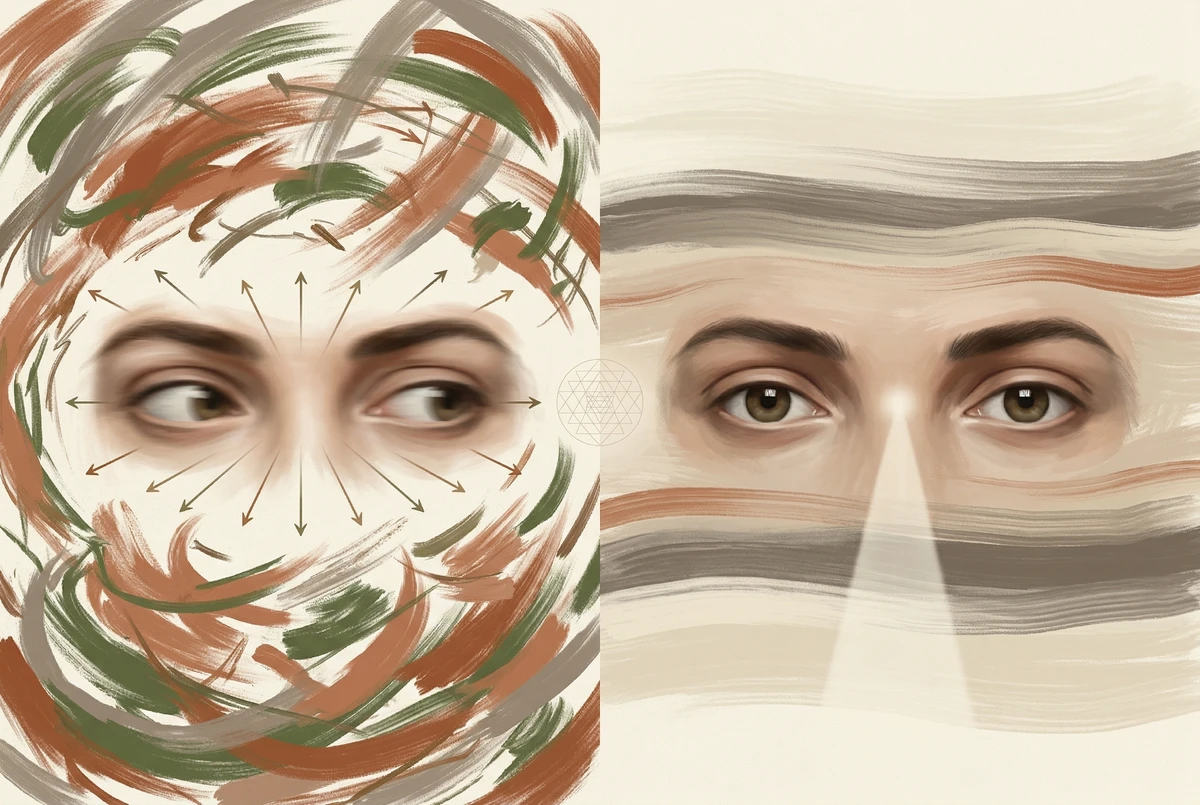
This mechanism doesn’t require belief. It requires eyeballs and a brain.
What about the “third eye” and chakra language?
Most trataka instructions mention “awakening the Ajna chakra” or “activating the third eye.” If you don’t share the yogic cosmology, this language can feel like a red flag.
Here’s what the neuroscience shows: the prefrontal cortex (the brain region behind your forehead) is heavily involved in the focused attention that trataka develops. The 2021 study confirmed bilateral activation of this region during sustained gazing practice. The pineal gland, often equated with the “third eye” in popular writing, evolved from a light-sensitive organ in lower vertebrates but functions as an endocrine gland producing melatonin in humans. It receives light information indirectly through the eyes, not through direct sensation.
You don’t need to believe in chakras for trataka to work. The spiritual vocabulary is one tradition’s framework for describing real attentional phenomena. But dismissing that framework entirely sells short centuries of careful inner observation. The traditional maps may describe something clinical language hasn’t fully captured yet.
Practice first. Assign meaning on your own terms.
When trataka does become religious
Context determines meaning. The same physical technique shifts from secular to religious depending on intention:
- Gazing at a deity statue (murti) with devotional intent is a religious act.
- Combining trataka with mantra chanting directed at a specific deity is religious practice.
- Practicing within a guru-disciple relationship with explicit spiritual goals is religious.
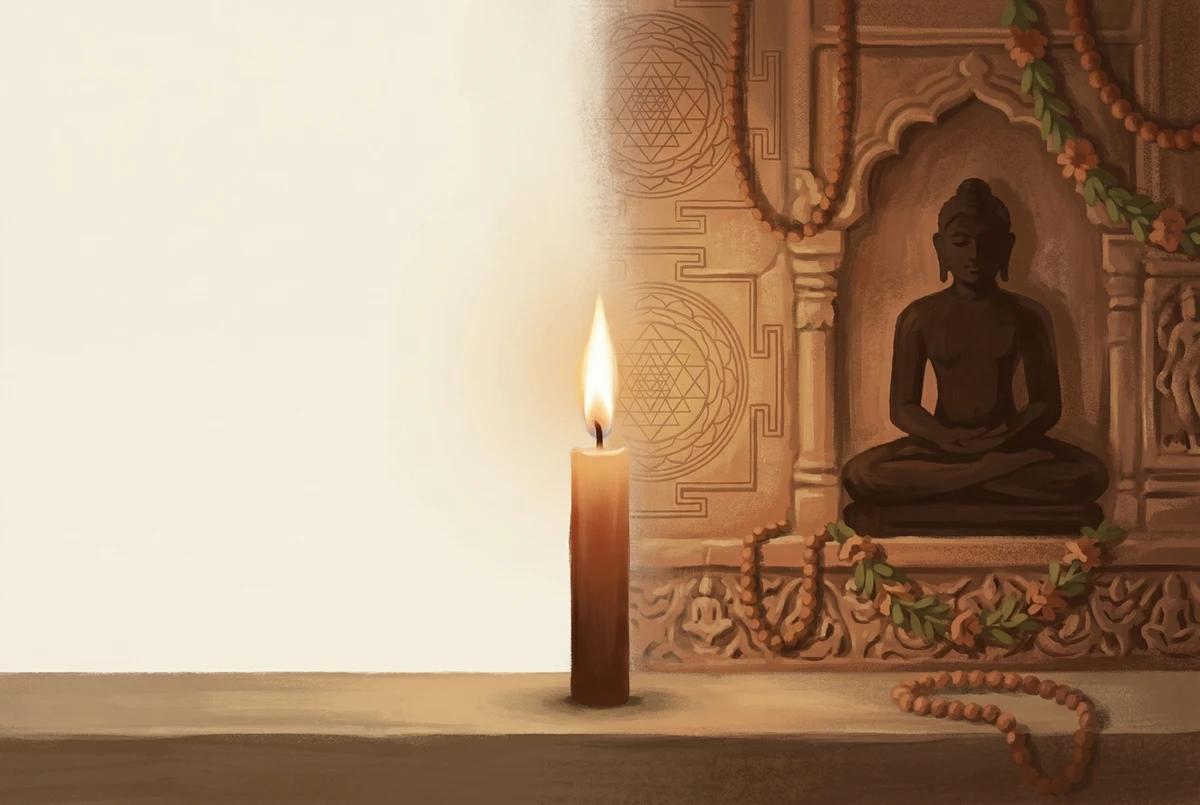
The technique doesn’t impose a framework. You decide what your practice means, the same way singing is entertainment in a concert hall and worship in a church.
One caveat: if you’re interested in the deeper meditative states the yoga tradition describes (not just relaxation or sharper focus), that tradition also recommends surrounding practices. Trataka was designed as a stepping stone within a larger system, not a standalone destination.
How to practice trataka without religious framing
If you want the concentration benefits without any spiritual context:
- Use a simple object. A candle flame or a black dot on a white wall works fine. No yantra or deity image needed.
- Skip the chakra language. Focus on what you notice (steadier attention, quieter mind) rather than on energy centers.
- Start short. Two to three minutes is enough at first. Work up to ten.
- The basic technique: Gaze steadily without blinking until your eyes water, then close your eyes and hold the afterimage for as long as it lasts.
- Afterward: Wash your eyes with cool water.
If you have epilepsy, avoid a flickering flame. If you have glaucoma, cataracts, or recent eye surgery, check with your doctor first.
Sources
- Svātmārāma. Haṭha Yoga Pradīpikā. c. 15th century CE. Chapter 2, verses 31–32.
- Gheraṇḍa Saṃhitā. c. late 17th century CE. Chapter 1, verses 53–54.
- Buddhaghosa. Visuddhimagga (Path of Purification). c. 5th century CE.
- Ehrlichman, H. & Micic, D. (2012). “Why Do People Move Their Eyes When They Think?” Current Directions in Psychological Science, 21(2), 96–100. DOI: 10.1177/0963721412436810.
- Costandi, M. (2015). “How your eyes betray your thoughts.” The Guardian / Neurophilosophy.
- “Focused attention meditation and working memory.” 2021. PMC8718544.
- Congregation for the Doctrine of the Faith. (1989). Orationis Formas: Letter on Some Aspects of Christian Meditation. Vatican.
- “Tradition and science of Trataka kriya.” Yoga Mimamsa, 2024, 56(2).