Best Time of Day for Trataka Meditation
Miha Cacic · April 9, 2026 · 5 min read
The best time for trataka depends on what you want from it. Morning practice sharpens focus for the day ahead. Evening practice quiets the mind for sleep. These aren’t interchangeable suggestions. The physiological conditions at each time of day differ, and the traditional recommendation of dawn or dusk reflects that.
Why timing matters more for trataka than other meditations
Most meditation techniques work in any lighting. Trataka doesn’t. Candle-flame trataka requires a dark or near-dark room so the flame becomes the dominant visual stimulus. Yoga International notes the room “must be as dark as possible,” and clinical studies on trataka have used darkened rooms as part of the protocol.
This darkness requirement isn’t just a logistical constraint. Swathi, Bhat, and Saoji (2021) proposed that practicing trataka in dim light may trigger melatonin release, and melatonin has been shown to positively influence learning and memory. The darkness that trataka requires may itself be part of the mechanism of action.
Your hormonal environment also shifts through the day. In the morning, cortisol is naturally elevated: the cortisol awakening response produces a 60-150% surge within 30-45 minutes of waking, a period that correlates with heightened executive function (Law et al., 2015). In the evening, melatonin onset shifts your body toward rest. Trataka practiced in these two windows interacts with different hormonal states.
One caveat: no study has directly compared morning versus evening trataka. A narrative review of 37 articles on shatkarma (Swathi et al., 2021) found nothing testing timing differences. The case for different effects at different times rests on traditional recommendations, physiological reasoning, and consistent reports from practitioners. It’s a well-supported inference, not a proven finding.
Morning trataka: sharpening focus for the day
The traditional recommendation is to practice during brahma muhurta, roughly 96 minutes before sunrise. Most yoga blogs simplify this to “4-6 AM,” but the actual window shifts with the seasons and your latitude. The underlying principle is simpler: practice before the day’s stimulation fills your mind.
Morning trataka coincides with the cortisol awakening response, a natural activation window. Law et al. (2015) found that the greater the cortisol awakening response, the better the subsequent executive function performance measured 45 minutes after waking. No study has tested whether this window amplifies trataka specifically, but the overlap between peak executive readiness and a concentration practice is suggestive.
Multiple studies confirm that trataka sharpens cognition. Raghavendra and Singh (2016) tested 30 healthy male volunteers on the Stroop color-word test before and after a 25-minute session (10 minutes of eye exercises followed by 15 minutes of candle gazing). The trataka group improved their color-word score by 26%, compared to 10.7% in the control group (p<0.001). The researchers suggested this may reflect increased prefrontal cortex activity, the brain region responsible for selective attention and response inhibition.
These cognitive effects appear to be immediate. Mallick and Kulkarni (2010) found that a single trataka session significantly increased critical flicker fusion frequency in 35 volunteers, suggesting cortical-level changes right after practice. Talwadkar et al. (2014) showed similar cognitive gains in elderly subjects after 26 days of practice, and Sherlee and David (2020) found significant improvements in both cognitive performance and anxiety in adolescents.
An important nuance: these cognitive studies didn’t test morning practice specifically. The Swathi et al. working memory study ran sessions between 4 and 6 PM and still found significant gains. Trataka appears to sharpen cognition regardless of time of day. The case for morning practice rests on the additional advantage of the cortisol awakening response, not on evidence that the cognitive effects are morning-specific.
Swami Satyananda Saraswati put it practically: “Students especially should practise trataka. Its daily practice will help them to develop concentration and memory power.” He recommended trataka “on that dot in the morning and evening,” making him one of the clearest traditional voices for twice-daily practice.
If you don’t wake before dawn, the principle matters more than the hour. Practice before screens, before breakfast, before the mind fills with tasks. Whatever time you wake, the first quiet minutes work.
Trataka before bed: calming the mind for sleep
The second traditional window is evening. Shathirapathiy et al. (2022) studied 29 people with insomnia who practiced trataka for 45 minutes daily over 10 days. Participants showed significant reductions in both the Insomnia Severity Index and the Pittsburgh Sleep Quality Index, with improvements across most sleep subscales. The study didn’t specify what time of day participants practiced, so we can’t confirm they practiced at night, but the sleep-specific benefits align with the evening use case.
One practitioner on Reddit described the effect vividly: “Thirty minutes of trataka right before bed, and I feel like I’m sleeping for much longer than 8 hours… very abundant in dreams.” The person noticed the sleep effect independently and asked whether there was a connection.
The physiology supports evening practice. Candle flame emits light at roughly 1800-1900K (warm amber). Choi and Suk (2016) found that melatonin suppression was “almost negligible” for color temperatures below 2000K. Kim et al. (2019) found that melatonin concentrations were more than 1.5 times higher under 1900K light compared to typical room lighting. Candlelight doesn’t fight your body’s sleep preparation; it supports it.
This makes candle trataka a physiologically better pre-bed activity than reading on a phone or tablet. Screen light at 6000-7000K actively suppresses melatonin. A candle flame at 1800K does not.
Two practical notes. First, finish your session at least 15-20 minutes before sleep. Second, keep evening sessions short (5-15 minutes). Satyananda warned that trataka can surface suppressed psychological material, and some practitioners report that intense, prolonged sessions can be activating rather than calming. Short, gentle evening trataka settles the mind. A 30-minute deep-concentration session may not.
Morning trataka vs. sunrise trataka: what’s the difference
Several sources recommend “sunrise” trataka, but this refers to a specific and advanced practice: surya trataka, gazing at the rising sun itself. Dr. Giridhar (1983) wrote that “trataka on the sun with open eyes should be performed in the early morning and late afternoon (i.e. sunset),” and only when the sun is near the horizon. This is not the same as general morning candle trataka.
For most practitioners, “morning trataka” means candle gazing in a darkened room before dawn or in the early hours. The key conditions, consistent across sources: empty stomach, quiet room, no prior screen exposure. Whether you practice at 5 AM or 7 AM matters far less than whether you practice before the day takes hold.
When NOT to practice trataka
Several contraindications appear consistently across sources:
After eating. Every source recommends an empty stomach. If you’re considering evening practice, wait at least two hours after dinner.
When emotionally agitated. Satyananda noted that trataka can activate subconscious material. During periods of emotional turmoil, this can amplify distress rather than calm it.
With certain medical conditions. People with epilepsy, glaucoma, or recent eye surgery should avoid trataka or consult a doctor first. Flickering candlelight can trigger photosensitive epilepsy.
When extremely drowsy. If you’re falling asleep during practice, you’re sleeping, not meditating. This is relevant for early-morning practice: if you can’t keep your eyes open, the session is wasted.
How to choose: matching timing to your goal
You want better focus and concentration. Practice in the morning, before the day starts. Three to ten minutes is enough.
You want better sleep. Practice 30-60 minutes before bed, for 5-15 minutes. Transition to bed without screens afterward. The warm candlelight supports melatonin production rather than suppressing it.
You want deeper meditation or spiritual practice. Practice at dawn or dusk (sandhi kala). In Ayurvedic and yogic tradition, these junction times mark transitions in the body’s subtle energy. Anandmurti Gurumaa describes the sandhi kala as a period when “nature will help and assist you — the external shift will create an internal shift.” Use trataka as a five-minute gateway before seated meditation, which aligns with Satyananda’s recommendation that “trataka should definitely be practised for at least five minutes before beginning any sadhana.”
You want eye health benefits. Session timing matters less than consistency. Keep sessions short (five minutes), and morning is slightly preferable since your eyes are rested.
You can commit to twice daily. Morning builds focus, evening releases the day. This follows Satyananda’s recommendation and combines both benefits.
Building a consistent trataka routine
The most important factor is consistency, not perfect timing. A daily five-minute session at 7 AM will serve you better than sporadic 20-minute sessions at 4 AM.
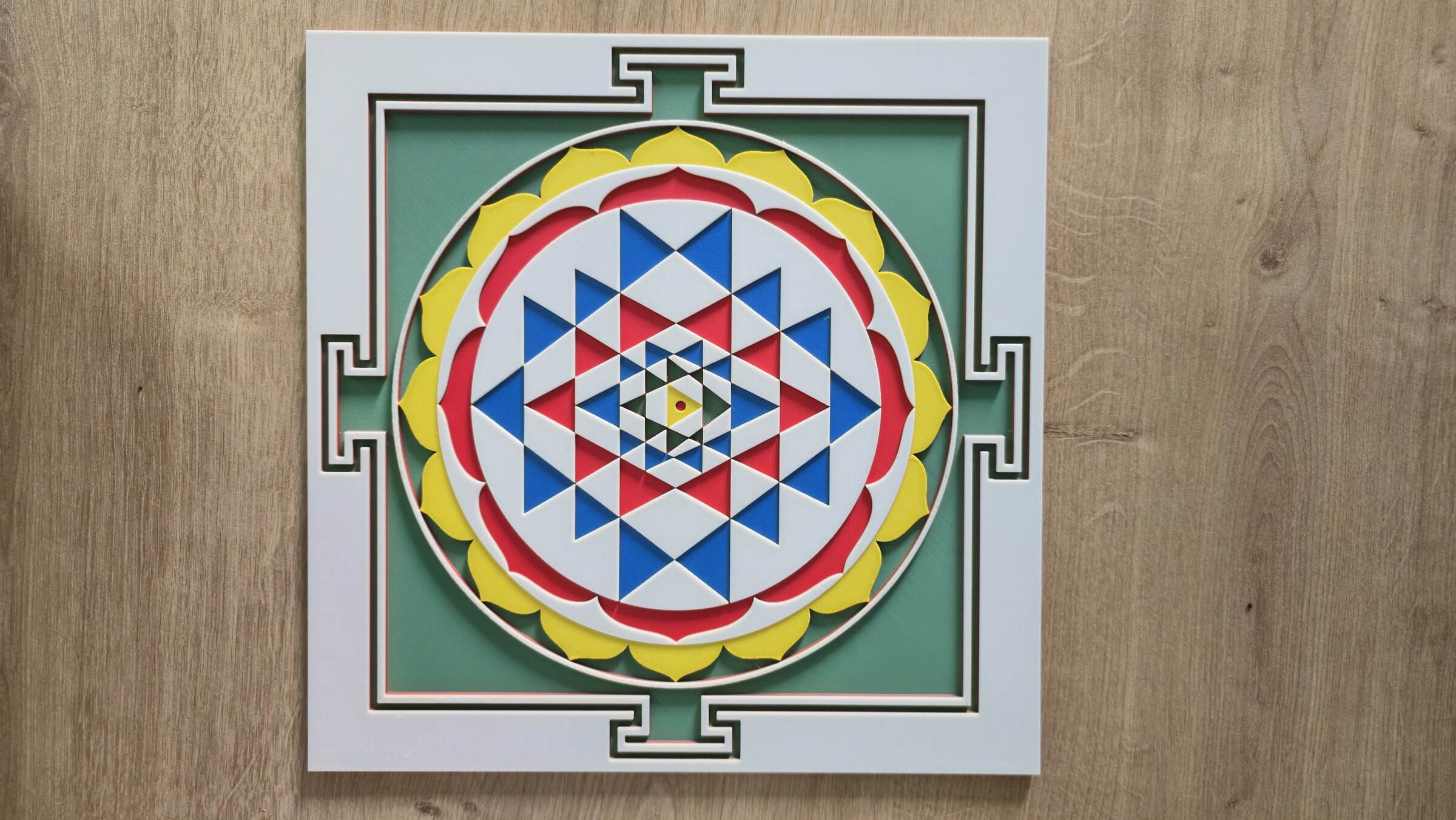
If you can’t darken a room for candle trataka, alternatives exist. Trataka on a black dot on a white wall, or on a yantra (geometric pattern), works in normal lighting. Satyananda listed many valid objects: a candle flame, a dot, a crystal, even a photograph. The candle is the most popular modern method, but the original texts describe trataka on any fixed point. In the Hatha Yoga Pradipika, Svatmarama wrote: “Being calm, one should gaze steadily at a small mark, till eyes are filled with tears.” No candle specified.
Pick one time. Practice at that time daily. Adjust based on what you notice: more alert in the morning, calmer at night. The tradition gives clear guidance, but your own experience is the final authority.
Sources
- Shathirapathiy G, Mooventhan A, Mangaiarkarasi N, et al. (2022). “Effect of trataka (yogic gazing) on insomnia severity and quality of sleep in people with insomnia.” Explore (NY), 18(1):100-103. PMID: 33036930.
- Swathi PS, Bhat R, Saoji AA. (2021). “Effect of Trataka (Yogic Visual Concentration) on the Performance in the Corsi-Block Tapping Task: A Repeated Measures Study.” Frontiers in Psychology, 12:773049. PMID: 34975664.
- Raghavendra BR, Singh P. (2016). “Immediate effect of yogic visual concentration on cognitive performance.” Journal of Traditional and Complementary Medicine, 6(1):34-36. PMID: 26870677.
- Talwadkar S, Jagannathan A, Raghuram N. (2014). “Effect of trataka on cognitive functions in the elderly.” International Journal of Yoga, 7(2):96-103. PMCID: PMC4097909.
- Sherlee JI, David A. (2020). “Effectiveness of yogic visual concentration (Trataka) on cognitive performance and anxiety among adolescents.” Journal of Complementary and Integrative Medicine, 17(3). PMID: 32415824.
- Swathi PS, Saoji AA, Ramachandra L. (2021). “Health and therapeutic benefits of Shatkarma: A narrative review of scientific studies.” Journal of Ayurveda and Integrative Medicine, 12(2):206-212. PMCID: PMC8039332.
- Mallick T, Kulkarni R. (2010). “The effect of trataka, a yogic visual concentration practice, on critical flicker fusion.” Journal of Alternative and Complementary Medicine, 16:1265-1267. PMID: 21091294.
- Law R, et al. (2015). “The cortisol awakening response predicts same morning executive function: results from a 50-day case study.” Stress, 18(6). DOI: 10.3109/10253890.2015.1076789.
- Choi K, Suk HJ. (2016). “Dynamic lighting system for the visual comfort and sleep quality improvement.” Applied Ergonomics. DOI: 10.1016/j.apergo.2016.02.013.
- Kim M, et al. (2019). “Effect of low color temperature LED lighting on melatonin production.” Scientific Reports, 9. DOI: 10.1038/s41598-019-43864-6.
- Svatmarama. (~15th century). Hatha Yoga Pradipika, Chapter 2, Verses 31-32. Translation: Pancham Sinh (1914).
- Swami Satyananda Saraswati. (1962/1963). “The Practice of Trataka.” Lecture delivered in Bombay, published in YOGA, Vol. 1, No. 3.
- Dr. Giridhar ‘Yogeshwar.’ (1983). “Trataka or Yogic Gazing.” YOGA Magazine, Bihar School of Yoga.
- Anandmurti Gurumaa. “Sandhi Kaal: A Golden Hour.” Gurumaa.com.