How to Start Meditating
Miha Cacic · April 11, 2026 · 7 min read
To start meditating, sit somewhere comfortable, pick something to focus on (your breath, a sound, a physical object), and practice holding your attention there for two to five minutes. When your attention drifts, and it will within seconds, notice that it drifted and bring it back. That cycle of drifting and returning is the meditation, not a failure of it.
Most beginner guides default to a single technique (breath awareness) and wish you luck. That works for some people. But if you’ve tried focusing on your breath and found it frustrating, abstract, or anxiety-inducing, the problem isn’t your discipline. It’s a mismatch between the technique and how your mind works. This article covers the standard starting advice, then goes further: how to identify which type of focus anchor your mind responds to, and what to do when the default doesn’t fit.
What meditation actually is (and what it isn’t)
Meditation is attention training. You pick a focus point (called an anchor), hold your attention on it, notice when attention wanders, and bring it back. That’s the entire practice. Everything else (posture, timing, tradition, apps) is scaffolding around this core loop. 
It is not “clearing your mind.” Your mind produces thoughts the way your lungs produce breath. You cannot stop it, and trying to stop it is the number one reason beginners feel like they’re failing. The goal is to notice thoughts without following them, like watching cars pass on a road without chasing any of them.
It is also not relaxation, though relaxation often results. A meditation session can be boring, uncomfortable, emotional, or agitating. All of these are normal and productive. If you expect blissful calm every time, you’ll quit the first time you feel restless, and restlessness is part of the process.
What you need to start (almost nothing)
A place to sit. Chair, couch, floor, bed, park bench. Keep your back roughly upright so you don’t fall asleep. No special cushion required. No special room required. You don’t need silence, either. Total quiet can be harder for beginners because every small sound becomes a distraction.
A timer. Your phone works fine. Setting a timer removes the “how long has it been?” loop that otherwise pulls you out of practice every thirty seconds.
That’s it. No app, no candle, no incense, no teacher, no particular outfit. All of those can help later, but none are prerequisites. The barrier to starting is zero.
One thing that does help: a consistent time and place. Morning is popular because there are fewer competing demands on your attention. The brain starts to associate a particular spot with the practice, which makes settling in easier over time.
How long to meditate when you’re starting
Start with two to five minutes. Not ten, not twenty. Two minutes is long enough to practice the core skill (notice drift, return attention) multiple times. Five minutes is a reasonable upper end for a first session.
The reason short sessions work better than long ones is simple: a five-minute session you do every day builds the habit faster than a twenty-minute session you skip three times a week. Consistency is the active ingredient, not duration. Research on habit formation found that new behaviors take an average of 66 days to become automatic, with a wide range of 18 to 254 days depending on the person and the behavior (Lally et al., 2010). You’re building a daily practice, not training for a marathon.
When should you increase? When your current duration feels manageable, not effortless, but no longer like a fight. Add two minutes at a time. Many practitioners settle between 10 and 20 minutes daily within a few months.
There is a useful benchmark from Amishi Jha’s lab at the University of Miami: in a study of Marines preparing for deployment, those who practiced mindfulness exercises for roughly 12 minutes a day maintained their working memory capacity under high stress, while those who practiced less saw their working memory degrade (Jha et al., 2010). Twelve minutes is not a magic number, but it gives you a concrete target once you’re past the first few weeks.
If five minutes feels unbearable, drop to two. The goal of your first week is simply to sit every day, not to sit for a long time.
Choosing a technique (match the anchor to your mind)
Every meditation technique gives you something to focus on. That something is your anchor. Different anchors work for different minds, and the reason most guides default to breath awareness isn’t that it’s the best anchor for everyone. It’s that the breath is always available and requires no equipment.
Here are the main options, with honest assessments of who each one suits.
Breath awareness. Focus on the physical sensation of air entering and leaving your nostrils, or the rise and fall of your belly. Works well for people who can feel subtle body sensations and don’t mind an internal focus. But it’s genuinely difficult for overthinkers and people with anxiety. A 2017 study from Willoughby Britton’s lab at Brown University documented that breath-focused meditation can trigger hyperawareness and anxiety in susceptible individuals (Lindahl et al., 2017). If you find breath focus frustrating rather than calming, that’s information about your mind, not evidence of failure.
Breath counting. A modification of breath awareness: count each exhale from 1 to 10, then restart. The number gives the mind a secondary task, which reduces wandering. A good transitional technique for people who find raw breath awareness too open-ended.
Body scan. Move your attention systematically through your body from head to toes (or the reverse), noticing sensations in each area. Works well for people who are disconnected from their body or who hold a lot of physical tension. The structured path gives the mind clear instructions to follow at every step.
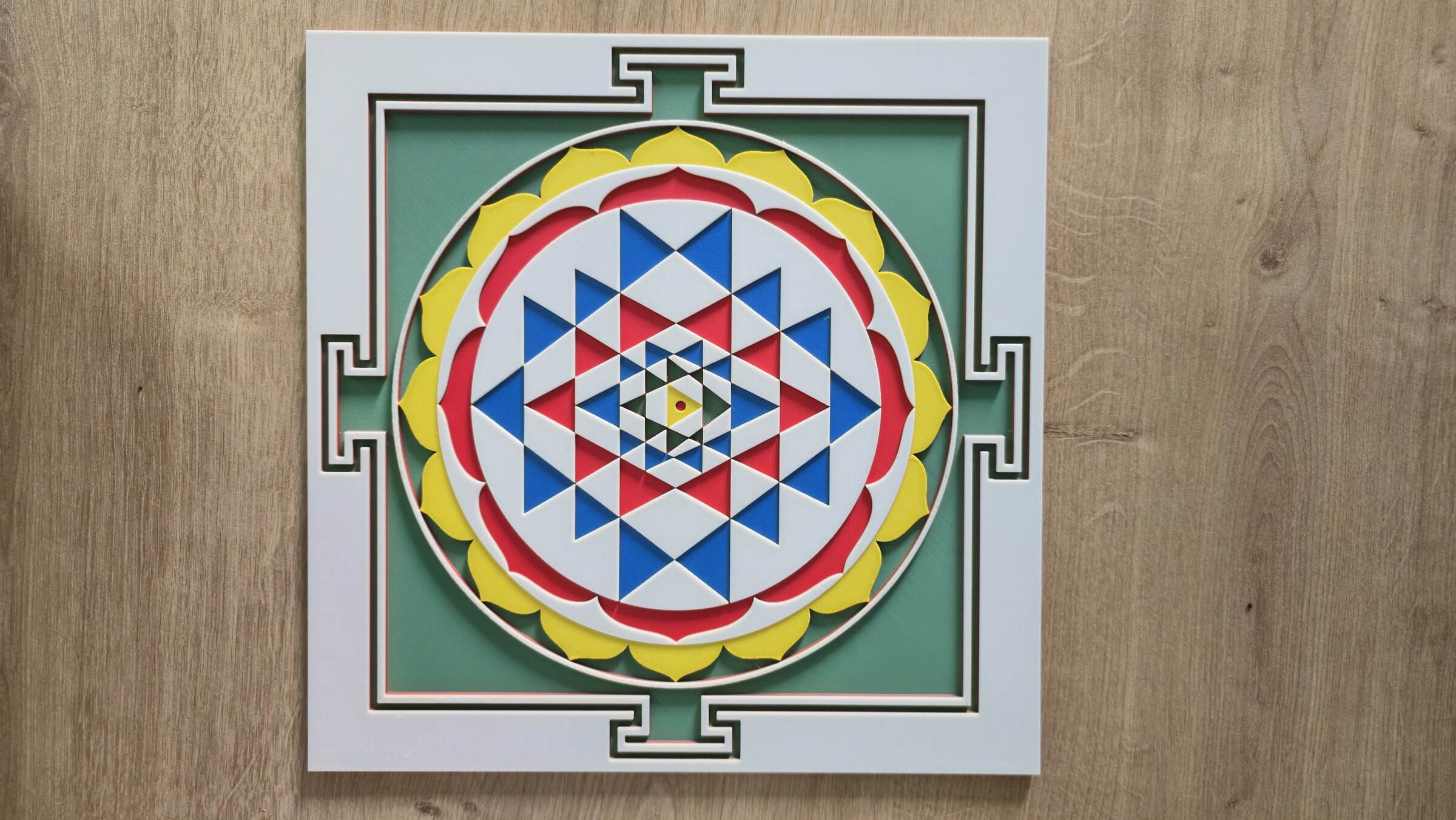
Visual object (trataka). Fix your gaze on a single object: a candle flame, a dot on the wall, a geometric form. Your eyes stay open, and when attention drifts, your gaze drifts with it, giving you built-in physical feedback. This makes catching and correcting drift easier than with an internal anchor like breath. Works well for visual thinkers and restless minds. See the final section for more on this technique.
Sound (mantra). Repeat a word or phrase, silently or aloud, as your anchor. The rhythm provides structure, and the repetition (whether voiced or silent) keeps the mind occupied. Works well for people who respond to repetition or who find silence uncomfortable.
Guided meditation. A teacher talks you through the session via an app or recording. Useful for your very first sessions, when you genuinely don’t know what to do. The limitation is that you’re training the skill of following instructions, not the skill of directing your own attention. Think of it as training wheels.
The recommendation: If you’ve never meditated, try breath counting for three days. If it clicks, stay with it. If your mind rebels (you can’t feel the breath, you get frustrated, you feel like you’re doing nothing), switch to a visual anchor or a body scan. The right technique is the one your mind can engage with, not the one that’s most commonly recommended.
Your first meditation session (step by step)
You can do this right now. 
Sit somewhere comfortable. Back upright, not rigid. A chair is fine. Hands wherever they naturally rest. Eyes can be closed or half-open with a slightly downcast gaze.
Set a timer for 3 minutes.
Take two or three slow, deliberate breaths. Not a breathing exercise. Just a signal to your nervous system that you’re shifting gears.
Choose your anchor. Breath (feel air at the nostrils), counting (count exhales 1 to 10), or an object in front of you (a spot on the wall, a candle, anything stationary).
Hold your attention on the anchor. Within 5 to 30 seconds, a thought will pull you away. You’ll start planning dinner, replaying a conversation, worrying about something. This is completely normal.
The moment you notice you’ve drifted, that is the most important moment. That noticing is the skill you’re building. Don’t scold yourself. Return to the anchor. If you were counting, start back at 1.
Repeat until the timer goes off. You might drift and return 20 times in 3 minutes. That’s 20 repetitions of the core exercise. You didn’t fail 20 times. You practiced 20 times.
When the timer sounds, open your eyes if they were closed. Take a breath. Notice how you feel. Don’t evaluate it. Just notice.
What to do when your mind won’t stop wandering
Your mind will wander constantly, especially at the beginning. The question isn’t how to stop it but how to work with it.
Distinguish between noticing a thought and following a thought. A thought appearing is not the problem. That’s what minds do. The problem is when you follow a thought for thirty seconds, or a full minute, before realizing you left the anchor. With practice, that gap shortens. In your first sessions, you might drift for a full minute before noticing. After a few weeks, you start catching yourself in seconds. That shortening is measurable, concrete progress.
Use labeling. When you notice a thought, silently label it: “thinking.” “Planning.” “Worrying.” “Remembering.” The label interrupts the thought’s momentum without fighting it. Then return to the anchor. This technique comes from the mindfulness tradition and gives you something specific to do in the moment of noticing, rather than the vague instruction to “let go.”
If you can’t feel the breath, switch anchors. This is where most beginner guides fail. They tell you to return to the breath, but if the breath was already too subtle to hold, returning to it just restarts the frustration loop. If breath isn’t working, open your eyes and focus on a physical object. Give your mind something it can grab.
“My mind is too busy to meditate” is backwards. The busier the mind, the more it benefits from the practice. But a busy mind needs a stronger anchor (a visual object, counting, or movement) rather than a subtle one (bare breath awareness). Matching the anchor strength to your mind’s activity level is the adjustment that most beginner advice skips.
How to know if it’s working
Beginners often quit because they can’t tell if anything is happening. Here’s what to look for.
The first sign: you notice distractions sooner. In your first session, you might follow a thought for a full minute before catching yourself. After a week, you start catching yourself in 10 to 15 seconds. You may not feel calmer, but your awareness is sharpening. The writer behind Rational Dharma’s meditation skill guide frames this well: meditation has two sub-skills, catching mind-wandering and returning to the anchor. The speed of your catch is the clearest early indicator of growth.
The second sign: you notice mind-wandering outside of meditation. You catch yourself mid-scroll, mid-worry, or mid-autopilot during your day. This isn’t meditation time, but the skill is leaking into daily life. This is the whole point.
The third sign: a gap between stimulus and response. Someone says something irritating and you notice a flash of annoyance before you react. That gap, even a fraction of a second, is new. It’s the beginning of responding instead of reacting.
What “working” does NOT look like: blissful calm during every session, an empty mind, instant stress relief, or feeling like a different person after a week. Real progress is quiet and incremental, most visible in how you handle ordinary moments, not in how peaceful you feel while sitting.
Timeline. Individual experience varies: some people notice shifts within days, others not for a month. Both are normal. For a research benchmark, a 2011 study from Harvard Medical School found measurable increases in gray matter density in the hippocampus after an 8-week teacher-led mindfulness program (MBSR), with participants averaging about 27 minutes of daily practice (Hölzel et al., 2011). Eight weeks of consistent daily practice is a reasonable point to assess whether meditation is affecting your life.
What if breath meditation doesn’t work for you
You’re not broken. You just need a different anchor.
Breath meditation is the most-recommended technique because it’s portable and requires nothing. But it’s also one of the most abstract anchors available, and for analytical, visual, or restless minds, that abstraction is a genuine limitation, not a willpower failure.
Visual meditation (trataka) is an alternative starting point that almost no beginner guide mentions. Instead of closing your eyes and chasing an invisible breath, you keep your eyes open and fix your gaze on a single object: a candle flame, a geometric pattern, or a simple dot. The object holds your attention naturally. When your attention wanders, your eyes wander too, giving you immediate physical feedback. That feedback loop makes it easier to catch drift and return, which is the core skill of meditation.
This is not a new or fringe technique. Trataka is one of the six classical purification practices described in the Hatha Yoga Pradipika, a 15th-century yoga text. Modern secular meditation culture inherited its practices primarily from the Theravada Buddhist tradition (breath-focused vipassana) and secular adaptations like MBSR. Visual meditation comes from the yogic tradition, which is why most Western beginner guides don’t mention it.
Trataka works especially well for people who think in images, whose minds are too restless for breath meditation, who’ve tried apps and hit a wall, or who find closing their eyes uncomfortable.
There’s a natural progression built into the practice, described in the Gheranda Samhita (a 17th-century yoga text): you start with external gazing (eyes open, looking at the object), then close your eyes and hold the afterimage internally. Trataka starts concrete and accessible, then progressively builds the same internal attention skills that breath meditation develops, but through a more tangible gateway.
The clinical research on trataka and attention specifically is limited (mostly small studies in Indian yoga journals). The case for it rests on a clear mechanism (a visible object gives better feedback than an invisible breath), thousands of years of practice tradition, and the straightforward observation that if breath meditation isn’t working for you, a different anchor might.
Sources
- Jha, A.P., Stanley, E.A., Kiyonaga, A., Wong, L., & Gelfand, L. (2010). “Examining the protective effects of mindfulness training on working memory capacity and affective experience.” Emotion, 10(1), 54–64. DOI: 10.1037/a0018438
- Jha, A.P., Morrison, A.B., Parker, S.C., & Stanley, E.A. (2015). “Minds ‘At Attention’: Mindfulness Training Curbs Attentional Lapses in Military Cohorts.” PLoS ONE, 10(2): e0116889. DOI: 10.1371/journal.pone.0116889. PMC: PMC4326474
- Hölzel, B.K., Carmody, J., Vangel, M., Congleton, C., Yerramsetti, S.M., Gard, T., & Lazar, S.W. (2011). “Mindfulness practice leads to increases in regional brain gray matter density.” Psychiatry Research: Neuroimaging, 191(1), 36–43. DOI: 10.1016/j.pscychresns.2010.08.006. PMC: PMC3004979
- Lindahl, J.R., Fisher, N.E., Cooper, D.J., Rosen, R.K., & Britton, W.B. (2017). “The varieties of contemplative experience: A mixed-methods study of meditation-related challenges in Western Buddhists.” PLoS ONE, 12(5): e0176239. DOI: 10.1371/journal.pone.0176239
- Lally, P., van Jaarsveld, C.H.M., Potts, H.W.W., & Wardle, J. (2010). “How are habits formed: Modelling habit formation in the real world.” European Journal of Social Psychology, 40(6), 998–1009. DOI: 10.1002/ejsp.674
- Svatmarama. Hatha Yoga Pradipika (~15th century CE). Chapter 2, Shatkarma (purification practices). Sacred Texts archive.
- Gheranda. Gheranda Samhita (~17th–18th century CE). Chapter 1, Shatkarma section. Sacred Texts archive.