Dharana, Dhyana, and Samadhi: The Three Stages of Meditation
Miha Cacic · April 11, 2026 · 7 min read
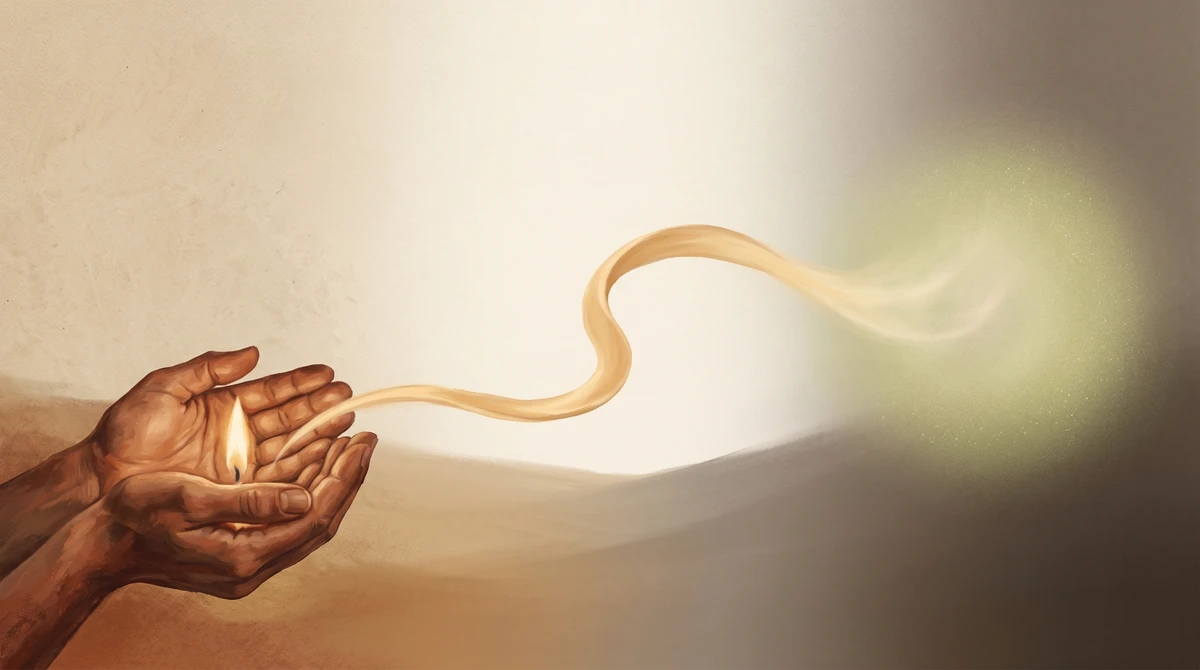
Dharana, dhyana, and samadhi are the last three of Patanjali’s eight limbs of yoga, and they describe something you’ve already experienced. You concentrate hard on a problem, your attention locks in and effort drops away, and then the answer arrives whole, without you thinking your way to it. Patanjali codified this progression around 2,000 years ago in three verses (Yoga Sutras 3.1–3.3): forced attention, effortless attention, direct insight.
Most explanations treat these as a mystical ladder you climb once. Concentrate long enough and you’ll reach enlightenment. But the Yoga Sutras describe something more practical: a repeatable three-phase process of understanding any object deeply. The entire third chapter of the text applies this process to dozens of different objects. Samadhi isn’t a destination. It’s what genuine understanding feels like from the inside.
What dharana, dhyana, and samadhi actually mean
The standard translation (concentration, meditation, absorption) creates a problem: it sounds circular. What is meditation if not concentration? The Sanskrit definitions are more precise because each describes a distinct quality of attention.
Dharana (Yoga Sutra 3.1): deshbandhas chittasya dharana, “the binding of the mind to one place.” The root dhr means to hold or retain. The defining feature is effort. You pick an object (a candle flame, the breath, a mantra) and hold your mind on it. Your attention wanders. You notice. You pull it back. This tug-of-war between focus and distraction is dharana.
The Mokshadharma, an ancient section of the Mahabharata, offers a vivid image for this state: a man carrying a vessel of water on his head while someone behind him holds a sword, ready to strike if a single drop spills. That alertness, that forced steadiness, is dharana. Andrey Safronov of the Ukrainian Federation of Yoga emphasizes this distinction: dharana isn’t merely concentrating on something, it’s holding yourself within a specific state regardless of distraction. 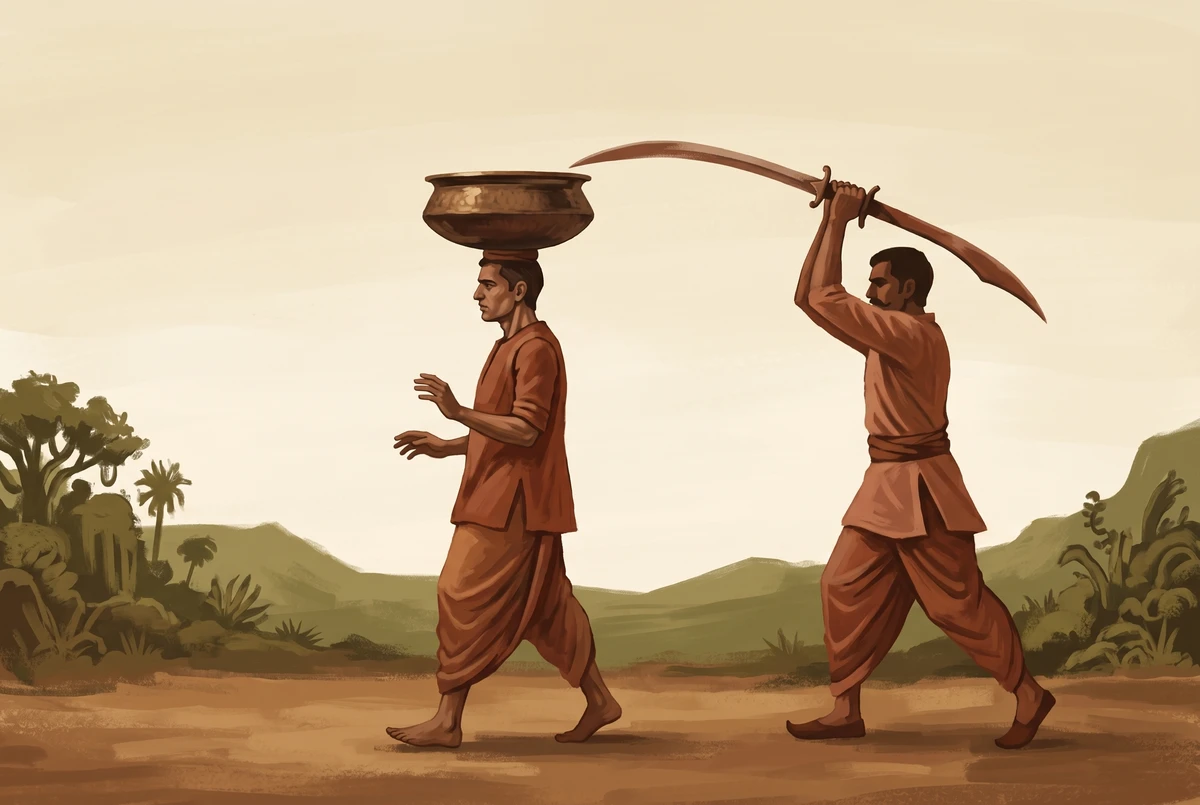
Dhyana (Yoga Sutra 3.2): tatra pratyayaikatanata dhyanam, “the continuous flow of cognition toward that object.” The root dhyai means to contemplate. The defining feature is effortlessness. As Vivekananda wrote: “When the mind has been trained to remain fixed on a certain internal or external location, there comes to it the power of flowing in an unbroken current, as it were, towards that point.”
In dharana, you keep pulling your attention back. In dhyana, it stays. The stream flows on its own. Vyasa’s commentary (the oldest and most authoritative commentary on the Sutras, c. 5th–6th century CE) emphasizes the word ekatanata: not a series of different thoughts about the object, but one continuously renewed cognition of it.
Samadhi (Yoga Sutra 3.3): tad eva arthamatra nirbhasam svarupa shunyam iva samadhih, “that same [dhyana], shining forth as the object alone, as if devoid of the mind’s own form.” The root sam + a + dha means to place together completely. The defining feature is insight. The mind stops projecting its interpretive overlay onto the object and grasps it directly.
Safronov’s reading is the clearest: “You were reflecting, you were tormented with thoughts, the process was going on, and then you’ve understood: ‘this is how it is!‘” Not trance. Not out-of-body experience. Not the cessation of thought. A cognitive event, a flash of direct understanding, accompanied by the strong emotional response that anyone who has solved a hard problem recognizes.
The progression is: effort, then effortlessness, then transparency.
Why they’re one process, not three techniques
Most yoga students encounter dharana, dhyana, and samadhi as items 6, 7, and 8 on a list, which creates the impression that you master one before moving to the next, like belt levels. Patanjali undercuts this framing in the very next verse (Yoga Sutra 3.4), introducing samyama: “The three together constitute samyama.” One word for all three, treated as a single integrated process.
A common teaching analogy (of uncertain traditional origin, though it appears in many modern yoga schools) compares the three to water. Dharana is drops falling. Dhyana is the drops merging into a continuous stream. Samadhi is the stream reaching the ocean. You don’t practice “drops” as a separate skill from “stream.” The stream is what the drops become when they stop being interrupted. 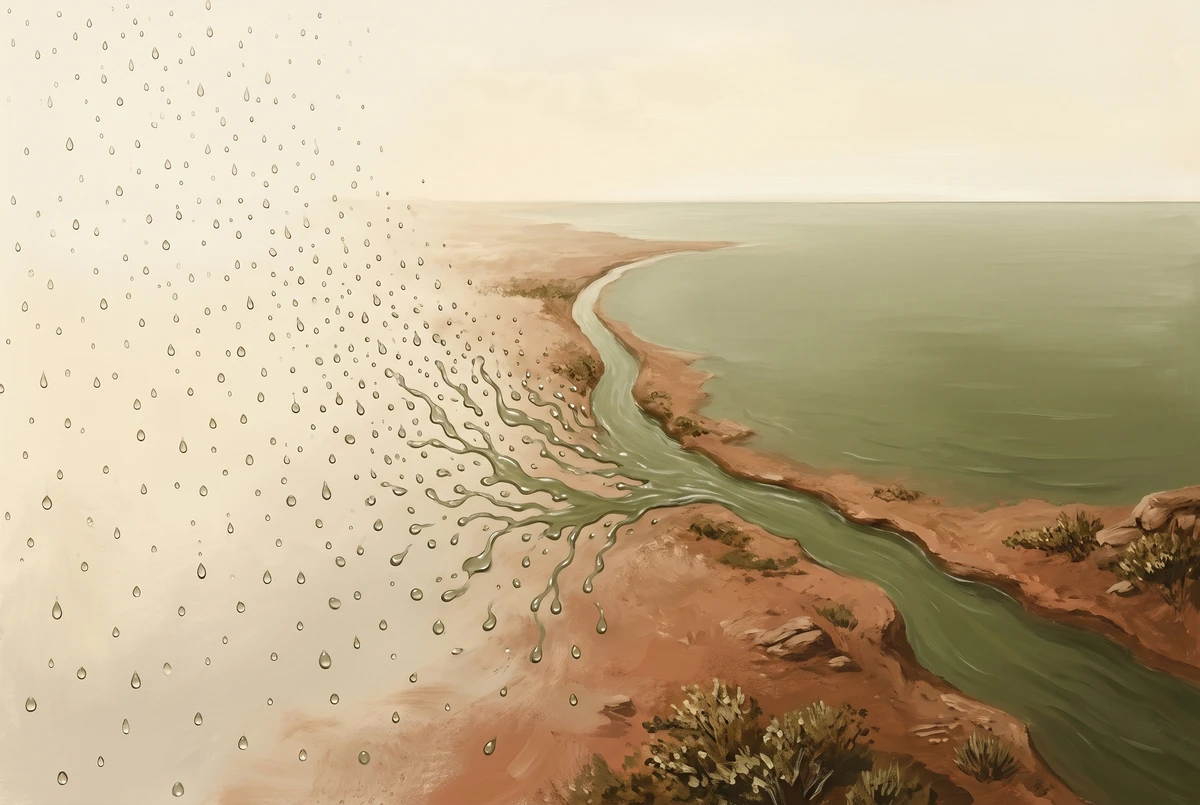
This matters practically. A meditation session can move through these phases. Even a distracted twenty-minute sit contains stretches of dharana (you catch yourself wandering and refocus) and, with practice, brief passages of dhyana (a few seconds where attention holds without effort). What develops over months and years isn’t access to higher stages but the proportion of time spent in each phase and the depth reached within them.
Patanjali confirms samyama’s repeatability in verse 3.5: “by the mastery of samyama comes the light of knowledge.” And in 3.6, he says samyama should be “applied stage by stage” to different objects. Samyama is a cognitive tool, not a one-time spiritual arrival.
How to recognize which stage you’re in
Practitioners return to this question constantly: “I know the definitions, but how do I tell which state I’m in during practice?” The answer lies in three markers: the quality of effort, the behavior of the inner monologue, and the sense of self as a separate observer.
You’re in dharana when you notice your attention has wandered and bring it back. There’s a gap between where your mind went and where you intended it to be. Your inner monologue is active (“focus… that was a thought… back to the breath”). You’re aware of yourself as the meditator directing attention. This is what most people mean when they say “I was meditating.”
You’re in dhyana when you lose track of time. You come out of a stretch of practice and realize you weren’t efforting. The object fills awareness without needing to be held there. The inner monologue has quieted. You typically notice the shift only after it ends: “I was really in it just then.” As one practitioner on Quora put it: “Once the repeated effort is no longer needed and your mind becomes naturally fixed, then dhyana happens. In sports it’s called being in the zone.”
That comparison is more precise than it sounds. Mihaly Csikszentmihalyi’s research on flow states (Flow: The Psychology of Optimal Experience, 1990) describes the same phenomenology: intense focus, loss of self-consciousness, altered time perception, a sense of effortlessness. Flow can’t be forced directly, but it emerges reliably when conditions are right (appropriate challenge, developed skill, clear goals). Csikszentmihalyi’s work suggests flow typically requires 15 to 25 minutes of focused engagement before it emerges, which aligns with the common meditation observation that transitions tend to happen after extended sitting, not in the first few minutes.
You’re in samadhi when a qualitative shift in understanding occurs. You’re no longer thinking about the object; you know it directly. This can be subtle (a flash of wordless recognition) or dramatic (a complete dissolution of the sense of separateness between observer and observed). Vivekananda described samadhi as superconsciousness: if a person “goes into it a fool, he comes out a sage,” because unlike sleep, samadhi produces knowledge.
A widely circulated teaching benchmark suggests that 12 uninterrupted breaths of dharana initiate the shift to dhyana, and 12 × 12 (144) breaths of sustained dhyana may produce samadhi. This formula appears in many yoga teacher training programs, but it can’t be traced to any primary Sanskrit text. Treat it as a useful practice frame, not a stopwatch target.
These transitions are not permanent level-ups. A moment of samadhi doesn’t mean you’ve “achieved” it forever. You’ll be right back in dharana ten seconds later, pulling your attention off your grocery list.
Dharana, dhyana, and samadhi in trataka practice
Trataka (candle gazing) makes these three phases unusually visible because it anchors each one to a distinct physical experience.
Dharana in trataka is the external gaze (bahiranga trataka). You fix your eyes on the flame and keep them steady. Your mind drifts; you catch it and bring your gaze back. The effort of not blinking, of holding the eyes still, is the physical expression of dharana. The Hatha Yoga Pradipika (chapter 2, verse 31) defines trataka as “looking intently with an unwavering gaze at a small point until tears are shed.” Though the text categorizes trataka among the six cleansing techniques (shat kriyas), commentators consistently identify it as a dharana practice. A 2015 study by Raghavendra and Singh found that a 25-minute trataka session significantly improved performance on the Stroop color-word test (p < 0.001), a measure of selective attention, cognitive flexibility, and response inhibition. The study was small (30 male volunteers at a yoga university) and lacked long-term follow-up, but the cognitive capacities it measured are consistent with what dharana training aims to develop.
Dhyana in trataka is the moment the gaze locks and the periphery disappears. You stop noticing the room, your body, time. The flame fills your entire field of awareness without effort. In the internal phase (antaranga trataka), this is when the afterimage stabilizes and you’re no longer struggling to hold it. It holds itself. As yoga therapist Connie Habash notes, trataka “cultivates at least three of the eight limbs of classical yoga: pratyahara through cutting out all distractions, dharana through intense focus, and dhyana through the stilling of thought.”
Samadhi in trataka arrives in the void phase (chidakasha). The afterimage has faded, the mental visualization dissolves, and what remains is a luminous stillness: awareness without an object. If insight arises here, it isn’t about the flame. It’s a direct recognition of the nature of attention itself. 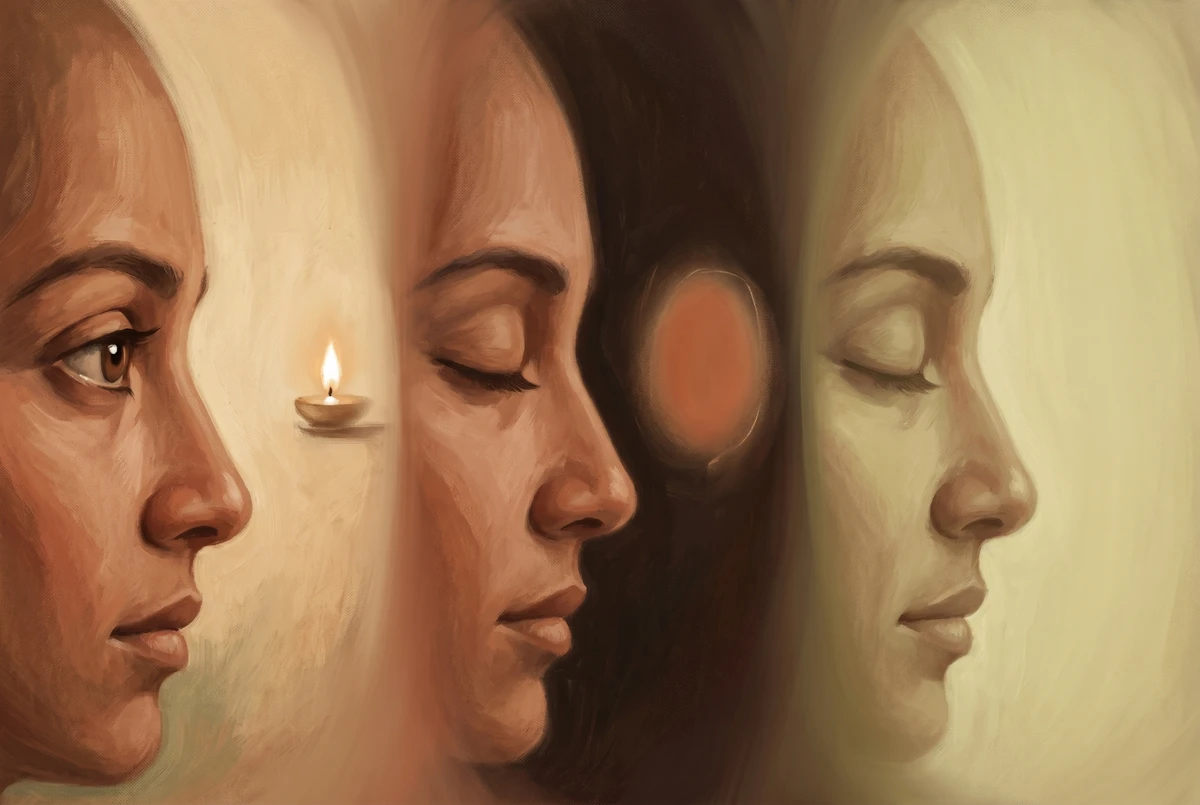
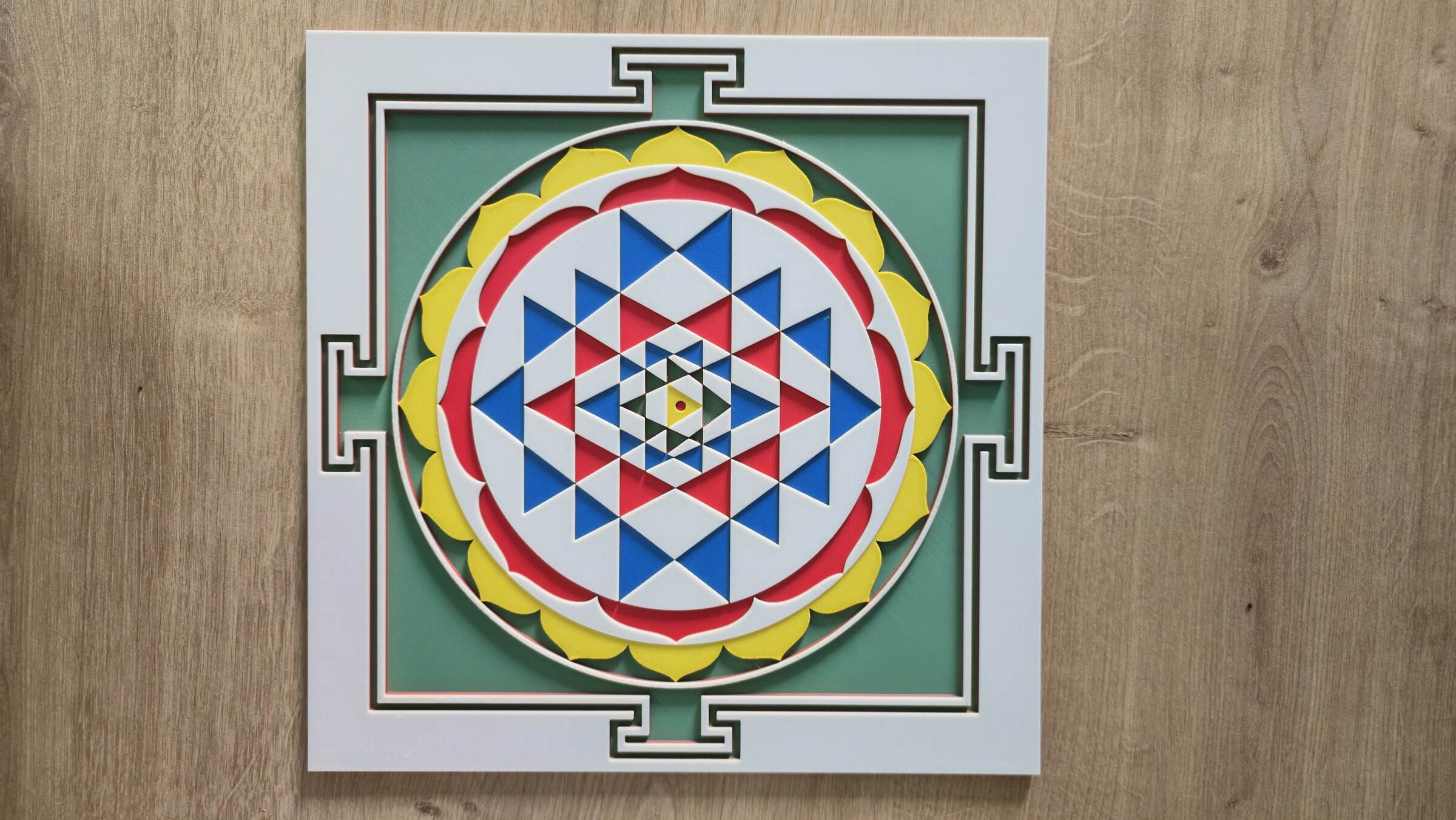
Yantra meditation follows the same arc. The geometric complexity of a yantra provides enough structure for dharana; the hypnotic depth of its nested forms facilitates the shift into dhyana; and the central bindu point, the dimensionless origin at the center, serves as a natural focal point for the dissolution into samadhi. 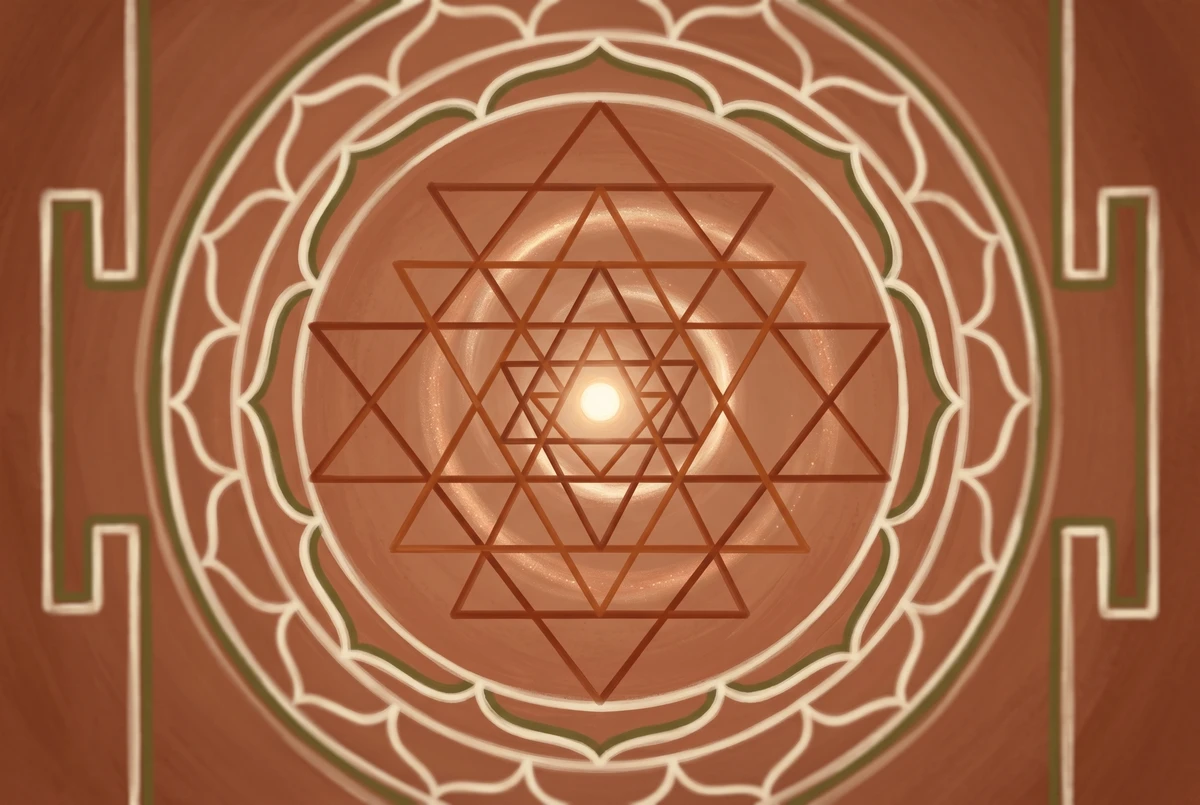
Common misconceptions
“Samadhi is the goal of yoga.” The Yoga Sutras never say this. Safronov points out that the entire third chapter discusses applying samyama (the dharana-dhyana-samadhi process) to various objects: the sun, the moon, the navel center, the pole star. Each application produces specific knowledge. If samadhi were the final destination, there would be no reason to discuss applying it to different objects. The actual endpoint Patanjali describes is kaivalya (liberation), which appears in Book IV as a natural result of sustained practice, not a single peak experience.
“You need to master dharana before you can experience dhyana.” The three are phases, not prerequisites. What develops with practice is duration and depth, not access. A beginner who sits long enough will encounter moments of each.
“Samadhi means leaving the body, entering a trance, or stopping the breath.” Patanjali’s definition of samadhi (Yoga Sutra 3.3) mentions none of these. The association comes from later traditions that conflated Patanjali’s cognitive samadhi with pranayama-induced states described in Hatha Yoga texts and with tantric and Shaiva practices. Patanjali’s samadhi, as Safronov argues, involves no trance, no respiratory standstill, no out-of-body experience. It is the moment cognition reflects “only the meaning of objects, their subject matter.”
“Dhyana and samadhi can’t be practiced.” This is technically true but practically misleading. You can’t force them to happen, just as you can’t force yourself to fall asleep. But you can dim the lights, lie down, and breathe slowly. In meditation, you can sit long enough, remove distractions, and sustain dharana. The transitions arise from the conditions, not from willpower.
Neuroscience supports this framing. Lutz, Slagter, Dunne, and Davidson (2008) studied meditators ranging from intermediate (average 19,000 hours of practice) to expert (average 44,000 hours) using brain imaging. They found an inverted U-curve: brain regions responsible for attention regulation showed less activation in expert meditators than in intermediate ones. The experts weren’t trying harder. They had passed through the effortful stage into what the researchers called “effortless concentration,” the neural signature of what Patanjali would call dhyana. As the authors wrote: “Progress in this form of meditation is measured in part by the degree of effort required to sustain the intended focus.”
“Meditation apps teach dhyana.” By definition, they can’t. Dhyana requires an unbroken flow of attention toward a single object. A narrator introducing new prompts, shifting your focus, and filling silence breaks that flow. Most guided meditation operates at the level of pratyahara (sensory withdrawal) and early dharana.
How the earlier limbs prepare you
Dharana, dhyana, and samadhi are limbs 6, 7, and 8 for a reason. They depend on what comes before.
Pratyahara (limb 5, withdrawal of the senses) is the immediate prerequisite. You can’t sustain dharana if every sound in the room hijacks your attention. Pratyahara doesn’t mean blocking the senses. It means the senses stop dictating where attention goes. In trataka, pratyahara happens naturally: the act of gazing at a single point reduces sensory input to one channel.
The earlier limbs play supporting roles. Yama and niyama (ethical conduct, limbs 1 and 2) reduce mental agitation at the source. A chaotic life produces a chaotic mind on the cushion. Asana (posture, limb 3) and pranayama (breath regulation, limb 4) stabilize the body and energy so you can sit long enough for the transitions to occur.
These limbs aren’t strictly sequential, but there’s a logic to the order. Without the foundation, dharana becomes white-knuckling through distraction, dhyana becomes daydreaming, and samadhi becomes fantasy.
What to do with this knowledge
Stop grading your meditation. A session of pure dharana, where you spend twenty minutes pulling your attention back from thoughts, is not a failed meditation. It’s the foundation. The pulling-back is the practice.
Notice transitions without grasping at them. The moment you think “I’m in dhyana!” you’ve introduced a new thought and pulled yourself out of it. The shift is recognized after the fact, not during.
Lengthen your sessions gradually. Short sits rarely give the mind enough time to move beyond dharana. The transitions tend to occur after the mind has been wrestled back many times and finally settles. If you consistently sit for five or ten minutes, try twenty.
Use trataka as a training ground. The physical act of gazing gives dharana a concrete anchor. The external-to-internal progression (open eyes on the flame, then closed eyes on the afterimage, then the void) maps onto the dharana-dhyana-samadhi arc in a way that’s easier to recognize than formless meditation.
Trust the process Patanjali described. Forced attention becomes effortless attention becomes insight. It’s not a mystical escalator. It’s the mechanism behind every moment of genuine understanding. You’ve already done it. Now you know what to call it.
Sources
- Lutz A, Slagter HA, Dunne JD, Davidson RJ. (2008). “Attention regulation and monitoring in meditation.” Trends in Cognitive Sciences, 12(4):163–169. doi: 10.1016/j.tics.2008.01.005. PMID: 18329323. PMCID: PMC2693206.
- Raghavendra BR, Singh P. (2015). “Immediate effect of yogic visual concentration on cognitive performance.” Journal of Traditional and Complementary Medicine, 6(1):34–36. doi: 10.1016/j.jtcme.2014.11.030. PMID: 26870677. PMCID: PMC4738033.
- Vivekananda, Swami. (1896). Raja Yoga, Chapter VII: “Dhyana and Samadhi.” Complete Works of Swami Vivekananda, Volume 1.
- Safronov, Andrey. (2013). “Dharana, Dhyana, Samadhi: Basic Considerations.” Ukrainian Federation of Yoga (in.yoga).
- Habash, Connie. (2017). “Trataka – the Yogic Art of Gazing.” Awakening Self.
- Csikszentmihalyi, Mihaly. (1990). Flow: The Psychology of Optimal Experience. Harper & Row.
- Patanjali. Yoga Sutras, Book III (Vibhuti Pada), Sutras 3.1–3.6. Translations referenced: Swami Satchidananda, I.K. Taimni, Edwin Bryant.
- Swatmarama. Hatha Yoga Pradipika, Chapter 2, Verses 31–32. Translation: Swami Muktibodhananda (1998), Bihar School of Yoga.