What to Do Instead of Breath Meditation
Miha Cacic · April 11, 2026 · 7 min read

If every meditation app tells you to “focus on the breath” and every time you try, you end up controlling your breathing, feeling anxious, or spacing out within seconds, the problem isn’t you. The breath is one meditation anchor among many, and it has specific failure modes that other anchors sidestep.
Why breath meditation doesn’t work for you (the short version)
Respiration is the only autonomic function where voluntary control is so complete that you can override it indefinitely. Your heartbeat and digestion run on autopilot. But the breath sits at the intersection of the brainstem’s automatic rhythm generator and the motor cortex’s voluntary control. The moment you pay attention to it, the motor cortex gets involved. The instruction “watch your breath but don’t control it” is, for many people, neurologically contradictory. 
This isn’t a personal failing. It’s how respiration works. At a 2018 mindfulness teacher training, Tamara Russell, a clinical psychologist and neuroscientist at King’s College London, described breath meditation as an advanced practice, not a beginner-friendly one, because interoception (sensing what’s happening inside your body) is among the hardest sensory channels to work with.
Most people who struggle with breath meditation fall into one of four patterns:
- The controller. The second you notice your breath, you start managing it. You can’t observe without interfering.
- The drifter. The breath is too uniform to hold your attention. Your mind wanders before you finish an inhale.
- The panicker. Focusing on your chest and throat triggers anxiety or tightness. You feel worse, not calmer.
- The dissociator. Closing your eyes and turning inward makes you feel disconnected or spaced out, not grounded.
Which one you are determines which alternative will work. Not every alternative solves every problem.
Choose your alternative by what goes wrong (not by what sounds nice)
Every meditation anchor can be placed on two axes: internal versus external, and low-stimulation versus high-stimulation. The breath is internal and low-stimulation, the hardest quadrant for beginners. Once you know what’s failing, you can pick an anchor that avoids that specific failure.
| Your problem | What you need | Try this |
|---|---|---|
| You control the breath (observer-control paradox) | An external anchor you can’t influence by watching it | Candle flame, ambient sound, geometric pattern |
| The breath is too boring (drifter, ADHD) | Higher stimulation with subtle change | Flickering flame, complex visual pattern, walking meditation |
| Breath awareness triggers anxiety | An outward-facing anchor, away from the chest and throat | Sound (environmental or singing bowl), visual gazing, walking |
| Closing your eyes is the problem | An open-eye practice | Trataka (candle or yantra gazing), walking meditation |
This framework draws on the work of Kristy Arbon, who categorizes meditation anchors along a spectrum from environment-expanding (sight, sound) to body-centered (interoception, proprioception). If your current anchor isn’t working, move along the spectrum rather than forcing it.
The neuroscience points in a similar direction. Brewer et al. (2011) found that experienced meditators showed default mode network deactivation across all meditation types studied. This suggests the core mechanism is sustained attention, not the specific object you attend to. A well-chosen anchor that lets you maintain genuine focus can produce the meditative effect.
Visual focus: trataka and Sri Yantra gazing
For people who can’t stop controlling their breath, the most direct alternative is a visual external anchor. In classical yoga, this practice has a name: trataka.
Trataka is one of the six shatkarmas (purification practices) listed in the Hatha Yoga Pradipika, Chapter 2, verses 31-32: “Being calm, one should gaze steadily at a small mark, till eyes are filled with tears. This is called Trataka by the acharyas.” The Gheranda Samhita lists it as the fifth shatkarma. Both texts place these practices before pranayama (breath work), not after. Trataka is foundational, not a workaround. 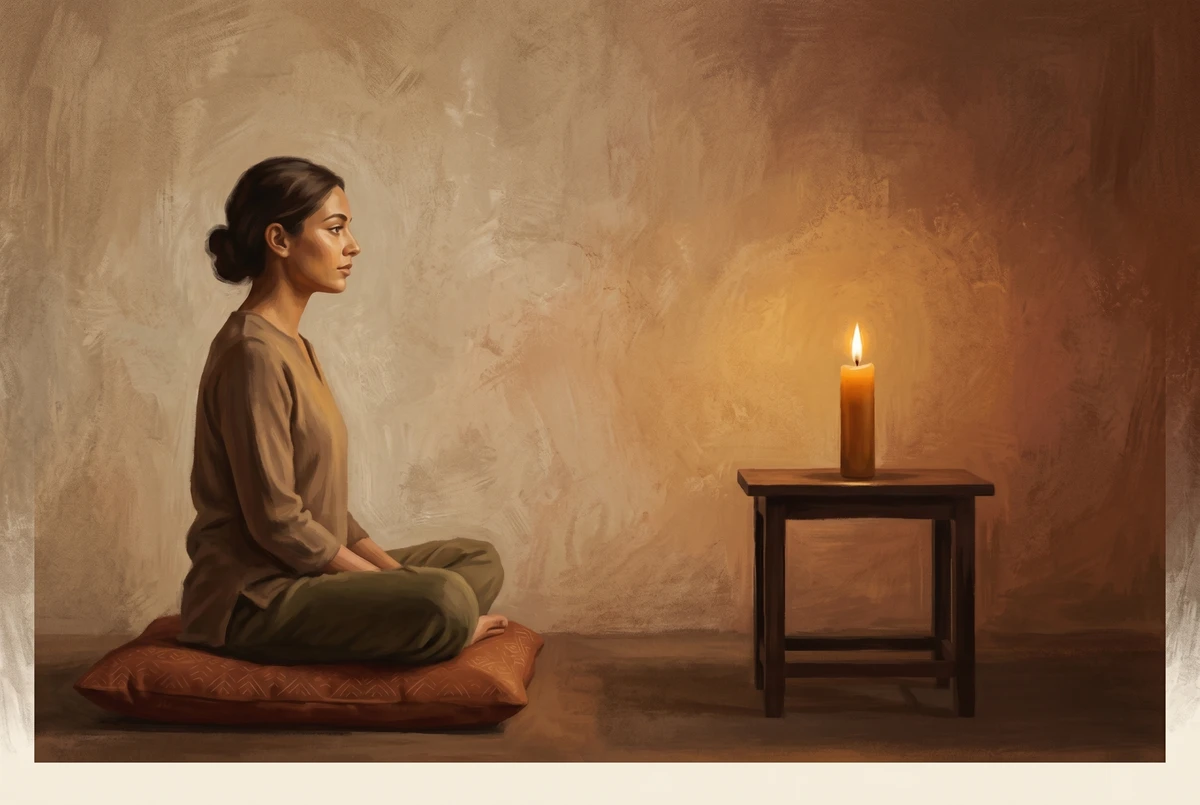
Why it solves the core problem. A candle flame or geometric pattern exists independently of you. Watching it doesn’t change it. The instruction is concrete (“look at this”) rather than paradoxical (“observe but don’t influence”). There’s nothing to control, so the observer-control paradox disappears.
Why it holds attention better than breath. A candle flame flickers. A Sri Yantra’s nested triangles reveal new geometric relationships as concentration deepens. This matters because the brain disengages from unchanging stimuli. As Arbon explains: “An object of awareness that changes is more accessible than one that does not change, simply because our brain is more likely to move toward its default mode of remembering and planning if we don’t have new stimulation to attend to.” The micro-novelty of a flame or the progressive complexity of a yantra keeps the default mode network at bay.
The eye-mind connection. Giovanni Dienstmann, drawing on neuropsychologist Marcel Kinsbourne’s research, describes the mechanism: “Distractions in the mind translate to micro movements in the eyes or eyelids, and vice-versa. Stillness of eyes brings stillness of mind, and vice-versa.” By stilling your gaze, you still your thinking. 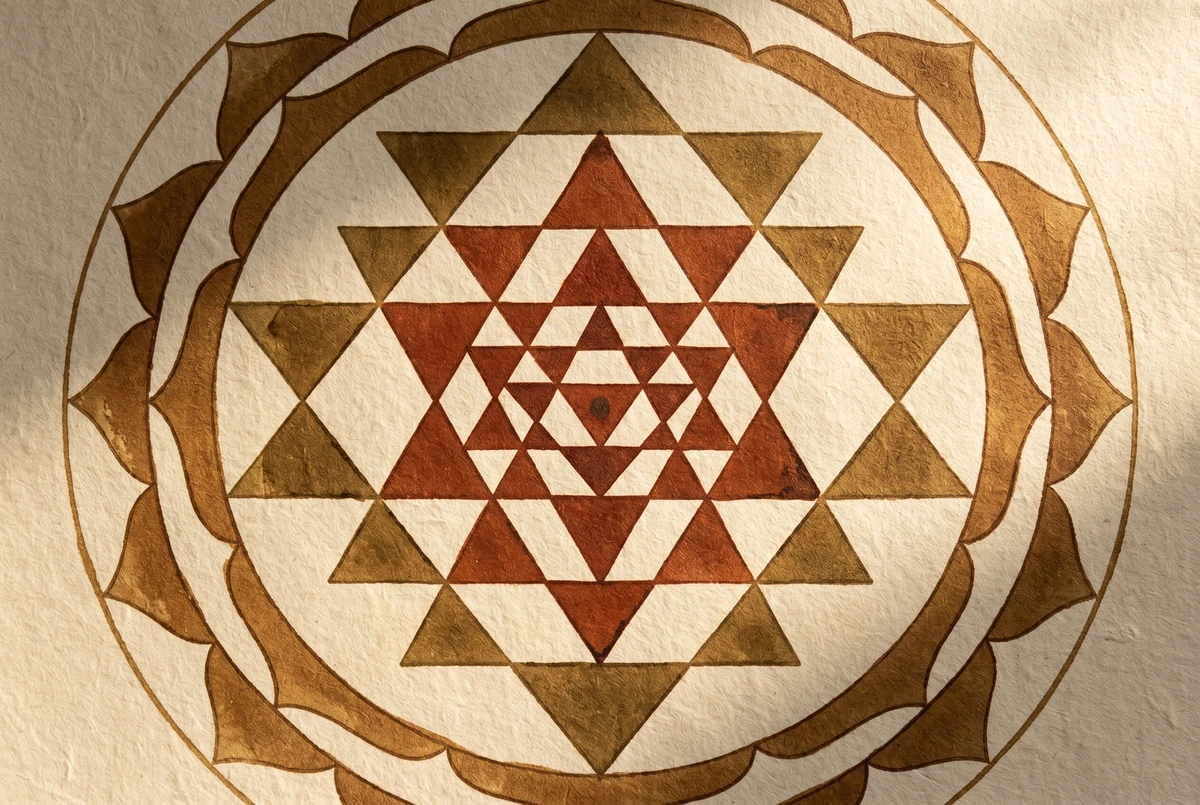
What the studies show. The research on trataka is modest in scale but consistent in direction:
- Raghavendra and Ramamurthy (2014) found that trataka shifted heart rate variability toward parasympathetic dominance (increased HF power, p<0.01; decreased LF power, p<0.01), with significant reductions in heart rate and breath rate.
- Talwadkar, Jagannathan and Raghuram (2014) ran a randomized study with 60 elderly participants and found significant improvements in working memory, selective attention, and executive function after 26 days of trataka practice.
- Raghavendra and Singh (2016) measured immediate cognitive effects: trataka significantly improved Stroop color-word test performance (p<0.001), indicating gains in selective attention and cognitive flexibility after a single session.
- A 2020 study in adolescents using the Hamilton Anxiety Scale found significant reductions in anxiety (p<0.0001) alongside improved cognitive performance.
- A randomized controlled trial on adults with primary hypertension found that a single 30-minute trataka session significantly reduced systolic blood pressure and heart rate compared to quiet sitting.
One honest caveat. The only head-to-head comparison of visual focus versus breath meditation (Sharma et al., 2022) found that breath meditation produced more EEG-measured calm-state time than external-point gazing in 34 healthy adults. But the sessions were only three minutes long, the participants were healthy volunteers without the observer-control problem, and the study measured a single EEG metric rather than anxiety, distress, or long-term outcomes. For someone who can use breath effectively, breath may produce faster calm. For the many people who can’t, trataka offers a path that breath doesn’t.
Built-in progress feedback. Unlike breath meditation, where you’re left guessing whether you’re “doing it right,” trataka gives you tangible markers. Your gaze stability improves over weeks. The after-image you see when you close your eyes (called antaranga trataka) becomes clearer and lasts longer. Eye watering decreases.
How to start. Sit at arm’s length from a candle or a printed Sri Yantra. Gaze softly at the flame or the central point of the pattern. When your attention drifts, notice that you stopped looking, and look again. Blink when you need to. After 2-3 minutes, close your eyes and observe whatever after-image appears. That’s a complete session.
Sound-based alternatives
If you’re more auditory than visual, or if you want to meditate with your eyes closed but can’t use the breath, sound is the next anchor to try. Sound is external, so you can’t control it by observing it. It solves the same core problem as trataka through a different sensory channel.
Ambient sound meditation. Pick one sound in your environment (a fan, birdsong, traffic) and treat it as your anchor. When your mind wanders, return to the sound. No app needed.
Mantra repetition. A repeated word or phrase (Om, “peace,” any word that doesn’t trigger associations) gives the mind something active to do. This solves both the controller problem (you’re busy repeating, not monitoring) and the drifter problem (the rhythm provides ongoing engagement). In the Sharma et al. (2022) EEG comparison, mantra and breath meditation produced statistically similar calm-state time, both outperforming external-point gazing, which suggests mantra is a viable substitute for breath when breath itself is the problem.
Singing bowl or resonance. The decay of a struck bowl, from loud to soft to silence, provides a natural arc of attention that guides concentration without effort. The change built into each strike prevents the brain from disengaging.
One note on internal sound. Some traditions practice nada yoga, listening for subtle sounds inside the body. This is closer to breath meditation than it looks: it’s body-centered and can be just as elusive for beginners. Save it for later. 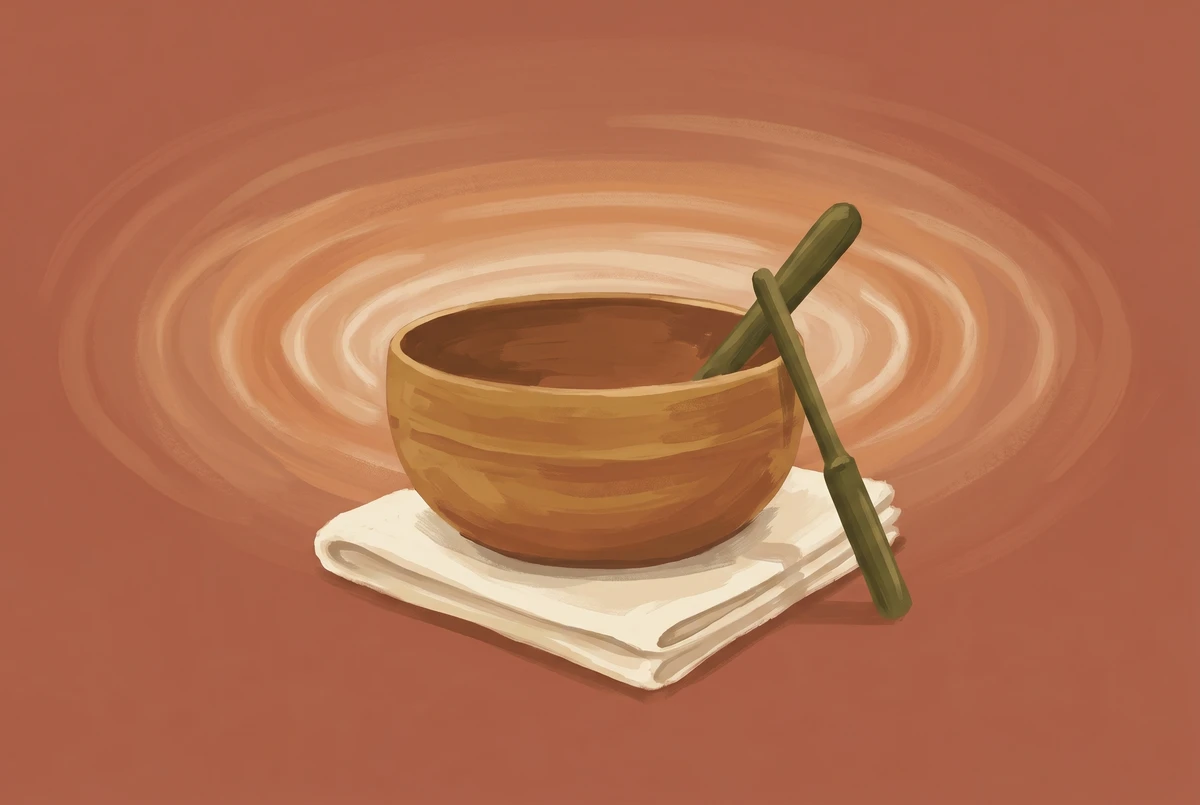
Movement-based alternatives
Some people struggle less with the breath and more with the stillness. If sitting quietly makes you restless or anxious, movement-based meditation may be a better starting point.
Walking meditation. Walk slowly and deliberately, paying attention to the soles of your feet on the ground. This anchor is body-centered but not interoceptive: it avoids the chest and throat area where emotions physically concentrate (Nummenmaa et al., 2014). Walking meditation can be particularly helpful for anxiety, because physical movement prevents the confined feeling that seated practice sometimes creates.
Tai chi and qigong. These are moving meditation traditions with centuries of practice behind them. The choreographed sequences provide structure that breath meditation lacks, and the complexity holds the drifter’s attention.
None of these are consolation prizes. Open-eye gazing is standard in Zen Buddhism. Walking meditation is central to Theravada practice. Tai chi has been practiced as moving meditation for centuries. Calling them “alternatives” is a concession to modern apps that have made seated breath meditation seem like the default. 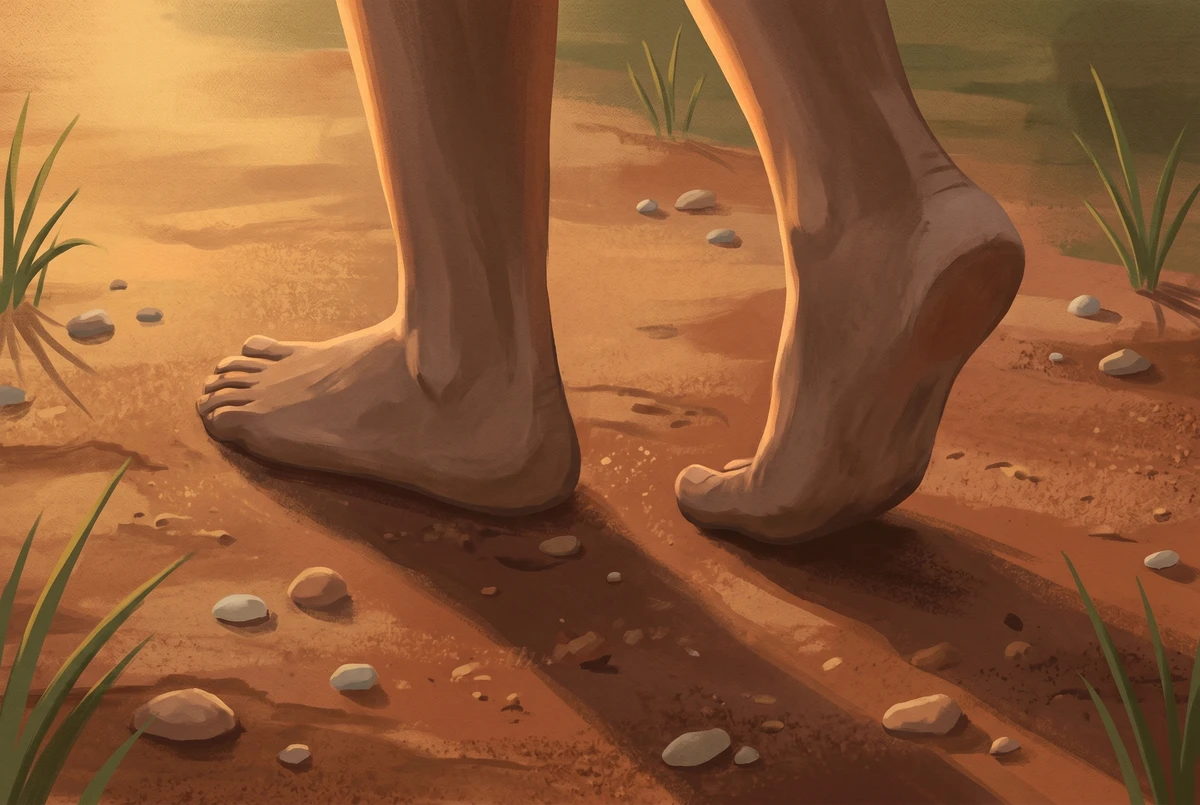
Body-based alternatives (that aren’t breath)
If you’re comfortable with body awareness but specifically struggle with the breath, you can redirect attention to body parts that carry less emotional charge.
Feet-first body scan. Start at your feet and scan upward. The feet carry far less emotional charge than the chest and throat (Nummenmaa et al., 2014), and you can stop before reaching the chest if needed. Ussher et al. (2014) found that even a brief 10-minute body scan produced immediate, measurable reductions in pain-related distress compared to a control condition.
Soles-of-the-feet meditation. Singh et al. developed this as a specific clinical technique: when distress arises, shift attention to the neutral point of your feet on the ground. In the original study and subsequent trials, this practice significantly reduced physical and verbal aggression across multiple phases. The mechanism is simple: the feet are as far from the chest and throat as you can get while staying in your body.
Hand and contact-point awareness. Focus on the sensations in your hands (temperature, tingling, pressure) or on where your body touches the chair or floor. Both use proprioception (position sense) rather than interoception (internal organ sense), which tends to feel grounding rather than exposing. These are practitioner-recommended anchors without dedicated research, but they follow the same principle: redirect attention away from the chest.
Practitioners report that some people who start with foot or hand awareness eventually work their way to the breath once they’ve built concentration through a less activating anchor.
A note on pushing through
You may have read advice to keep trying breath meditation, that discomfort is part of the process. This is sometimes true for mild restlessness. But for anxiety, trauma, or genuine distress, pushing through can make things worse.
Willoughby Britton, a clinical psychologist at Brown University, has spent over a decade documenting adverse meditation experiences. In a study of mindfulness-based program participants (spanning various meditation techniques, not breath alone), 58% reported adverse effects with negative emotional valence, and 37% reported negative impacts on daily functioning. The adverse effects included increased anxiety, re-experiencing traumatic memories, and dissociation.
None of this means meditation is dangerous. It means that the right anchor matters. If breath meditation is worsening your anxiety or triggering trauma responses, switching to an external anchor isn’t giving up. It’s the informed choice.
What you can start tonight
You don’t need to decide right now which practice to commit to. You need one 2-minute experiment.
The candle test. Light a candle. Sit at arm’s length. Look at the flame. When your attention drifts, notice you stopped looking, and look again. Two minutes. If this felt more natural than breath meditation, trataka is your practice.
The sound check. Close your eyes for one minute. Instead of searching for your breath, listen. How many distinct sounds can you hear? If this felt easier than breath focus, sound-based meditation is your path.
The walk test. Go outside. Walk slowly for five minutes, paying attention only to the feeling of your feet on the ground. If your mind stayed more settled than during seated breath meditation, start with walking meditation.
You’re not choosing the “best” alternative. You’re finding the anchor that your attention naturally settles on. There is only fit.
Sources
- Raghavendra BR, Ramamurthy V. (2014). “Changes in heart rate variability following yogic visual concentration (Trataka).” Heart India, 2(1):15–18. DOI: 10.4103/2321-449x.127975.
- Talwadkar S, Jagannathan A, Raghuram N. (2014). “Effect of trataka on cognitive functions in the elderly.” International Journal of Yoga, 7(2):96–103. PMCID: PMC4097909.
- Raghavendra BR, Singh P. (2016). “Immediate effect of yogic visual concentration on cognitive performance.” Journal of Traditional and Complementary Medicine, 6(1):34–36. DOI: 10.1016/j.jtcme.2014.11.030.
- Sharma K, Wernicke AG, Rahman H, Potters L, Sharma G, Parashar B. (2022). “A Retrospective Analysis of Three Focused Attention Meditation Techniques.” Cureus, 14(3):e23589. PMCID: PMC8967094.
- “Effectiveness of yogic visual concentration (Trataka) on cognitive performance and anxiety among adolescents.” (2020). Journal of Complementary and Integrative Medicine, 17(3). PMID: 32415824.
- Kusuma et al. “Immediate effect of trataka on blood pressure indices in individuals with primary hypertension.” Arterial Hypertension (Via Medica).
- Nummenmaa L, Glerean E, Hari R, Hietanen JK. (2014). “Bodily maps of emotions.” PNAS, 111(2):646–651. PMCID: PMC3896150.
- Brewer JA, Worhunsky PD, Gray JR, Tang YY, Weber J, Kober H. (2011). “Meditation experience is associated with differences in default mode network activity and connectivity.” PNAS, 108(50):20254–20259. PMID: 22114193.
- Britton WB, Lindahl JR, et al. (2022). “Defining and measuring meditation-related adverse effects in mindfulness-based programs.” Translational Psychiatry, 12:166. PMCID: PMC8845498.
- Singh NN, Wahler RG, Adkins AD, Myers RE. (2003). “Soles of the Feet: a mindfulness-based self-control intervention.” Research in Developmental Disabilities, 24(3):158–169. PMID: 12850422.
- Ussher M, Spatz A, Copland C, et al. (2014). “Immediate effects of a brief mindfulness-based body scan on patients with chronic pain.” Journal of Behavioral Medicine, 37(1):127–134. PMID: 23129105.
- Arbon K. (2018). “Anchoring Awareness: Alternatives to the Breath.” HeartWorks Training.
- Russell T. Mindfulness in Motion. Watkins Publishing. ISBN: 9781780285818.
- Hatha Yoga Pradipika, Chapter 2, Verses 31–32. Pancham Sinh translation.
- Dienstmann G. “Trataka Meditation (Gazing Meditation).” Live and Dare.