Best Object for Trataka Meditation
Miha Cacic · April 11, 2026 · 6 min read
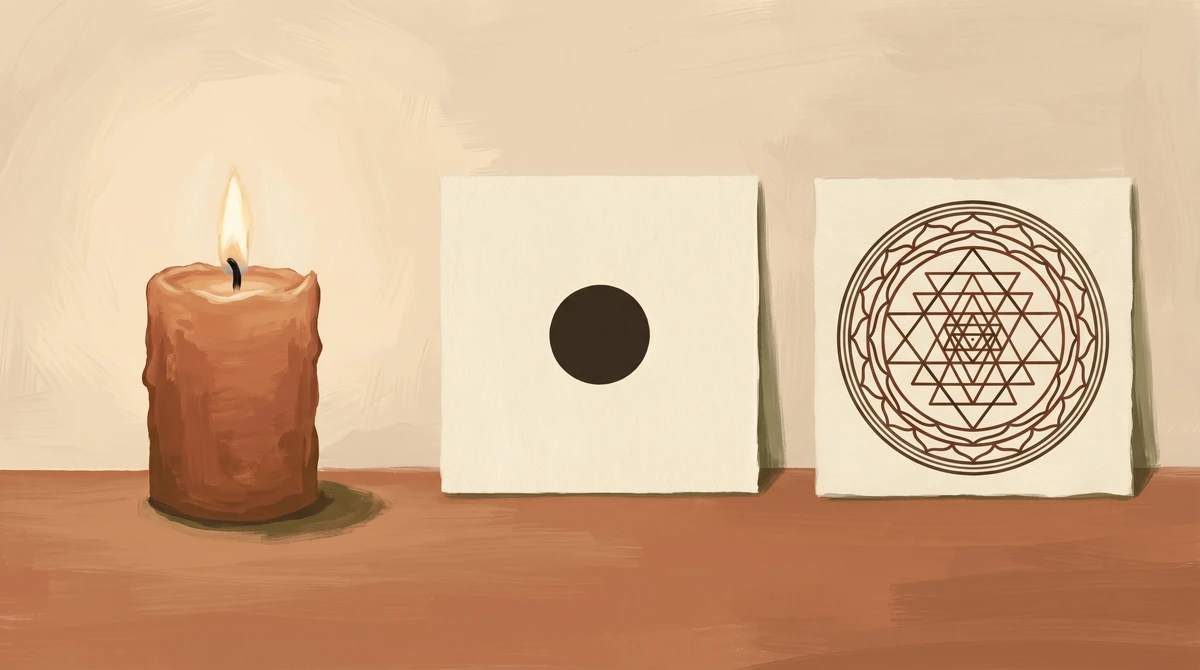
The candle flame is the best object for most trataka practitioners, and the reason is specific: it produces the strongest afterimage for internal practice. That afterimage (the vivid phosphene you see when you close your eyes after sustained gazing) is where the real meditative depth happens. But “best” depends on what you’re training. A black dot builds raw concentration without sensory crutches. A yantra adds contemplative depth. Each object creates a different experience because of how it interacts with your retina and attention.
Most articles on trataka objects read like a menu: candle, dot, yantra, moon, rising sun. Pick what resonates. That’s not helpful, because it ignores the mechanism that makes the choice matter. Here’s how each object actually works, and how to choose based on your stage of practice.
Why the object actually matters
Trataka has two phases. The first, bahiranga (external gazing), is what most people think of: you fix your gaze on an object without blinking until tears form. The second, antaranga (internal gazing), is where the practice deepens: you close your eyes and concentrate on the afterimage that remains. 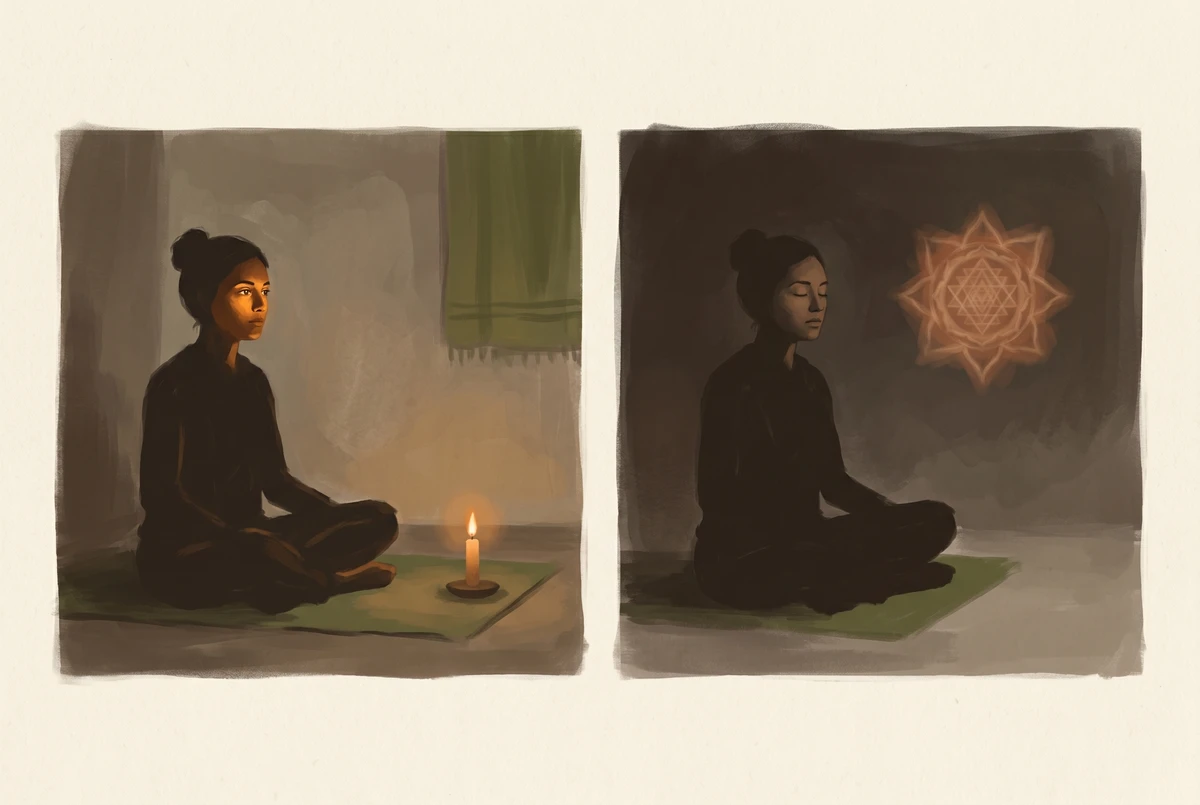
The quality of that second phase depends heavily on what your object does to your retina.
Objects that emit their own light (a candle flame, a ghee lamp) directly bleach the photopigments in your retinal cells. When you close your eyes, those depleted photoreceptors register as a bright, vivid phosphene, a glowing shape you can hold in your mind’s eye for roughly 30 to 60 seconds. That phosphene becomes your internal meditation object.
Objects that only reflect light (a black dot on white paper, a printed yantra) create contrast-based after-effects. The afterimage is fainter, fades faster, and requires more visualization effort to sustain.
This isn’t preference. It’s physiology. The Hatha Yoga Pradipika (2:31) defines trataka simply as gazing steadily at a “small mark” until tears flow, without specifying what that mark should be. The candle flame recommendation comes from Swami Satyananda Saraswati and the Bihar School tradition, which codified the three-stage progression: bahiranga (external gazing), antaranga (internal gazing at the phosphene), and shoonya (gazing into void). That progression is what makes the object choice meaningful, because your starting object shapes what happens at every subsequent stage.
No published study has directly compared different trataka objects head-to-head. All the research uses a single protocol (almost always candle flame). The argument for flame’s superiority rests on the physiological mechanism and centuries of teaching tradition, not controlled trials.
Candle flame: why it’s the default recommendation
The candle flame earns its status as the default for several reasons.
It draws the gaze without effort. Fire is visually magnetic. You don’t need willpower to keep looking at it the way you might with a static dot. The flame’s micro-movements are contained enough to maintain focal attention but dynamic enough to hold interest. This matters for beginners who haven’t yet built the concentration to sustain a fixed gaze.
It produces the strongest afterimage. Because the flame emits light directly into your photoreceptors, it creates the most vivid phosphene of any common trataka object. For a beginner, this means the transition to antaranga (internal) trataka is immediate and obvious. You close your eyes and the glowing image is simply there, giving you something concrete to focus on. No imagination required.
It produces tears faster. The Hatha Yoga Pradipika defines successful bahiranga trataka as gazing “until tears flow.” A bright flame in a dim room triggers tear production sooner than a low-contrast reflected object, because the luminous intensity is higher.
The research, though limited, supports it. Swathi, Bhat, and Saoji (2021) found that candle-flame trataka significantly improved visuospatial working memory in a group of 41 young adults (Cohen’s d = 0.74 on forward total score), while simple eye exercises produced no improvement over baseline. The researchers proposed that focused attention on the flame activates the prefrontal cortex in a way that passive eye movement cannot. This is one study with a small sample, not a definitive verdict, but it’s the strongest evidence that the flame’s demands on focused attention produce measurable cognitive effects.
It works in a minimal setup. A single candle in a dark, draft-free room. Flame at eye level, about 50 to 75 cm away. That’s the entire apparatus. 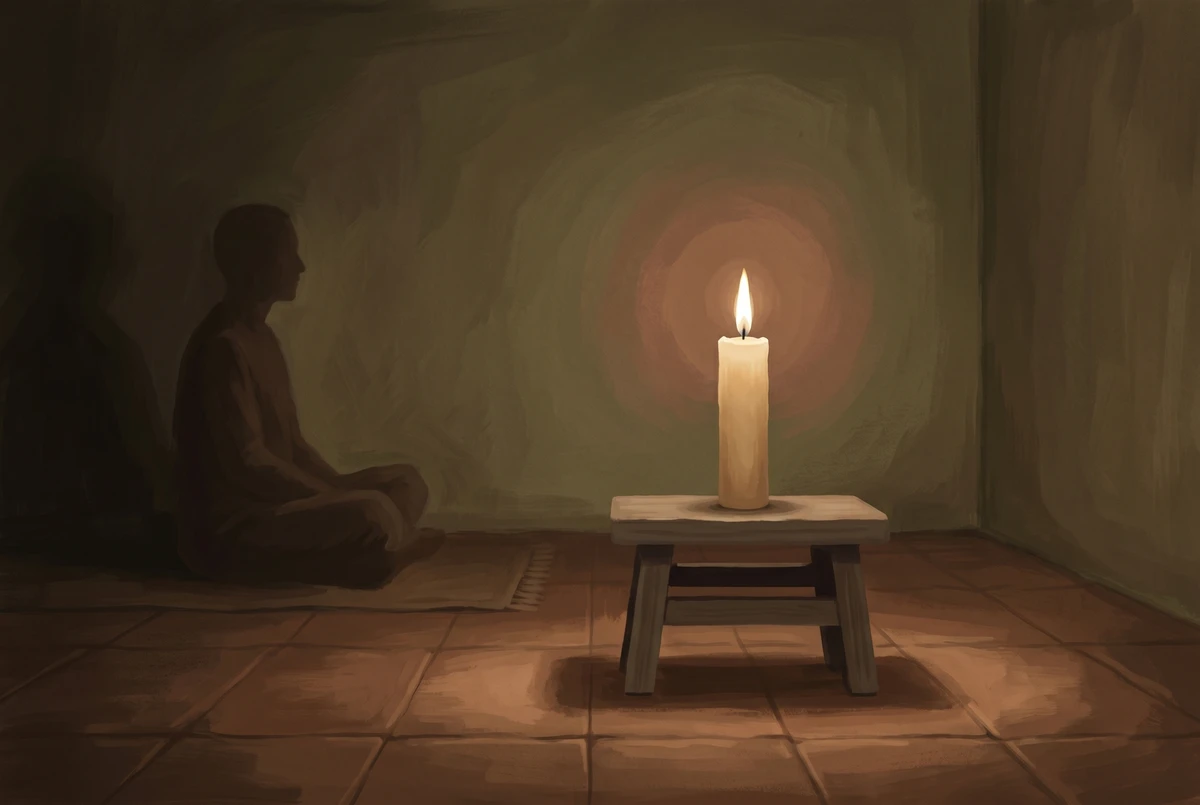
Practical notes: Use a proper candle with a stable wick, not a tealight (too low, too flickery). A ghee lamp works identically and some practitioners find its light softer and steadier. The flame should be still; if it dances, your environment has too much airflow.
Safety: Flame trataka is contraindicated for people with epilepsy, cataracts, glaucoma, or severe photosensitivity. Some teachers advise rotating to a different object every two months to avoid prolonged photoreceptor stress. This “two-month rotation” is traditional practical wisdom rather than a clinically documented threshold, but it’s sensible caution.
Black dot: pure concentration without the crutch
The black dot strips trataka down to its essence: sustained external attention with almost no sensory reward.
A dot on white paper produces minimal afterimage. There’s no vivid phosphene to chase when you close your eyes. This is not a disadvantage; it’s the point. With a black dot, you’re training pure dharana (concentration) rather than phosphene-following. The practitioner who masters dot trataka builds visualization capacity from scratch, generating internal images through effort rather than retinal mechanics.
This makes the black dot better suited for three situations:
When you want harder concentration training. The flame’s afterimage is scaffolding. It holds your internal attention for you. The dot removes that scaffolding. If you can sustain internal focus on a faint or absent afterimage, you’ve built genuine one-pointed concentration.
When you can’t use flame. People with epilepsy (flickering light is a seizure trigger), cataracts, glaucoma, or severe light sensitivity can practice dot trataka safely. There are no documented contraindications for gazing at a non-luminous object.
When your environment doesn’t allow a candle. Bright room, daytime, shared space, travel. A black dot on a piece of paper taped to the wall at eye level works anywhere. High contrast matters: a dark dot (1-2 cm diameter) on a clean white background, well-lit by ambient light. 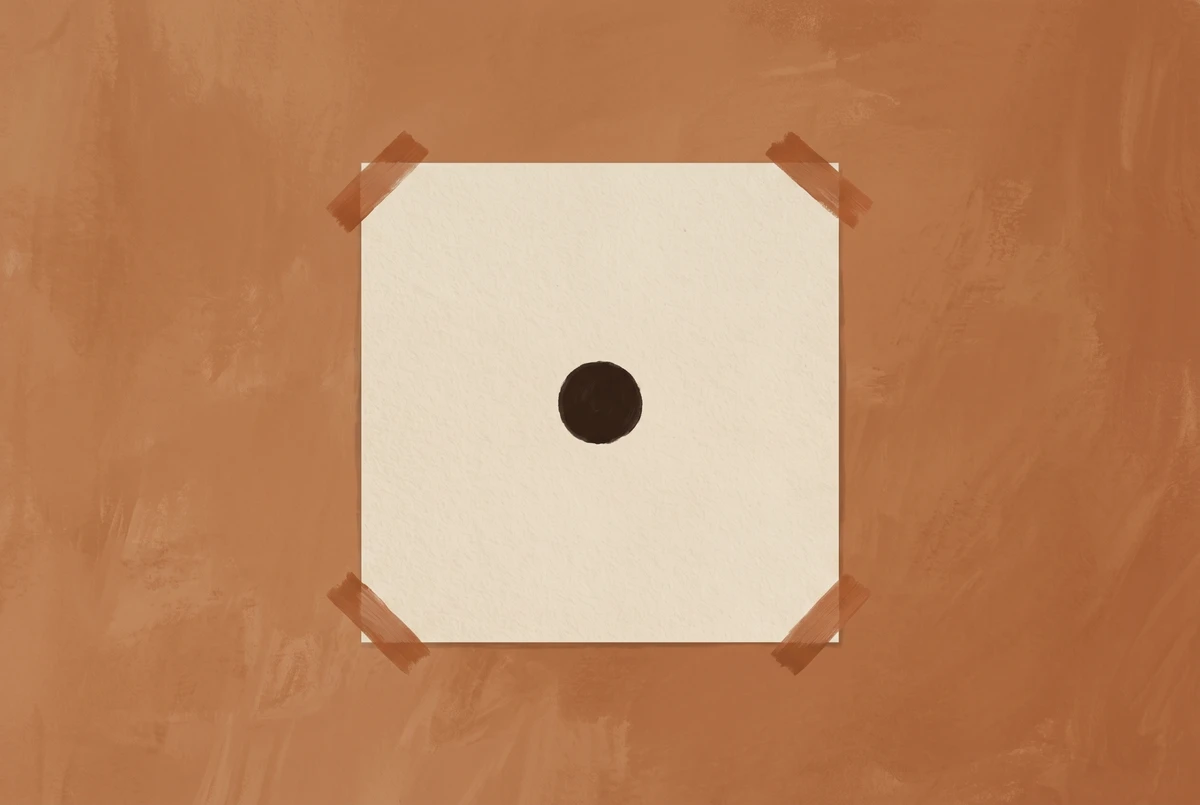
The dot is not inferior to the candle. It trains a different capacity. Practitioners who begin with the candle flame and later move to the dot often report the transition as humbling, because they realize how much they were relying on the phosphene rather than their own attention.
Yantra: when concentration meets contemplation
A yantra, particularly the Sri Yantra, transforms trataka from a concentration exercise into something closer to contemplation.
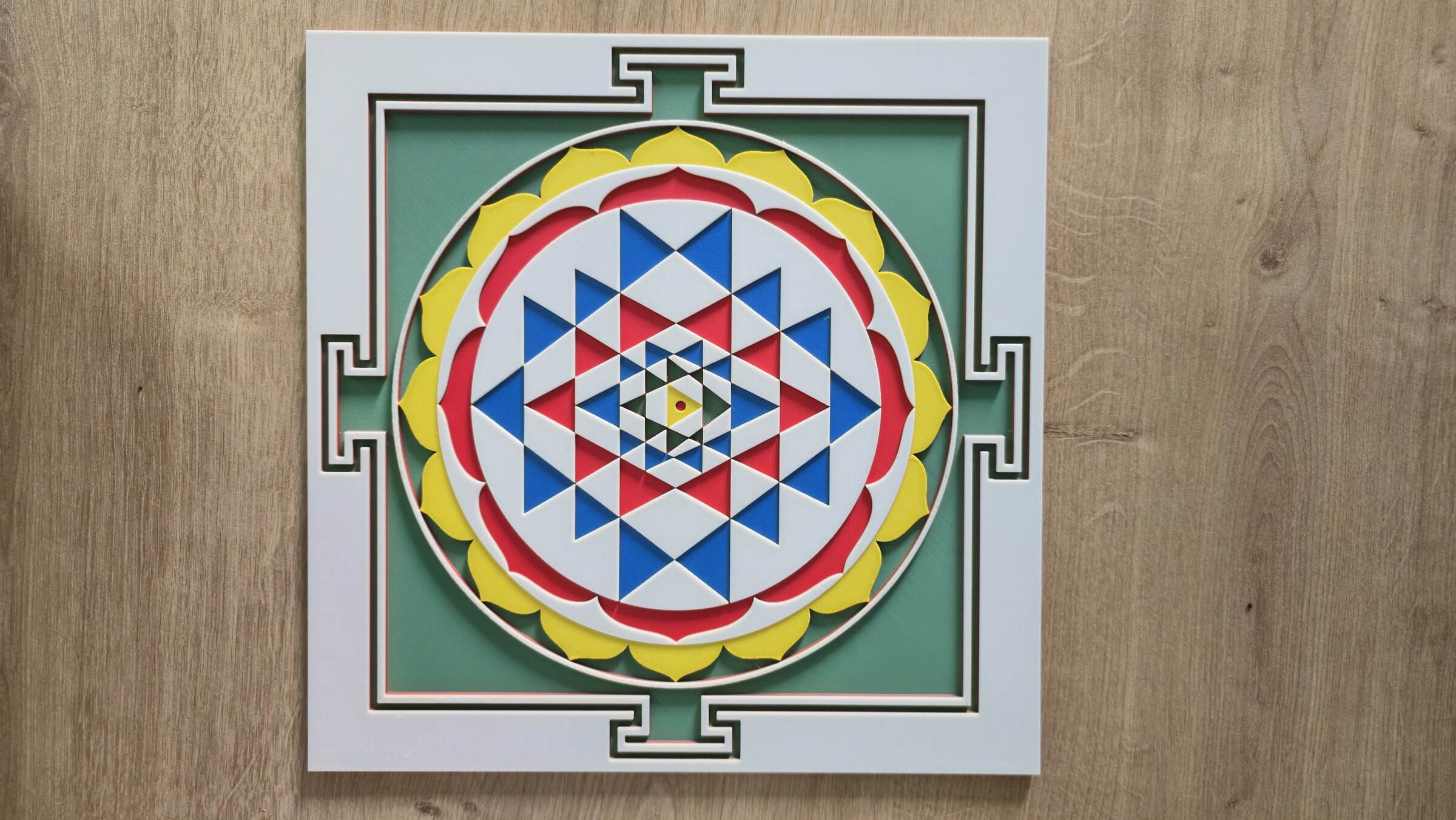
The difference is structural. A candle flame or dot is featureless: there’s nothing to explore, only something to hold. A yantra is geometrically complex: nine interlocking triangles, 43 smaller triangles, concentric lotus petals, all organized around a central point (the bindu). The geometry gives the mind something to move through rather than merely grip. 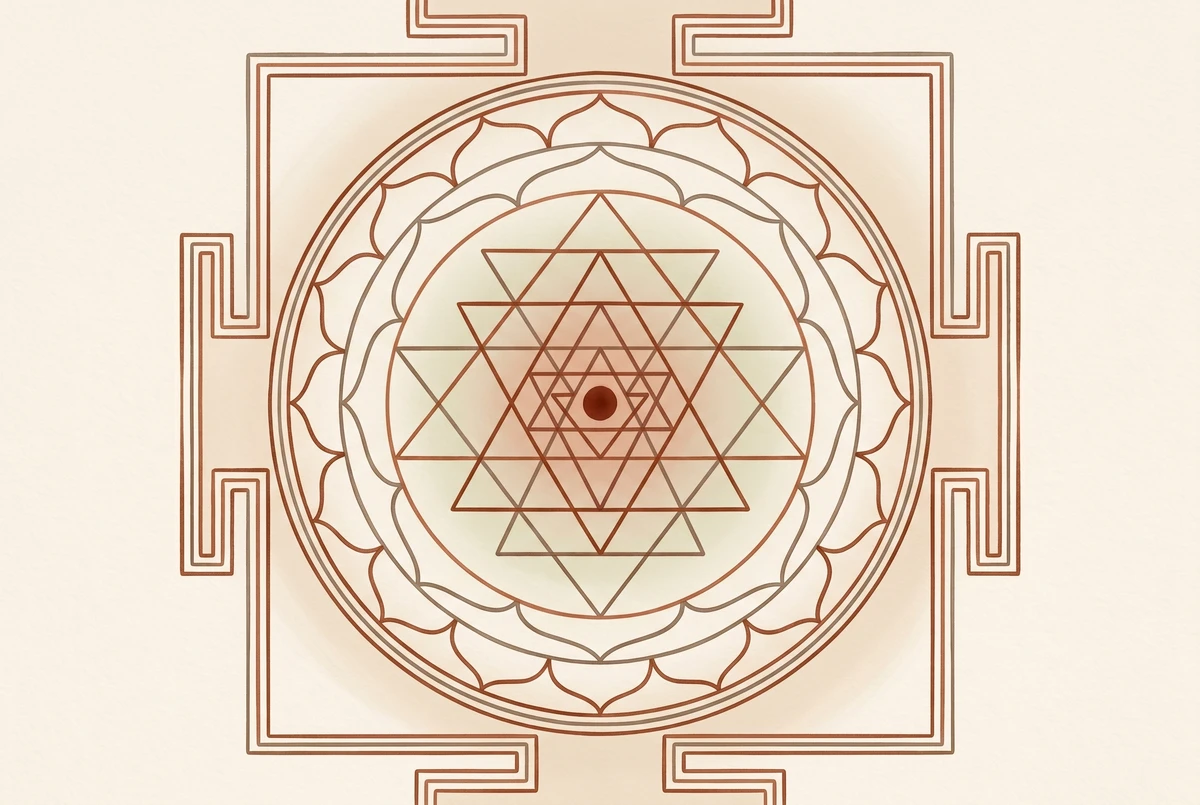
The traditional practice: gaze at the bindu at the center. The peripheral geometry (triangles, petals, gates) is absorbed passively by your visual field. Over time, the practice naturally deepens as the mind follows the yantra’s structure inward, from outer gates to inner triangles to the central point.
The afterimage behaves differently here. A printed black-and-white yantra initially produces a faint phosphene, much weaker than a candle. But practitioners report that with consistent daily practice over weeks, the afterimage of the full yantra grows progressively stronger and more detailed. As one practitioner in the Shri Vidya tradition describes: “The after-image in your closed eyes will become stronger and stronger and eventually the entire Yantra will remain imprinted in your closed eyes as an after image.”
This is the yantra’s unique contribution: it builds an internal geometric map that serves as the object for extended antaranga trataka. A colored yantra produces complementary-color afterimages (a red triangle becomes green, blue becomes orange), which some traditions interpret as signs of deepening practice.
Yantra trataka is best suited for practitioners who already have some concentration ability and want to add a contemplative or spiritual dimension. It engages both focused attention (on the bindu) and diffuse awareness (of the surrounding geometry) simultaneously, a more sophisticated attentional demand than single-point gazing.
The College of Psychic Studies notes that “there is something very sacred about its web of interlocking triangles, something mysterious and incredibly impactful about the dot at the centre and the way the eye is drawn in.” That pull toward the center isn’t mystical marketing; it’s how the geometry is constructed. The yantra is designed to funnel attention inward. Trataka on a yantra works with that design.
On a screen: does digital trataka work?
People ask this constantly, and the honest answer is: it works poorly, for specific reasons.
The afterimage problem. A screen is technically self-luminous (it emits light), which should produce afterimages. But the backlight bleeds around your focal object, bathing your retina in diffuse light from the entire display surface. When you gaze at a dot or flame image on screen, your retina receives the focal object’s light plus the surrounding screen glow. The result: a washed-out, nonspecific afterimage of the whole screen rather than a clean phosphene of your meditation object. 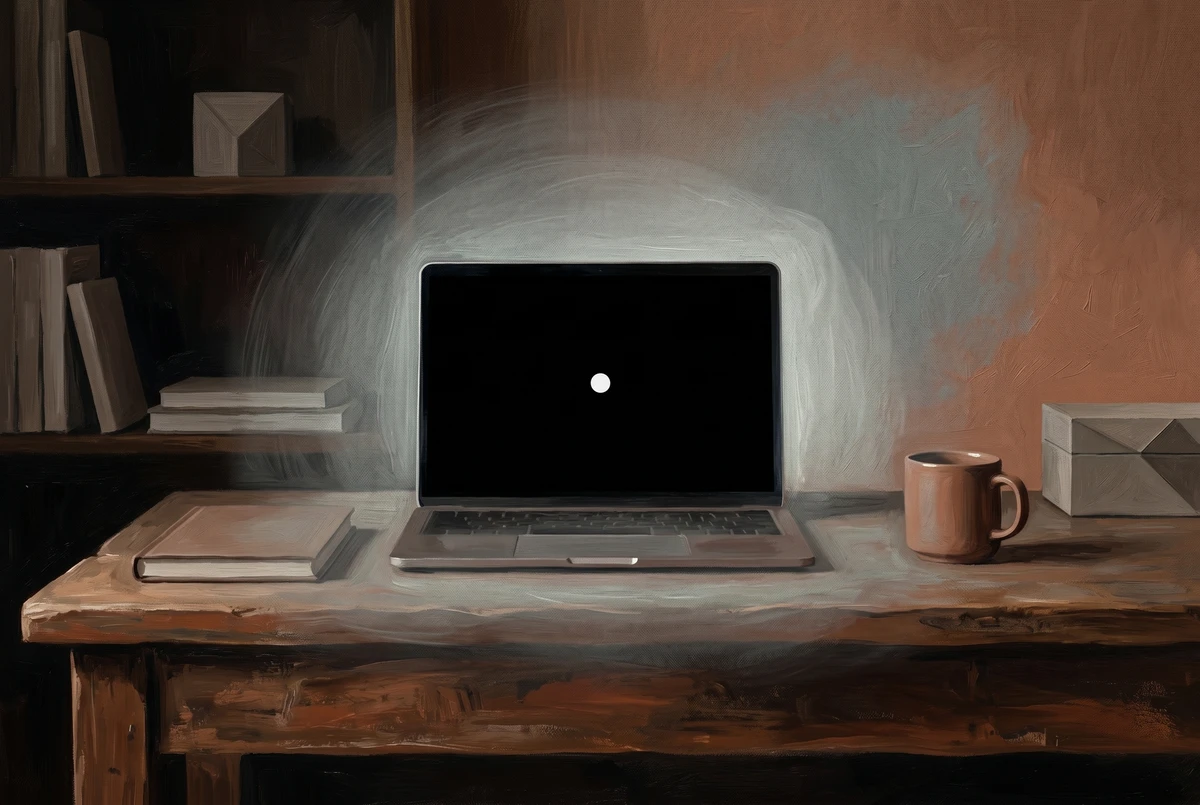
The eye strain paradox. Research consistently shows that trataka treats digital eye strain. Kumar et al. (2022) found significant improvement in digital eye strain symptoms after one month of trataka practice. Swathi, Saoji, and Bhat (2022) ran a randomized controlled trial showing that trataka reduces visual fatigue, visual strain symptoms, and mind-wandering in people with prolonged screen exposure. Trataka is a counterpoint to screen use. Doing it on a screen undermines the mechanism.
The attention problem. Screens are associated with scattered attention, notification-checking, and rapid context switching. Sitting in front of your laptop “meditating” while notifications are one swipe away creates a fundamentally different psychological container than sitting in a dark room with a single candle.
The exception. If you have no candle, no printer, no paper, and you want to try trataka right now: a simple white dot on a black background, displayed full-screen, in a dark room, with screen brightness set to minimum, is better than not practicing. But treat it as a stopgap, not a method.
How to choose: matching the object to your stage
Complete beginner: Start with a candle flame. The immediate, vivid afterimage gives you clear feedback that the practice is working. You’ll know what antaranga trataka feels like from your first session, and that experience motivates continued practice.
Want pure concentration training: Move to a black dot. Strip away the sensory support and build real attentional muscle. This is especially useful after a few months of candle trataka, when you want to test whether your concentration can stand on its own.
Seeking contemplative depth: Try a yantra (the Sri Yantra is the traditional choice). You’ll need existing concentration ability to sustain the gaze, but the geometric complexity rewards extended practice in ways a featureless object cannot.
Medical constraints (epilepsy, cataracts, glaucoma, photosensitivity): Black dot. No contraindications, no light-based risks.
Traveling or no supplies: A dot drawn on a piece of paper, taped to a wall. A coin. Any small, well-defined object at eye level.
Advanced objects (mirror, moon, rising sun, tip of the nose) exist in the literature but require guidance from a teacher. They are not DIY practices for unsupervised beginners.
The object matters less than you think it does, relative to consistency. Any object practiced daily for eight weeks will produce deeper results than the “perfect” object practiced sporadically. The candle flame is the best starting point because it creates the fastest feedback loop. But the practitioner who does dot trataka every morning without fail will outpace the one who buys an expensive yantra and practices twice a month.
Sources
- Swathi, P.S., Bhat, R., & Saoji, A.A. (2021). “Effect of Trataka (Yogic Visual Concentration) on the Performance in the Corsi-Block Tapping Task: A Repeated Measures Study.” Frontiers in Psychology, 12, 773049. PMC8718544.
- Kumar, K.U.D., Shetty, S., Amin, H., Rashmitha, A.P., & Rani, P.S. (2022). “Trataka Kriya in Individuals with Digital Eye Strain: A Pre–Post Experimental Design.” Journal of Health and Allied Sciences NU, 12(01): 53–56. doi: 10.1055/s-0041-1732811.
- Swathi, P.S., Saoji, A.A., & Bhat, R. (2022). “The role of trataka in ameliorating visual strain and promoting psychological well-being during prolonged use of digital displays: A randomized controlled trial.” Work, 71(4): 1035–1042. PubMed: 35095011.
- Talwadkar, S., Jagannathan, A., & Raghuram, N. (2014). “Effect of trataka on cognitive functions in the elderly.” International Journal of Yoga, 7(2): 96–103. PubMed: 25035618.
- Mallick, T., & Kulkarni, R. (2010). “The effect of trataka, a yogic visual concentration practice, on critical flicker fusion.” Journal of Alternative and Complementary Medicine, 16(12): 1265–1267. PubMed: 21091294.
- Svatmarama. (15th century). Hatha Yoga Pradipika, Chapter 2, Verses 31–32. Translation by Pancham Sinh (1914). sacred-texts.com.
- Swami Satyananda Saraswati. Dharana Darshan. Bihar School of Yoga.
- Swami Satyananda Saraswati. Asana Pranayama Mudra Bandha. Bihar School of Yoga.