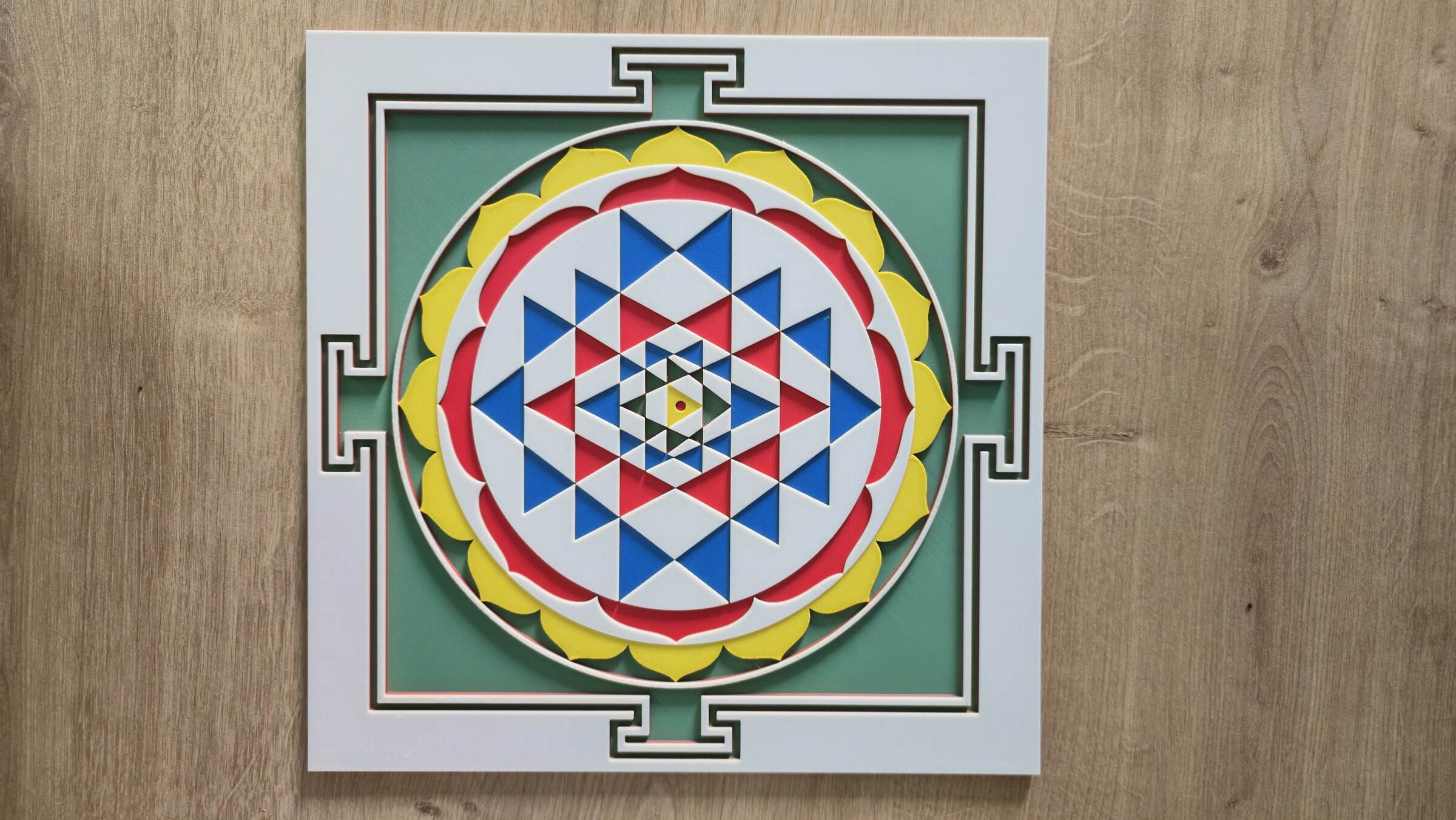
Mindfulness vs Concentration Meditation: How They Work Together
Miha Cacic · April 11, 2026 · 7 min read

Mindfulness meditation and concentration meditation aren’t two different types of meditation you choose between. They’re two skills you use together in every session. Concentration holds your attention on one thing. Mindfulness watches what’s happening and decides where to point that attention next. The balance between them shifts as you develop, and getting that balance right matters more than which “type” of meditation you practice.
What concentration meditation actually is
The Pali term is samatha, meaning “tranquility” or “calm abiding.” The practice is straightforward: pick a single object (your breath, a candle flame, a mantra, a visual point) and hold your attention on it. When the mind wanders, bring it back. That’s the entire technique.
The goal is what Buddhist texts call ekagatta, one-pointedness of mind: the ability to sustain unbroken attention on your chosen object. Bhante Gunaratana, in Mindfulness in Plain English, describes concentration as “forcing the mind to remain on one static point” and emphasizes the word force: “Concentration is pretty much a forced type of activity. It can be developed by force, by sheer unremitting willpower.”
But “concentration” is actually a misleading translation. The original Pali word samadhi comes from roots meaning “to put together” or “to collect” (sam + ā + dhā). It points to something closer to “composure” or “collected mind” than to the tight-jawed straining English speakers associate with “concentrating.” Thanissaro Bhikkhu consistently translates samadhi-related terms as “composure” rather than “concentration” in his Pali Canon translations. This distinction matters practically: many beginners approach concentration meditation thinking they need to muscle their minds into submission, which produces exactly the wrong kind of effort.
The breath is the most commonly taught concentration object, but the tradition offers many others: candle flame gazing (trataka), mantra repetition, kasina discs (colored objects used in classical Theravada), visualization, and counting practices. Trataka, described in the 15th-century Hatha Yoga Pradipika as gazing steadily at a small point “till eyes are filled with tears,” gives the mind a physical anchor through the eyes, making it particularly accessible for those who find breath attention too abstract. 
What mindfulness meditation actually is
The Pali term is vipassana, meaning “clear seeing” or “insight.” Where concentration narrows your attention to one point, mindfulness opens your awareness to observe whatever arises (thoughts, sensations, emotions, sounds) without reacting to any of it. You don’t chase pleasant experiences or push away unpleasant ones. You notice, acknowledge, and let go.
Jon Kabat-Zinn, who brought mindfulness into Western clinical settings through MBSR (Mindfulness-Based Stress Reduction), defined it as “the awareness that arises through paying attention, on purpose, in the present moment, non-judgmentally.” This aligns closely with how the Buddhist tradition describes vipassana: clear-eyed observation without reactive interpretation.
Most articles describe mindfulness as passive observation. It isn’t. Gunaratana calls mindfulness “the manager of the operation”: “It picks the objects of attention, and notices when the attention has gone astray. Concentration does the actual work of holding the attention steady on that chosen object.” Mindfulness decides where to look and flags when you’ve drifted. Concentration does the looking.
Thanissaro Bhikkhu makes a critical point in his essay “One Tool Among Many”: vipassana in the Pali Canon is not a technique. It’s a quality of mind. “Vipassana is not a meditation technique. It’s a quality of mind, the ability to see events clearly in the present moment.” The popular Western idea of “mindfulness meditation” as a specific sit-down practice is a modern adaptation. In the original texts, vipassana describes what your mind does when it’s working well, not a method you follow.
The standard analogy (and why it falls short)
You’ll find this comparison everywhere: concentration is a zoom lens focused on one point; mindfulness is a wide-angle lens taking in the whole scene. Gunaratana himself uses it: “Concentration is the lens. It produces the burning intensity necessary to see into the deeper reaches of the mind. Mindfulness selects the object that the lens will focus on and looks through the lens to see what is there.”
The analogy works as a starting point, but it breaks down in three ways.
First, a camera uses one lens at a time. In meditation, you use both skills simultaneously. You hold steady attention on an object (concentration) while maintaining awareness of when that attention drifts (mindfulness). They run in parallel, not in sequence.
Second, the analogy implies two separate cameras, making mindfulness and concentration sound like two different practices you alternate between. They’re more like the focus ring and the viewfinder on the same camera. Neither produces a useful result alone.
Third, and most importantly, the analogy misses the directional relationship. Mindfulness directs concentration. It decides where to aim the lens and notices when the lens has drifted off target. Without mindfulness, concentration is powerful but blind. Without concentration, mindfulness has nothing stable to see with.
A better image comes from Thanissaro Bhikkhu’s reading of the Yuganaddha Sutta (AN 4.170), where Ven. Ananda describes practitioners developing samatha and vipassana either in sequence or in tandem. Thanissaro captures this as two oxen pulling a cart: one can go before the other, or they can be yoked side by side, but the cart doesn’t move without both. Mac Djerf, a meditation instructor who has practiced since 1975, uses a similar image: samatha and vipassana are “two legs” of the practice. You walk with both. 
Why you can’t practice one without the other
Concentration without mindfulness makes you absorbed but unaware. Gunaratana calls this the “Stone Buddha” syndrome: “The meditator gets so tranquilized that he sits there like a rock.” You can zone out during a mantra repetition and enter a pleasant trance with no self-awareness. That feels good, but it doesn’t produce insight. Gunaratana goes further: “You can use concentration to dominate others. You can use it to be selfish.” Without mindfulness watching over the process, concentration is raw power without direction. 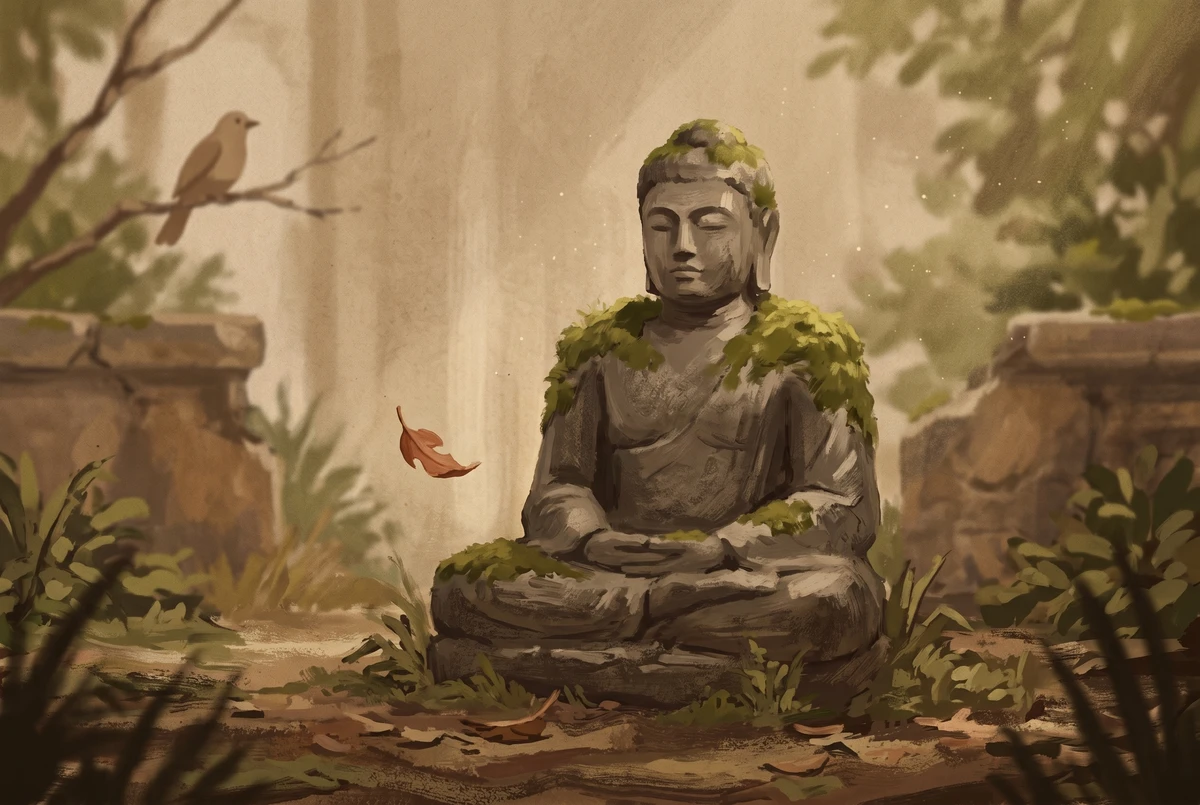
Thanissaro Bhikkhu adds the canonical perspective: without vipassana, samatha becomes “stagnant and dull.” Tranquility without clear-seeing is a comfortable fog.
Mindfulness without concentration leaves you scattered. You try to observe everything, but your attention is too weak to hold steady on anything. Gunaratana describes this as “a wildly oversensitized state.” In practice, you sit down to “be mindful” and feel like your mind is more chaotic than before. It isn’t. You’re now aware of how chaotic it always was, and you lack the concentration power to stay steady through it.
Thanissaro describes what can happen when vipassana pushes too hard without samatha’s stabilizing force: “nausea, dizziness, disorientation, and even total blanking out, that can occur when the mind is trapped against its will in the present moment.”
Together, they function. Concentration provides the power to hold attention steady. Mindfulness provides the intelligence to know where to direct that attention and what to do with what you see. The Pali Canon almost always mentions them as a pair. In the Samadhi Sutta (AN 4.94), the Buddha describes practitioners who have one quality but not the other as having incomplete practice, and prescribes that they seek out practitioners of the complementary skill to learn from.
The neuroscience confirms this pairing. Lutz, Slagter, Dunne, and Davidson, in their 2008 framework paper that established the scientific terminology for these practices, note that open monitoring (mindfulness) practice typically begins with focused attention (concentration) training: “OM practices share a number of core features, including especially the initial use of FA training to calm the mind and reduce distractions.” Concentration is the foundation mindfulness stands on.
How the balance shifts as you progress
When you’re starting out (first few months), emphasize concentration. The untrained mind is so active that trying to be openly mindful of everything will overwhelm you. Gunaratana is direct about this: “If you emphasize the awareness function at this point, there will be so much to be aware of that concentration will be impossible… Put most of your effort into one-pointedness at the beginning.”
The object doesn’t matter (breath, candle flame, mantra). What matters is the repeated act of returning attention when it wanders. A couple of months of this builds enough concentration power that mindfulness can begin to function.
As concentration stabilizes, shift emphasis toward mindfulness. Once you can hold attention on your object for several minutes without constant interruptions, start widening your awareness. Notice the texture of sensations around your object. Notice when concentration deepens or lightens. Begin to observe the process of meditation itself.
Lutz et al. (2008) confirm this is not just traditional teaching but how contemporary neuroscience characterizes the progression: “As FA advances, the well developed monitoring skill becomes the main point of transition into OM practice. One aims to remain only in the monitoring state, attentive moment by moment to anything that occurs in experience without focusing on any explicit object.”
The ongoing balancing act. Gunaratana’s practical rule: “If you find yourself getting frantic, emphasize concentration. If you find yourself going into a stupor, emphasize mindfulness.”
Some sessions call for more concentration (agitated day, racing mind), others for more mindfulness (you’re calm but feel dull or stuck). Learning to read your own state and adjust in real time is itself a mindfulness skill.
The long-term arc. Lutz et al. found an inverted U-shaped curve in brain activation during focused attention practice. Meditators with an average of 19,000 hours of practice showed stronger activation in concentration-related brain areas than novices. But meditators with 44,000 hours showed less activation than the 19,000-hour group. After enough practice, concentration required less neural effort to maintain. This lends neuroimaging support to the traditional claim that advanced samatha eventually ceases to feel like “forcing.” 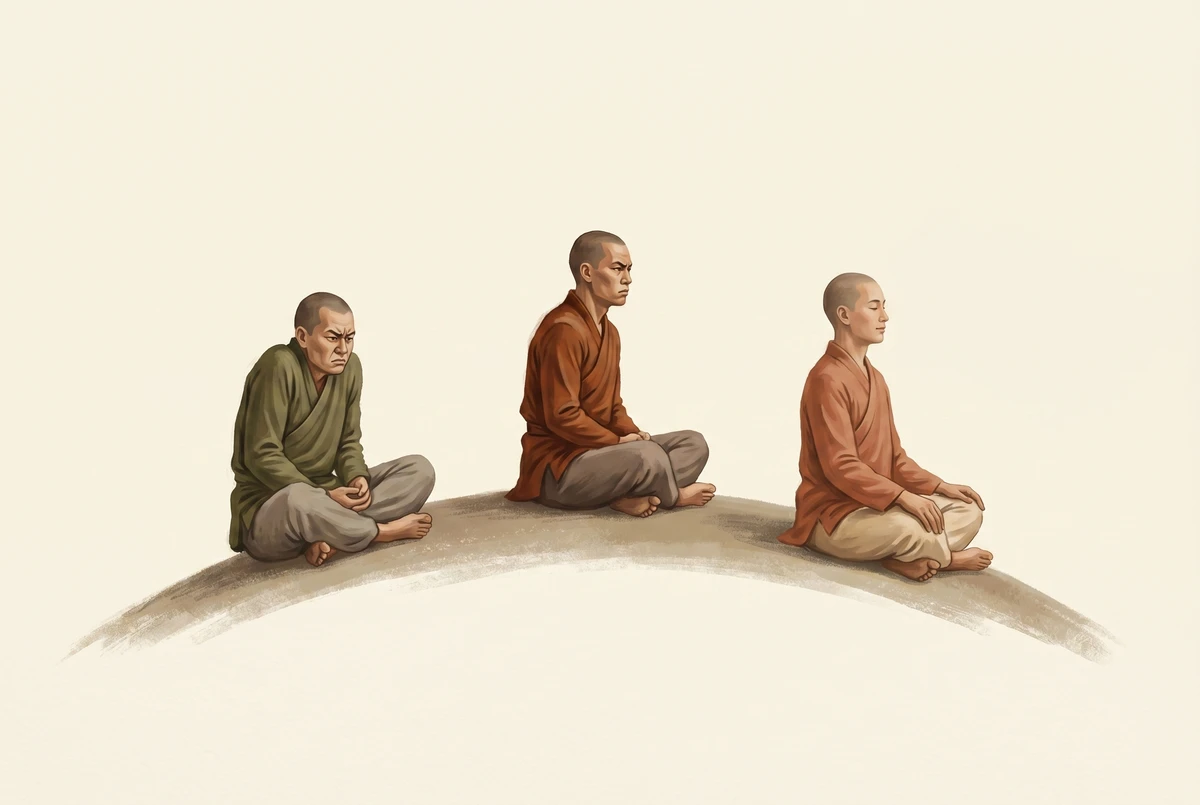
Concentration objects beyond the breath
Breath attention doesn’t click for everyone, and the tradition offers far more options than most introductions suggest.
Trataka (fixed-point gazing). You gaze steadily at a single visual point, traditionally a candle flame. The Hatha Yoga Pradipika, the oldest surviving Hatha Yoga text, classifies trataka as one of the six shatkarmas (purification practices foundational to Hatha Yoga). Visual thinkers who find breath attention too subtle to hold onto often find trataka more accessible.
Mantra. Repetition of a word or phrase. This works through the auditory channel the way trataka works through the visual channel. Present across traditions: japa in Hinduism, zikr in Sufism, centering prayer in Christianity (developed by Thomas Keating in the 1970s, based on the 14th-century Cloud of Unknowing).
Kasina practice. An ancient Buddhist technique using colored discs as concentration objects (earth, water, fire, wind, blue, yellow, red, white). Historically one of the most systematically taught concentration methods in classical Theravada, described in detail in Buddhaghosa’s 5th-century Visuddhimagga. Less commonly taught today but still practiced.
Body scan. A moving concentration technique where you systematically direct attention through the body, area by area. This combines concentration (holding attention on one region) with a mindfulness element (noticing what you find there).
The best concentration object is the one you can stay with. If breath doesn’t work for you, that isn’t a sign you’re bad at meditation. It means you need a different vehicle for the same skill.
When to emphasize which skill
Not which “type” to practice, but which emphasis serves you in different situations:
Before focused work: a few minutes of concentration-heavy practice (trataka, breath counting) to sharpen attention.
When stressed or emotionally activated: mindfulness emphasis, observing what’s arising without reacting. You need enough baseline concentration to avoid spiraling into the emotion you’re trying to observe.
During formal meditation sessions: both, in dynamic balance. Start with concentration to settle the mind, then gradually open toward mindfulness as the mind stabilizes.
In daily life: mindfulness emphasis. Gunaratana: “You can be mindful while solving problems in intensive calculus. You can be mindful in the middle of a football scrimmage. You can even be mindful in the midst of a raging fury.” True concentration meditation requires a dedicated sit. Mindfulness can go everywhere.
When feeling dull or flat: mindfulness emphasis to notice what’s beneath the surface dullness.
When feeling scattered or overstimulated: concentration emphasis to anchor and calm. Pick your object and keep returning.
Common misconceptions
“Concentration meditation is harder. Mindfulness is the easy one.” The opposite is true. Concentration is more intuitive for beginners because it gives you a clear task: focus on this thing, come back when you wander. Gunaratana writes that “mindfulness is more difficult to cultivate than concentration because it is a deeper-reaching function.” Observing your own mental process while it’s happening is subtler and more demanding than holding attention on a single point.
“Mindfulness just means watching your thoughts.” Mindfulness directs, notices, and discerns. It decides where attention goes and flags when it drifts. It’s not passive spectating; it’s the management layer of your attention.
“You should pick one style and stick with it.” The Pali Canon almost never mentions vipassana without pairing it with samatha. As Thanissaro Bhikkhu writes: “In the few instances where they do mention vipassana, they almost always pair it with samatha, not as two alternative methods, but as two qualities of mind.”
“Concentration meditation is only for Buddhists.” Every contemplative tradition has concentration practices. Trataka comes from the Hindu yoga tradition. Centering prayer is Christian. Sufi zikr uses divine name repetition. The mechanism (sustained single-pointed attention) is universal; the framing differs.
“If I can’t focus on my breath, I’m bad at meditation.” You might just need a different concentration object. Candle flame, mantra, visual point, body scan, walking count. The skill you’re building is the same regardless of the object you train it with.
Sources
- Lutz A, Slagter HA, Dunne JD, Davidson RJ. (2008). “Attention regulation and monitoring in meditation.” Trends in Cognitive Sciences, 12(4):163–169. PMID: 18329323. PMC: PMC2693206.
- Gunaratana, Bhante Henepola. (1991/2011). Mindfulness in Plain English, Chapter 14: “Mindfulness Versus Concentration.” Vipassana Fellowship online edition.
- Thanissaro Bhikkhu. (1997). “One Tool Among Many: The Place of Vipassana in Buddhist Practice.” Access to Insight (BCBS Edition).
- “Yuganaddha Sutta: In Tandem” (AN 4.170). Trans. Thanissaro Bhikkhu. Access to Insight (BCBS Edition), 2013.
- “Samadhi Sutta: Concentration (Tranquillity and Insight)” (AN 4.94). Trans. Thanissaro Bhikkhu. Access to Insight (BCBS Edition), 2013.
- “Maha-satipatthana Sutta: The Great Frames of Reference” (DN 22). Trans. Thanissaro Bhikkhu. Access to Insight (BCBS Edition).
- Swami Swatmarama. (~15th century CE). Hatha Yoga Pradipika, Chapter 2, verses 31–32. Trans. Pancham Sinh, 1914.
- Kabat-Zinn, Jon. (1990). Full Catastrophe Living: Using the Wisdom of Your Body and Mind to Face Stress, Pain and Illness. New York: Delacorte.