Shatkarmas: Six Purification Practices in Hatha Yoga
Miha Cacic · April 11, 2026 · 6 min read
The shatkarmas are six purification techniques from hatha yoga, described in the 15th-century Hatha Yoga Pradipika (HYP). Five of them are unmistakably physical: flushing your sinuses, cleaning your stomach, churning your abdomen, irrigating your colon, pumping your lungs. The sixth is trataka, where you stare at a candle flame until tears come. A concentration practice sitting in the same list as nasal irrigation seems like a mistake, but it’s not. It reveals the logic behind the entire system.
What the shatkarmas are and where they come from
Shat means six. Karma means action. The shatkarmas are six cleansing actions that prepare the body for pranayama (breath control) and, eventually, meditation.
Two texts define the system. The Hatha Yoga Pradipika, written by Svātmārāma in the 15th century, lists them in Chapter 2, verse 2.22: dhauti, basti, neti, trataka, nauli, and kapalabhati. The Gheranda Samhita, a late 17th-century teaching manual from northeast India, covers the same six but expands them with dozens of sub-techniques, particularly under dhauti.
The texts disagree on something fundamental: whether you need to do these at all.
The HYP is explicit. Verse 2.21 states: “If there be excess of fat or phlegm in the body, the six kinds of kriyas should be performed first. But others, not suffering from the excess of these, should not perform them.” If your body is already balanced, you skip the shatkarmas and go directly to pranayama. They are corrective, not mandatory.
The Gheranda Samhita takes the opposite position. It teaches a sevenfold yoga with shatkarma as the first stage, before asana, mudra, or anything else. In this framework, purification is a universal prerequisite. You must first make the vessel fit before filling it.
This is a genuine doctrinal difference, not a settled question. Most yoga articles present the shatkarmas as universally required. The HYP says otherwise.
The six practices: what each one actually involves
Neti: clearing the nasal passages
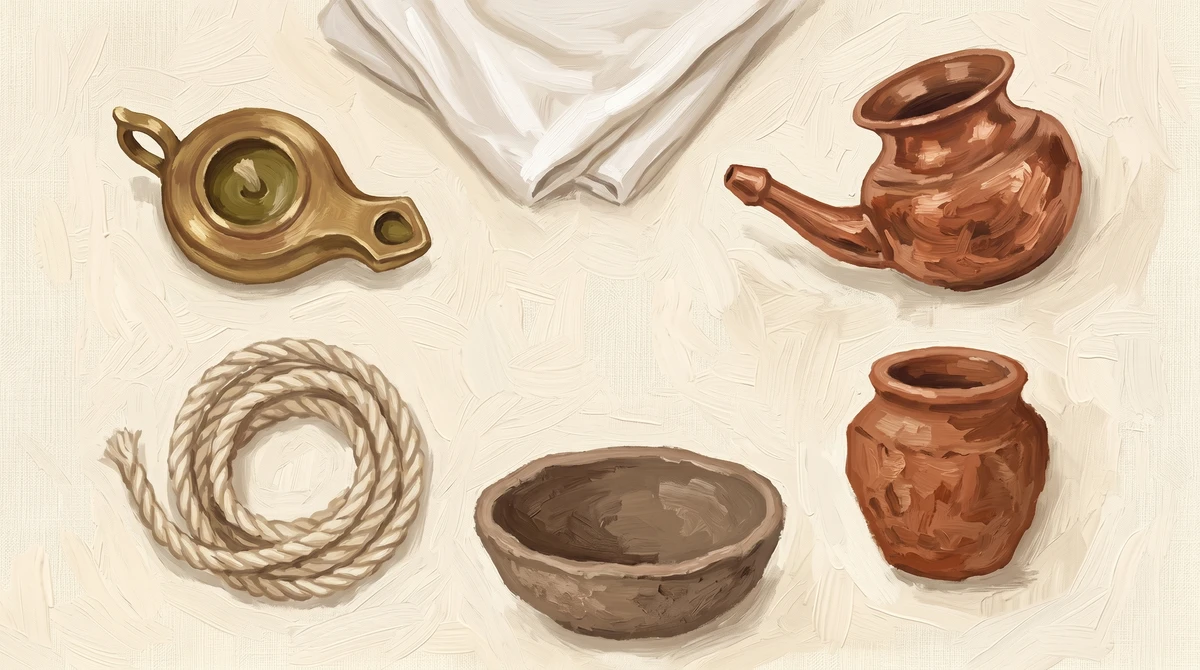
Neti cleans the nasal passages through two methods. Jala neti uses a small pot to pour warm saline water through one nostril and out the other. Sutra neti threads a waxed cotton cord (or rubber catheter) through the nose and out the mouth, then pulls it back and forth to clear the passages.
The yogic reasoning: the nostrils correspond to ida and pingala, the two primary energy channels (nadis), and clearing them is said to balance these channels. The physical mechanism is more modest but well-supported. The nasolacrimal duct connects the nasal cavity to the tear drainage system, so clearing the nose improves sinus drainage.
A 2020 review by Meera and colleagues found consistent evidence that jala neti helps with sinusitis, rhinosinusitis, and allergic conditions. The review also reports improved vision, though the mechanism (likely nasolacrimal clearance) remains anatomically plausible rather than clinically proven. A 2021 narrative review of all shatkarma research (Swathi, Raghavendra, and Saoji) confirmed neti’s benefits for rhinosinusitis across age groups. This is the most evidence-backed shatkarma, and the safest for home practice with basic precautions (use distilled or boiled water, correct saline concentration).
Dhauti: cleansing the digestive tract
Dhauti is the most varied category. The core practice is vamana dhauti (also called kunjal kriya): you drink several glasses of warm salt water, then induce vomiting to flush the stomach. The Gheranda Samhita expands dhauti into multiple sub-types, including danta dhauti (cleaning the teeth and tongue), karna dhauti (ear cleaning), and vastra dhauti, where a practitioner swallows a long strip of wet muslin cloth, lets it sit in the stomach, then slowly draws it back out to scrub mucus from the esophagus and stomach lining.
Shankhaprakshalana, a full intestinal wash where you drink salt water and cycle through specific asanas to push the water through the entire digestive tract, also falls under dhauti.
The traditional target is kapha (mucus and phlegm) accumulation in the upper digestive system. The Swathi et al. (2021) review found that dhauti enhances respiratory function and is useful in digestive disorders. Vastra dhauti and shankhaprakshalana require trained supervision. Vamana dhauti and the simpler sub-types (tongue scraping, teeth cleaning) do not.
Nauli: abdominal massage through muscle isolation
Nauli isolates the rectus abdominis muscles and rolls them side to side, creating a visible churning motion across the abdomen. Three stages: madhya nauli (central isolation), vama nauli (left rotation), and dakshina nauli (right rotation). 
The Hatha Yoga Pradipika treats nauli with unusual reverence. The Muktibodhananda commentary on verse 2.34 (Bihar School of Yoga, 1985) calls it “the crown of hatha yoga practices.” The older Pancham Sinh translation is more restrained: “an excellent exercise in hatha yoga.”
In 1924, Swami Kuvalayananda at the Kaivalyadhama Yoga Institute made nauli the subject of the first scientific experiment on any hatha yoga technique: an X-ray study of the abdominal muscle movements during the practice (Dallaghan & Tiwari, 2025). Despite that early start, nauli still has no peer-reviewed clinical trials (Swathi et al., 2021).
Nauli requires mastery of uddiyana bandha (the abdominal lock) as a prerequisite. Without it, the muscle isolation is impossible. Agni sara, a simpler practice of pumping the abdomen in and out, is the preparatory step. Expect months of practice before nauli clicks. If you’ve tried and failed, nothing is wrong with you.
Basti: cleansing the lower intestine
Traditional jala basti involves sitting in navel-deep water, inserting a small tube into the rectum, then using nauli and uddiyana bandha to create internal suction that draws water into the colon. The water is held, then expelled. Sthala basti uses air instead of water.
The key difference from a modern enema: traditional basti relies on the practitioner’s own muscular control (nauli) to draw in the water, rather than external pressure. This makes it both more difficult and more dependent on prior mastery of other shatkarmas.
The HYP (verse 2.26) specifies “navel-deep water” but does not require a river, despite what some modern commentaries claim. The text specifies the depth, not the source.
Like nauli, basti has no peer-reviewed clinical research (Swathi et al., 2021). Modern practitioners have largely replaced the traditional technique with standard enema procedures.
Kapalabhati: purifying the frontal brain
Kapalabhati (“skull-shining breath”) consists of rapid, forceful exhalations through the nose with passive inhalations. The HYP describes it as breathing “very quickly, like a pair of bellows of a blacksmith” (verse 2.35). 
A real point of confusion: kapalabhati is listed as a shatkarma in the HYP, but many yoga schools teach it as pranayama. Both classifications are textually defensible. The HYP places the shatkarma section within a chapter titled “On Pranayama.” Wikipedia categorizes kapalabhati under both shatkarma and pranayama. It’s a purification technique that uses breath as its medium, which puts it at the boundary between the two categories.
The Swathi et al. (2021) review found that kapalabhati activates the sympathetic nervous system, enhances cognition, and improves overall metabolism. Along with jala neti, it is the most commonly practiced shatkarma and safe for home practice after basic instruction.
Trataka: purifying through concentrated gazing
Trataka means steady gazing at a fixed point, usually a candle flame, without blinking until tears flow. This is bahiranga (external) trataka. You then close your eyes and hold the afterimage in your mind’s eye as long as possible. This is antaranga (internal) trataka. 
The physical effect: tears flush the eyes and nasolacrimal ducts. The mental effect: develops ekagrata (one-pointedness), the ability to sustain attention on a single object. The HYP claims it “eradicates eye diseases, fatigue, and sloth.”
The Swathi et al. (2021) review found that trataka enhances cognition and brings relaxation, but found no evidence supporting its role in treating eye disorders. The HYP’s claim about eye diseases does not hold up.
Why is a concentration practice classified as a body purification?
Why these six and not others: the logic of the system
Most articles present the shatkarmas as a list. But look at what each one targets: 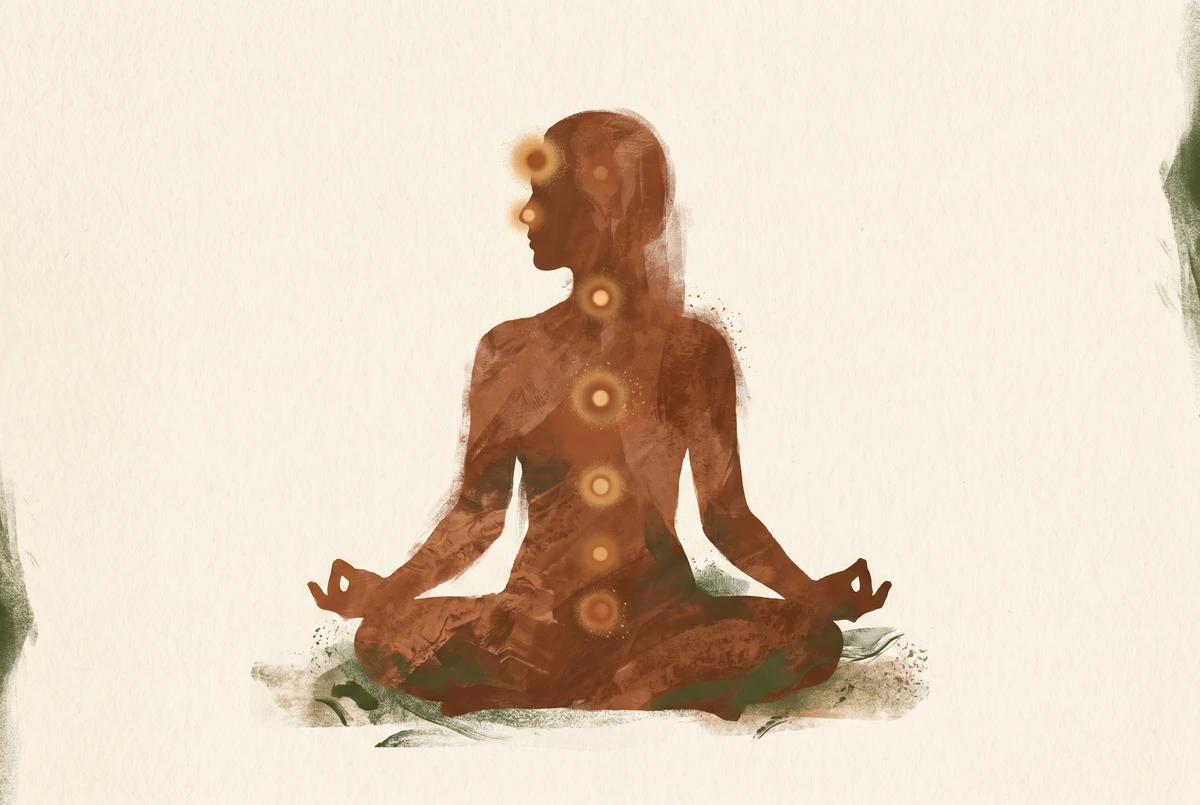
- Neti clears the nasal passages (the entry point for breath)
- Dhauti cleans the digestive tract (where food becomes fuel)
- Nauli churns the abdominal organs (the traditional seat of agni, metabolic fire)
- Basti flushes the colon (the endpoint of digestion, a major site of waste accumulation)
- Kapalabhati pumps the lungs and stimulates the frontal brain (where breath meets the nervous system)
- Trataka trains the capacity for sustained focus (where sensory input meets attention)
The six form a progression from the body’s physical openings to the mind itself. In the yogic framework, each removes a category of obstruction to the flow of prana: blocked channels, undigested matter, sluggish organs, accumulated waste, dull respiration, scattered attention. Clear all six and the body becomes a fit container for pranayama to direct prana into the central sushumna channel.
This is why a concentration technique belongs in a purification list. Trataka is not anomalous. It purifies the instrument of attention, the final obstruction in the sequence.
The tradition didn’t fully agree that six was the right number. The Hatha Ratnavali, a later hatha yoga text, criticizes the HYP for describing only six shatkarmas and adds two more: cakri (rectal dilation) and gajakarani (esophageal wash). But the six from the HYP became the canonical list, and the progression they describe (physical entry point to mental clarity) is the logic that held.
Shatkarma, pranayama, and the path to meditation
The HYP places the shatkarmas at the start of a progression: purification, then pranayama, then pratyahara (sense withdrawal), dharana (concentration), dhyana (meditation), and samadhi (absorption). The logic: if the nadis (energy channels) are clogged, pranayama cannot direct prana into the central sushumna channel.
But the HYP undercuts its own sequence. Verse 2.37 states: “Some teachers do not advocate any other practice, being of opinion that all impurities are dried up by the practice of pranayama.” Even within the tradition that codified the shatkarmas, there were teachers who considered them unnecessary.
What this means practically: if you practice pranayama or meditation without first doing the shatkarmas, you’re not violating a universal rule. You’re following one textual tradition over another. Both have historical authority.
Shatkarma vs. panchakarma: the yoga-Ayurveda overlap
Neti and basti appear in both shatkarma (yoga) and panchakarma (Ayurveda’s “five actions”), which causes genuine confusion. The practices share names but differ in nearly everything else.
Panchakarma is a clinical treatment. Ayurvedic practitioners administer it at specialized centers, often over days or weeks. It treats disease. The procedures (therapeutic vomiting, purgation, enemas, nasal administration, and bloodletting) are performed on the patient, not by the patient.
Shatkarma is self-practice. You do it yourself as part of your yoga routine. The goal is not treating illness but removing physical obstructions so that pranayama and meditation can work. A yogic basti using nauli-generated suction and an Ayurvedic basti administered with herbal decoctions are different procedures with different purposes, even though they share a name.
Which shatkarmas are practical for modern practitioners
Not all six shatkarmas are equally relevant to someone practicing yoga today. An honest assessment:
Accessible (safe for regular home practice): Jala neti with a neti pot, kapalabhati, and trataka. These can be learned from clear instruction (a workshop, a good teacher, or reliable video demonstration) and practiced independently. Jala neti has the strongest research support of any shatkarma. Kapalabhati and trataka are widely practiced without reported safety concerns.
Intermediate (learn with a teacher, then practice independently): Agni sara and nauli require months of dedicated practice and hands-on correction from an experienced teacher. Simple dhauti techniques like tongue scraping (jihva dhauti) are accessible, but vamana dhauti (salt water vomiting) benefits from initial guidance.
Advanced or primarily historical (require expert supervision): Vastra dhauti (cloth swallowing), traditional jala basti (internal suction in water), and shankhaprakshalana (full intestinal wash). These are taught in intensive yoga training settings, not in casual home practice. Few practitioners will do them, and that’s fine.
The blanket “you need a guru for all shatkarmas” warning that appears on nearly every yoga website doesn’t match the actual risk profile. The warning likely originates in the Bihar School tradition, which classifies all shatkarmas as requiring personal instruction. That makes sense for vastra dhauti and traditional basti. It does not make sense for using a neti pot. The medical literature on jala neti (Meera et al., 2020) raises no safety concerns for home use beyond standard precautions. 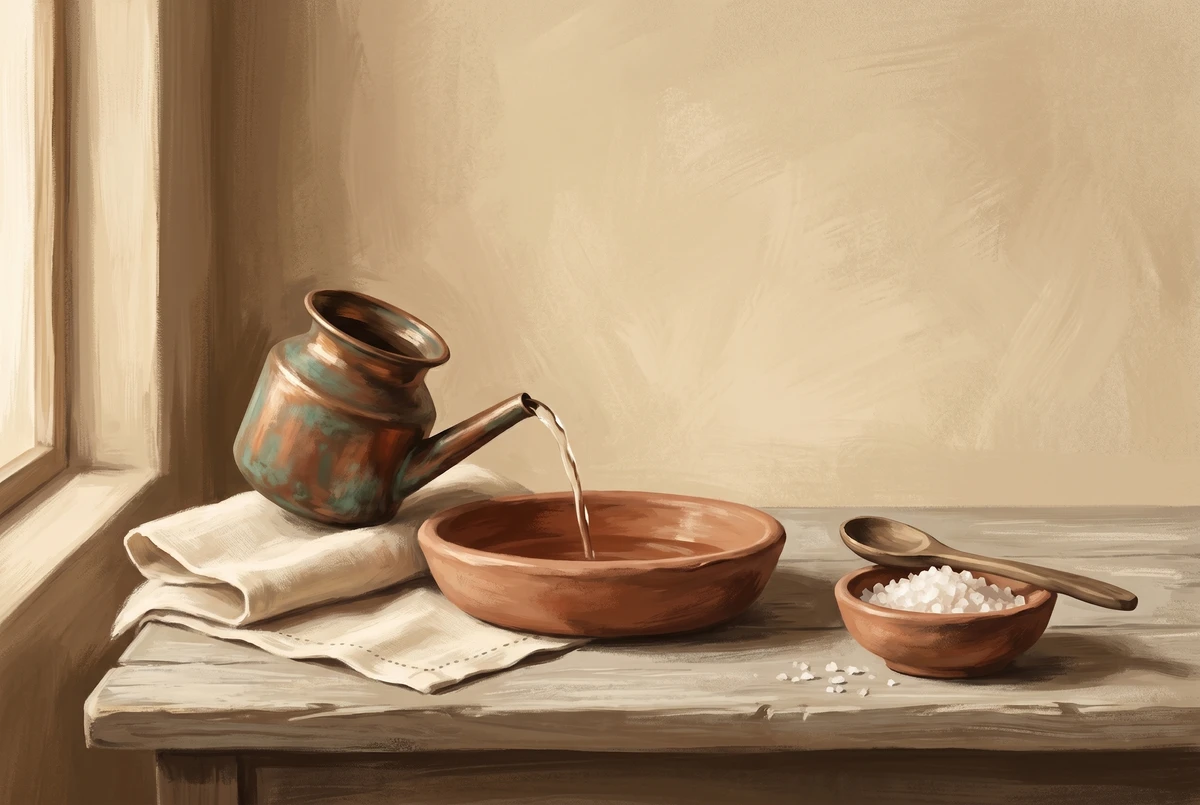
Sources
- Swathi P.S., Raghavendra B.R., Saoji Apar Avinash. (2021). “Health and therapeutic benefits of Shatkarma: A narrative review of scientific studies.” Journal of Ayurveda and Integrative Medicine, 12(1), 206–212. DOI: 10.1016/j.jaim.2020.11.008
- Meera S., Vandana Rani M., Sreedhar Cijith, Robin Delvin T. (2020). “A review on the therapeutic effects of Neti Kriya with special reference to Jala Neti.” Journal of Ayurveda and Integrative Medicine, 11(2), 185–189. DOI: 10.1016/j.jaim.2018.06.006
- Dallaghan Paul, Tiwari Subodh. (2025). “A Review of the Earliest Scientific Studies on Yoga and the Birth of Yoga Therapy in 1924.” International Journal of Yoga Therapy, 35(2025), Article 2. PMID: 40359248
- Svātmārāma. Hatha Yoga Pradipika (c. 15th century). Pancham Sinh translation (1914). Sacred Texts Archive
- Svātmārāma. Hatha Yoga Pradipika (c. 15th century). Commentary by Swami Muktibodhananda Saraswati. Bihar School of Yoga, 1985 (revised 1998).
- Mallinson, James; Singleton, Mark. (2017). Roots of Yoga. Penguin Books. ISBN 978-0-241-25304-5.
- Gheranda Samhita (c. late 17th century). See Mallinson, James (2004). The Gheranda Samhita. Yoga Vidya.