Short Meditation Techniques: 1 to 5 Minutes
Miha Cacic · April 11, 2026 · 7 min read

Five minutes of meditation is enough to reduce stress. One minute can reset your attention. But these are different things, and they work through different mechanisms.
Most “short meditation” guides hand you a list of techniques and say “try one.” This article matches specific techniques to specific time windows, based on what your nervous system is doing at each stage. And if you’ve tried breath meditation and couldn’t hold focus, there’s a faster anchor: your eyes.
Why short meditation works (and what it can’t do)
The question most people ask first: is it even worth doing?
Yes. A study of 61 mental health professionals found that five minutes of daily mindfulness meditation for just seven days significantly reduced perceived stress (Lam, Sterling & Margines, 2015). A separate study of college students showed that 5-12 minutes daily over eight weeks reduced stress, state anxiety, and trait anxiety, with improvements scaling in proportion to total minutes practiced (Burgstahler & Stenson, 2020). Even the lowest-compliance group (averaging roughly 3-4 minutes per day) showed measurable gains in mindfulness.
Single sessions produce immediate effects too. A 2023 PLOS ONE study found that one 10-minute meditation session improved reaction times and cognitive flexibility in both experienced meditators and complete beginners (Sleimen-Malkoun, Devillers-Réolon & Temprado, 2023). While 10 minutes exceeds this article’s 1-5 minute scope, the finding that beginners benefit immediately, without prior practice, matters: the mechanisms don’t require weeks of buildup.
What short meditation can’t do: build the deep concentration that develops over months of 20+ minute sessions, process trauma, or produce the sustained neuroplastic changes associated with long-term practice. Basso et al. (2019) found that 13 minutes of daily meditation needed a full eight weeks before attention, memory, and mood benefits appeared. Four weeks wasn’t enough. Short meditation is a reset button, not a renovation.
The practical insight: a review of over 200 mindfulness trials found no evidence that longer sessions are more helpful than shorter ones. Frequency and consistency predicted better outcomes than duration. One randomized controlled trial found that four 5-minute sessions were as effective as four 20-minute sessions for improving depression, anxiety, and stress. But consistency only works if the practice is short enough that you actually do it. One to three minutes is short enough that most people won’t talk themselves out of it.
A monk at Plum Village, Thich Nhat Hanh’s monastery, was once told about a student’s three-hour spontaneous meditation session. His response: “How about three breaths? That’s all you need to tune into the present moment.”
One more nuance worth knowing: brief meditation reliably reduces the subjective experience of stress. Its relationship with cortisol (the stress hormone) is more complex than most articles claim. Creswell et al. (2014) found that brief mindfulness training reduced how stressed people felt during a social stress test, while actually increasing their cortisol reactivity. The researchers interpret this as “active coping”: meditation helps you engage with stress more directly rather than suppressing the hormonal response. If you meditate and still feel the adrenaline, that’s not failure. It’s a different kind of regulation.
What happens in your body across 5 minutes
Understanding the physiological timeline explains why a 1-minute practice should look different from a 5-minute one.
0-30 seconds: Orienting response. Your attention shifts from whatever you were doing to the present moment. If you slow your breathing, heart rate begins to decelerate. This is all a micro-practice can realistically accomplish, and it’s enough to interrupt a stress spiral.
30-90 seconds: Vagal engagement begins. Extended exhales (breathing out longer than you breathe in) start activating the parasympathetic nervous system through the vagus nerve. De Couck et al. (2019) identified the mechanism: when you exhale slowly, the rising diaphragm changes pressure in the thoracic cavity, stimulating pulmonary vagal afferents. Heart rate variability, a marker of vagal tone, begins to shift. Breathing techniques typically need at least 60-90 seconds before the effect becomes noticeable. 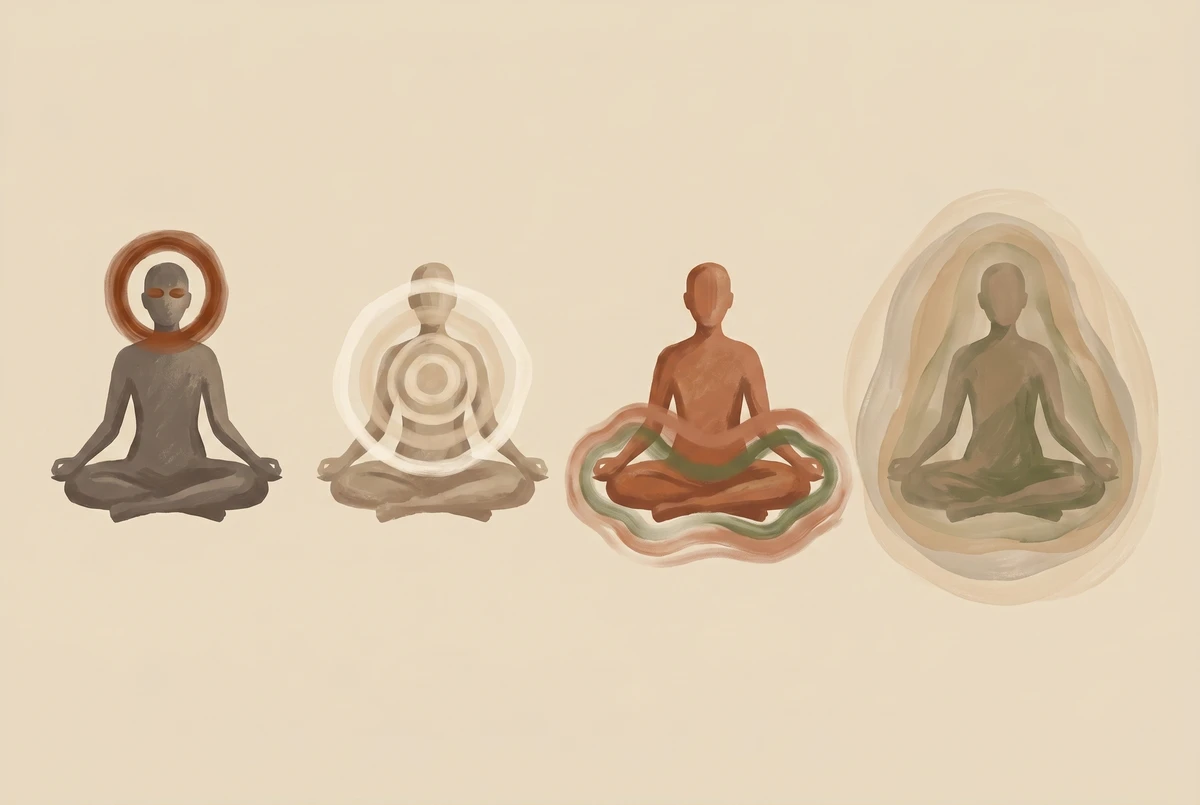
90 seconds to 3 minutes: The state shift. The parasympathetic response consolidates. The “settled” feeling arrives. Mind-wandering decreases noticeably. De Couck’s study showed that just two minutes of extended-exhale breathing was sufficient to prevent stress escalation during a subsequent decision-making task. The breathing group also made significantly more correct decisions.
3-5 minutes: Sustained attention stabilizes. In experienced meditators, the default mode network (your brain’s “internal narrator”) shows measurable quieting during practice. Brewer et al. (2011) found reduced default mode network activity across multiple meditation types. This quieting develops with weeks and months of consistent practice. What a single 5-minute session does is train the capacity: each session is a repetition that builds toward that change.
The takeaway: a 1-minute practice is an attention reset. A 3-minute practice starts to change your physiological state. A 5-minute practice can produce genuine calm. They’re not the same thing made shorter. They’re different tools.
Techniques by time: what to do with the minutes you have
60 seconds: the attention reset
Four techniques that work as complete practices in one minute. None of these is a truncated longer meditation.
1. Single-point gaze (micro-trataka). Fix your eyes on any small, still point: a dot, the edge of your coffee mug, a mark on the wall. Don’t strain; just rest your gaze. Keep your eyes still for 30 seconds, then close them for 30 seconds and notice the residual sensation or after-image. This works faster than breath meditation because the visual system recruits more cortical territory than any other sense. When your eyes stop moving, your mind tends to follow. 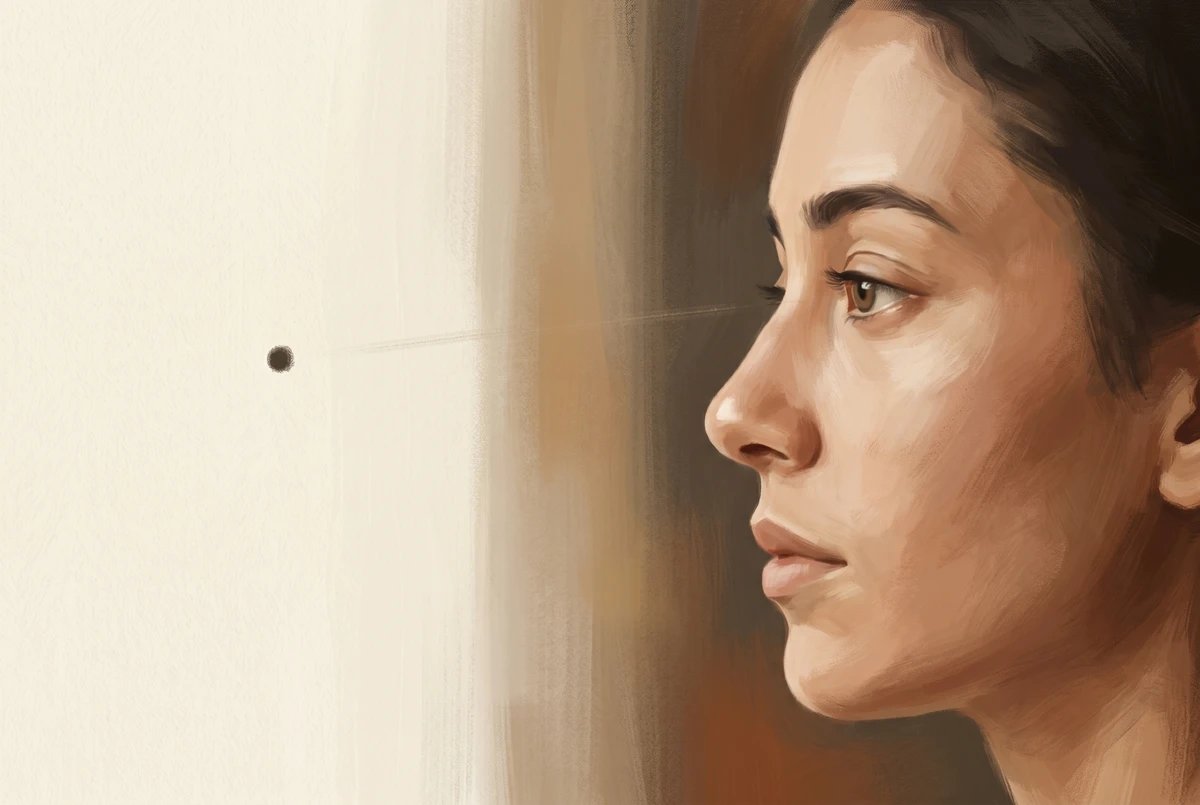
2. One long exhale. Inhale naturally, then exhale as slowly as you can through your nose. One breath, drawn out as long as possible. A single extended exhale measurably lowers heart rate via the vagal mechanism described above. Repeat 3-4 times to fill the minute.
3. 5-4-3-2-1 sensory sweep. Name 5 things you see, 4 you hear, 3 you feel, 2 you smell, 1 you taste. This is a grounding technique, not a concentration technique. Best for moments of anxiety or dissociation, less effective for building focus.
4. STOP method. Stop. Take one breath. Observe (body, thoughts, emotions, without trying to fix anything). Proceed. This is a meta-awareness check rather than a meditation, but it works as a micro-interrupt when you’re about to react to something.
Be honest with yourself: 60 seconds is an attention reset, not a meditation session. It won’t produce deep calm. It will interrupt a stress spiral and bring you back to the present moment.
2-3 minutes: the state shift
Most guides jump from “one minute” to “five minutes” as if nothing exists in between. But 2-3 minutes is where real physiological change begins.
1. Extended exhale breathing (2:1 ratio). Inhale for 3-4 counts, exhale for 6-8 counts. The longer exhale is the active ingredient: it directly stimulates the vagus nerve. Two minutes of this pattern produces measurable increases in heart rate variability and prevents stress escalation (De Couck et al., 2019). You don’t need to count precisely. Just make the out-breath noticeably longer than the in-breath. 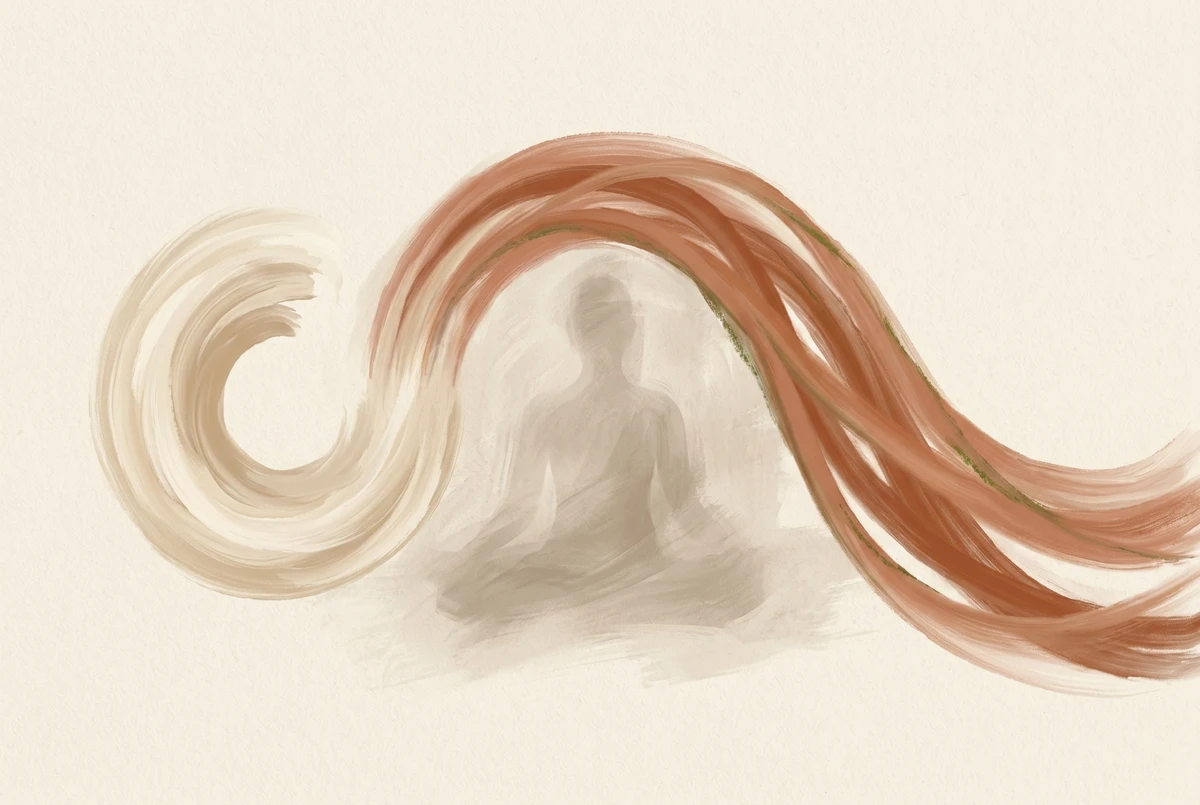
2. Point-focus with after-image. Gaze at a small object (a candle flame, a dot on paper, a geometric image on your phone) for 60-90 seconds without forcing concentration. Then close your eyes for 60-90 seconds and hold the after-image at the center of your visual field. One complete cycle. This pairs the fast attention capture of visual anchoring with the contemplative depth of internal visualization.
3. Express body scan. Start at the crown of your head. Move your attention downward in roughly 10-second sweeps: head, neck and shoulders, chest, belly, hips and legs, feet. That takes about 60 seconds. Spend the remaining time resting your attention on whichever area felt most tense, breathing into it.
4. Noting practice. Close your eyes. For each experience that arises (thought, sound, body sensation), silently label it: “thinking,” “hearing,” “feeling.” Don’t elaborate. Label and release. This builds metacognitive distance: the ability to observe your mind rather than be carried along by it. Two to three minutes is enough to notice the pattern of your current mental weather.
5 minutes: the full reset
Five minutes is enough for a structurally complete session with a beginning, middle, and end.
A complete 5-minute session:
Minute 1: Arrive. Close your eyes or soften your gaze. Take three deep breaths without controlling them. Just notice their shape. Let your breathing return to its natural rhythm.
Minutes 2-3: Choose your anchor. Count breaths (inhale 1, exhale 2, up to 10, then restart), hold a fixed gaze point, or track body sensations. When your attention wanders, notice where it went (“planning,” “remembering,” “worrying”), then return. Each return is the practice, not a failure.
Minute 4: Expand awareness. Stop focusing on a single anchor. Notice the entire field of experience (sounds, body, breath, the space around you) without singling anything out. This open awareness is where the “spacious” quality of meditation lives.
Minute 5: Close. Take one deep breath. Set a single intention for the next hour (not the whole day, which is too abstract to be useful). Open your eyes.
Alternative 5-minute techniques:
Loving-kindness (metta). Silently repeat “May I be well, may I be at ease” for 2 minutes directed at yourself, then 2 minutes extending to someone you care about, then 1 minute extending broadly. Brewer et al. (2011) found that the default mode network quiets during loving-kindness meditation just as it does during concentration practices. Unlike pure attention techniques, loving-kindness also engages positive emotion circuits, making it the best option when the problem is emotional flatness rather than scattered attention.
Walking meditation. Walk slowly for 5 minutes. Attend to the sensation of each foot contacting the ground. No destination needed. Works especially well when sitting feels impossible or your body is restless.
Candle or point gaze (trataka). One minute settling, two minutes gazing at a flame or fixed point, two minutes with eyes closed holding the after-image. The Hatha Yoga Pradipika (c. 15th century) describes trataka as a purification practice (“gaze steadily at a small object without blinking until tears flow”). In its modern short form, it’s one of the most effective techniques for people who struggle with closed-eye meditation.
Open-eye meditation: why it works for restless minds
Most meditation instructions assume closed eyes. But many people find closed-eye meditation harder, not easier. Removing your dominant sense (vision) leaves the mind without an external anchor. Thoughts rush in to fill the gap.
Open-eye point-focus meditation (called trataka in yogic tradition, drishti in some Buddhist lineages) works the opposite way: you give the mind something concrete and external to rest on. For restless or fidgety people, this is often easier than tracking the breath.
Why this matters for short sessions: the visual system recruits more cortical territory and processes information faster than interoceptive (body-sensing) pathways. In practice, a fixed gaze can stabilize attention within seconds. Breath awareness takes longer to settle into. When you only have 1-3 minutes, you need to anchor fast. A visual point gives you that speed.
There’s a second practical benefit. Norris et al. (2018) found that individuals higher in neuroticism benefited less from a single brief meditation session than those lower in neuroticism. This has a practical implication: the people most drawn to short meditation (anxious, stressed, racing-mind types) may be the ones who need a stronger anchor to get started. A visual focus point provides that strength in a way that subtle breath sensations often don’t. 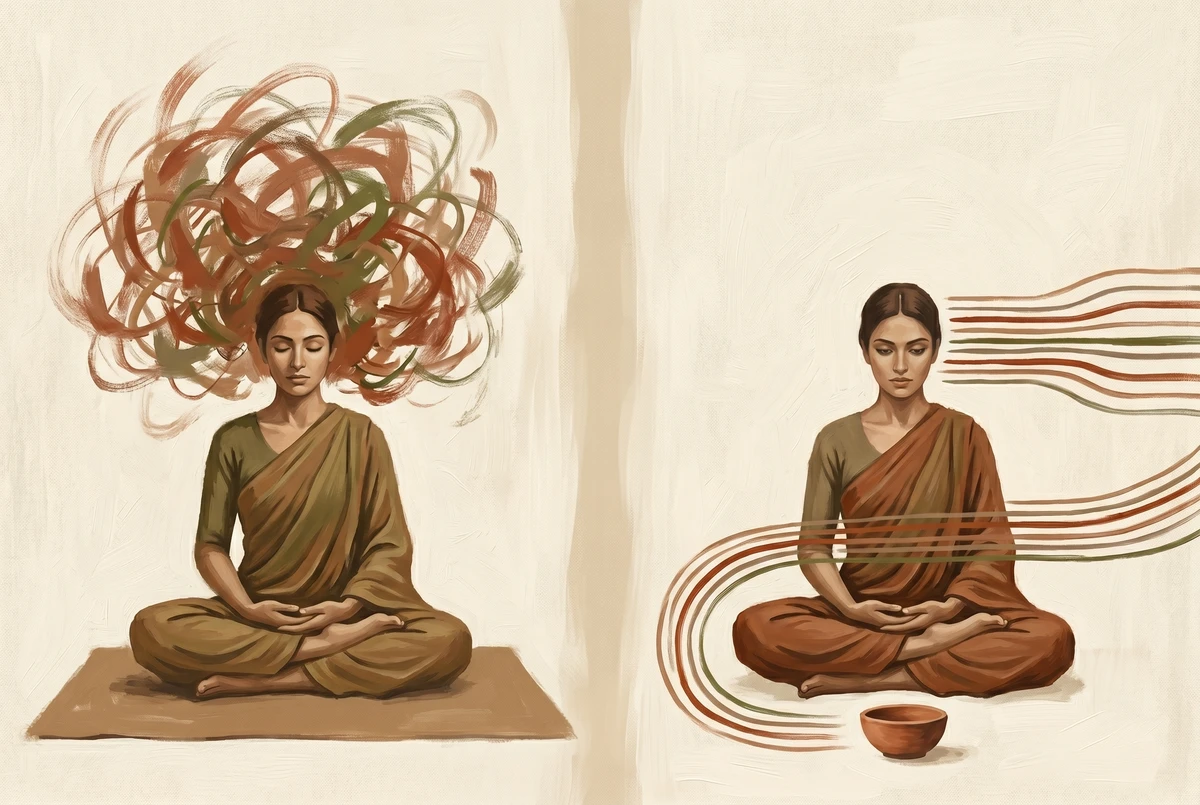
The practical version: pick any small, non-moving point. Rest your gaze without straining. Notice when your eyes want to dart away; that’s the visual equivalent of mind-wandering. Bring them back gently. When you close your eyes afterward, the after-image gives you a built-in internal focus object for free.
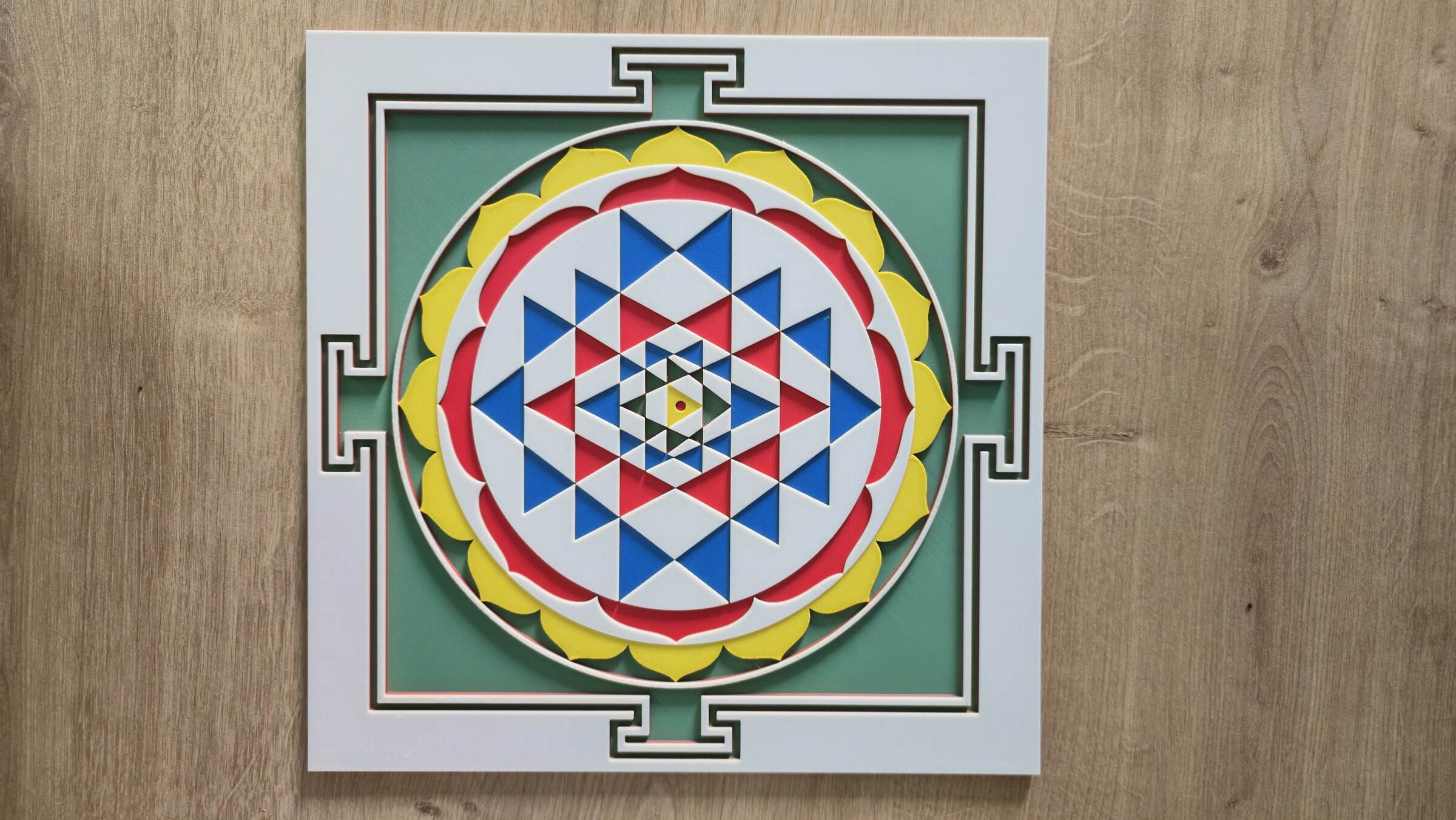
If the single-point gaze resonates with you, trataka meditation and geometric-focus practices like Sri Yantra meditation take this principle considerably deeper.
When to use which technique
Different mental states call for different tools.
Anxious or panicking? 5-4-3-2-1 sensory sweep (1 min) or extended exhale breathing (2-3 min). Both ground you in sensory reality and activate the parasympathetic response. Avoid closed-eye techniques during acute anxiety; removing visual input can increase disorientation.
Scattered, can’t focus? Single-point gaze (1 min) or point-focus with after-image (2-3 min). Vision anchors attention faster than breath.
Emotionally reactive, about to say something you’ll regret? STOP method (1 min) or noting practice (2-3 min). Both create a gap between stimulus and response.
General stress, need to decompress? Extended exhale breathing (2-3 min) or the full 5-minute reset. The parasympathetic shift needs at least 60-90 seconds to engage, so give it that time.
Flat, unmotivated, or emotionally numb? Loving-kindness (5 min). Focus-based techniques won’t help much here. The problem isn’t scattered attention; it’s emotional flatness. Loving-kindness engages emotional circuits that pure attention techniques don’t.
Can’t sit still? Walking meditation (5 min) or the 1-minute “shake-and-notice”: shake your whole body vigorously for 30 seconds, then stand completely still for 30 seconds and notice the contrast. Restless energy sometimes needs to discharge before stillness becomes possible.
Eyes tired from screens? Closed-eye body scan (2-3 min) or palming (cup your hands over closed eyes for 60 seconds and rest in the darkness). These rest the visual system rather than engaging it further.
Building a daily practice from micro-sessions
The most common way people fail at meditation is by starting too big. A 20-minute commitment sounds reasonable on Monday morning and feels impossible by Wednesday.
Habit-stack instead of scheduling. Attach your practice to something you already do: after pouring coffee, before opening email, at each red light, when you close your laptop. Habit formation research shows that habits form faster when linked to existing triggers (Lally et al., 2010). The same study found that building automatic habits takes anywhere from 18 to 254 days, with complex behaviors taking longer. Meditation, with its attentional demands, likely falls toward the longer end of that range. The trigger-response pattern matters more than the duration. 
Progress by desire, not discipline. Start with 1-minute practices for the first two weeks. This builds the trigger-response pattern while staying under the brain’s resistance threshold. Move to 2-3 minutes in weeks three and four. Try 5 minutes when it feels natural. Let the duration grow because you want to stay longer, not because a program told you to.
Multiple micro-sessions or one longer session? Both work, for different reasons. Three 1-minute sessions scattered through the day build the habit of returning to presence. One 5-minute session builds depth of sustained attention. If you can do both, do both.
When to go longer: when 5 minutes consistently feels too short and you find yourself wanting to stay. That pull is the signal. Don’t force longer sessions before it arrives.
Sources
- Burgstahler MS, Stenson MC. (2020). “Effects of guided mindfulness meditation on anxiety and stress in a pre-healthcare college student population: a pilot study.” Journal of American College Health, 68(6), 666-672. DOI: 10.1080/07448481.2019.1590371. PMID: 30939081.
- Lam AG, Sterling S, Margines E. (2015). “Effects of Five-Minute Mindfulness Meditation on Mental Health Care Professionals.” Journal of Psychology & Clinical Psychiatry, 2(3), 00076. DOI: 10.15406/jpcpy.2015.02.00076.
- Norris CJ, Creem D, Hendler R, Kober H. (2018). “Brief Mindfulness Meditation Improves Attention in Novices: Evidence From ERPs and Moderation by Neuroticism.” Frontiers in Human Neuroscience, 12, 315. DOI: 10.3389/fnhum.2018.00315.
- Sleimen-Malkoun R, Devillers-Réolon L, Temprado J-J. (2023). “A single session of mindfulness meditation may acutely enhance cognitive performance regardless of meditation experience.” PLOS ONE, 18(3), e0282188. DOI: 10.1371/journal.pone.0282188.
- Basso JC, McHale A, Ende V, Oberlin DJ, Suzuki WA. (2019). “Brief, daily meditation enhances attention, memory, mood, and emotional regulation in non-experienced meditators.” Behavioural Brain Research, 356, 208-220. DOI: 10.1016/j.bbr.2018.08.012.
- Creswell JD, Pacilio LE, Lindsay EK, Brown KW. (2014). “Brief mindfulness meditation training alters psychological and neuroendocrine responses to social evaluative stress.” Psychoneuroendocrinology, 44, 1-12. DOI: 10.1016/j.psyneuen.2014.02.007. PMID: 24767614.
- Brewer JA, Worhunsky PD, Gray JR, Tang YY, Weber J, Kober H. (2011). “Meditation experience is associated with differences in default mode network activity and connectivity.” Proceedings of the National Academy of Sciences USA, 108(50), 20254-20259. PMC3250176.
- De Couck M, Caers R, Musch L, Fliegauf J, Giangreco A, Gidron Y. (2019). “How breathing can help you make better decisions: Two studies on the effects of breathing patterns on heart rate variability and decision-making in business cases.” International Journal of Psychophysiology, 139, 1-9. DOI: 10.1016/j.ijpsycho.2019.02.011. PMID: 30826382.
- Lally P, van Jaarsveld CHM, Potts HWW, Wardle J. (2010). “How are habits formed: Modelling habit formation in the real world.” European Journal of Social Psychology, 40(6), 998-1009. DOI: 10.1002/ejsp.674.
- Svātmārāma. (c. 15th century). Hatha Yoga Pradipika, Chapter 2, Verse 31. Translation: Swami Muktibodhananda, Bihar School of Yoga, 1985.